
Last updated September 10, 2026
Full 25-point door and opener safety check with every visit - springs, cables, rollers, tracks, and your LiftMaster or Chamberlain opener included
You get a price before we start. It does not change when the truck arrives.
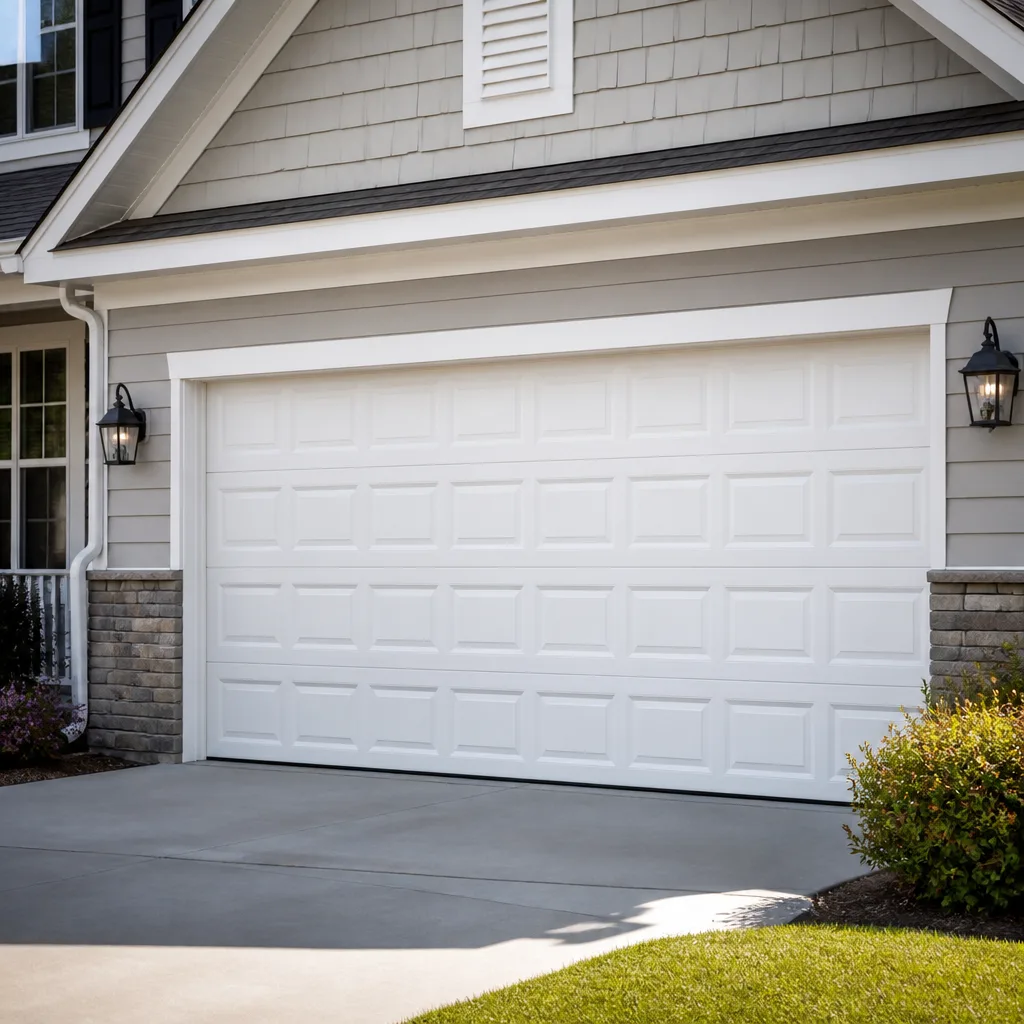
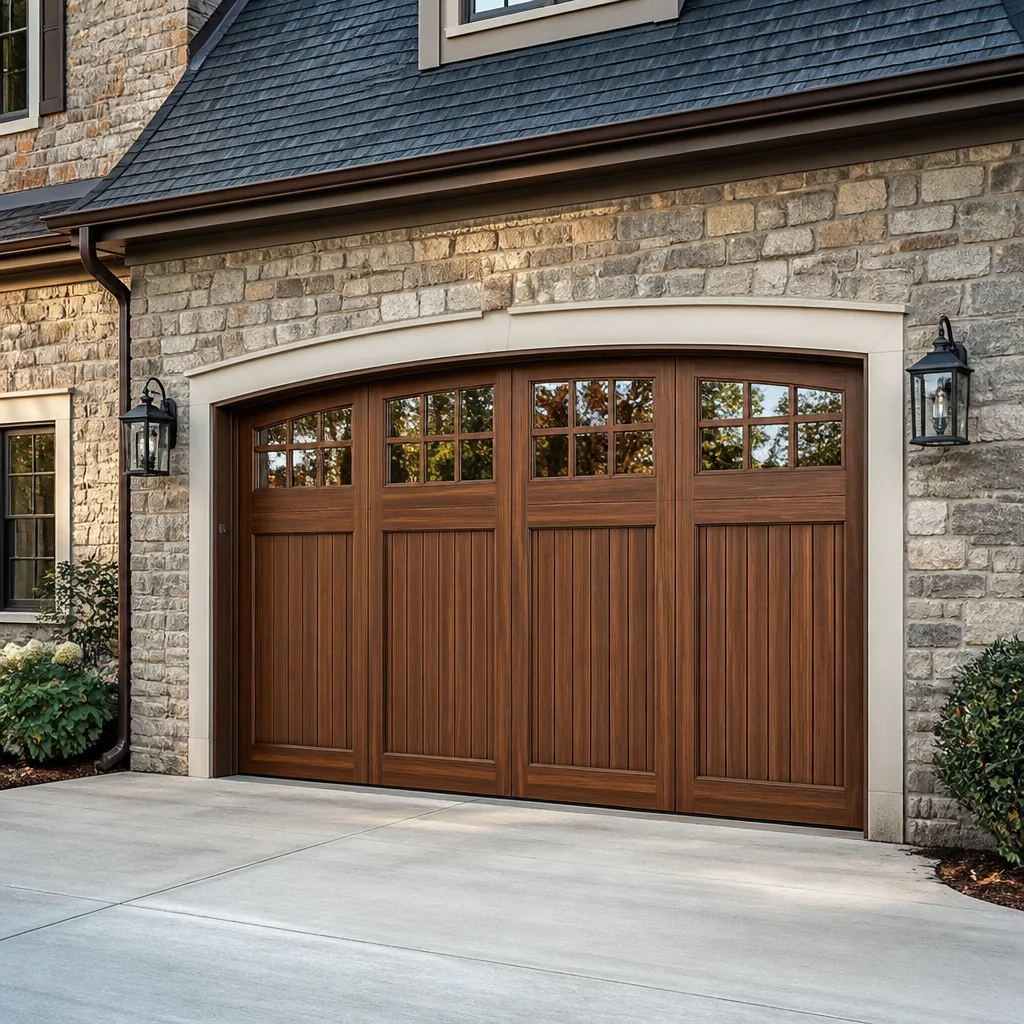
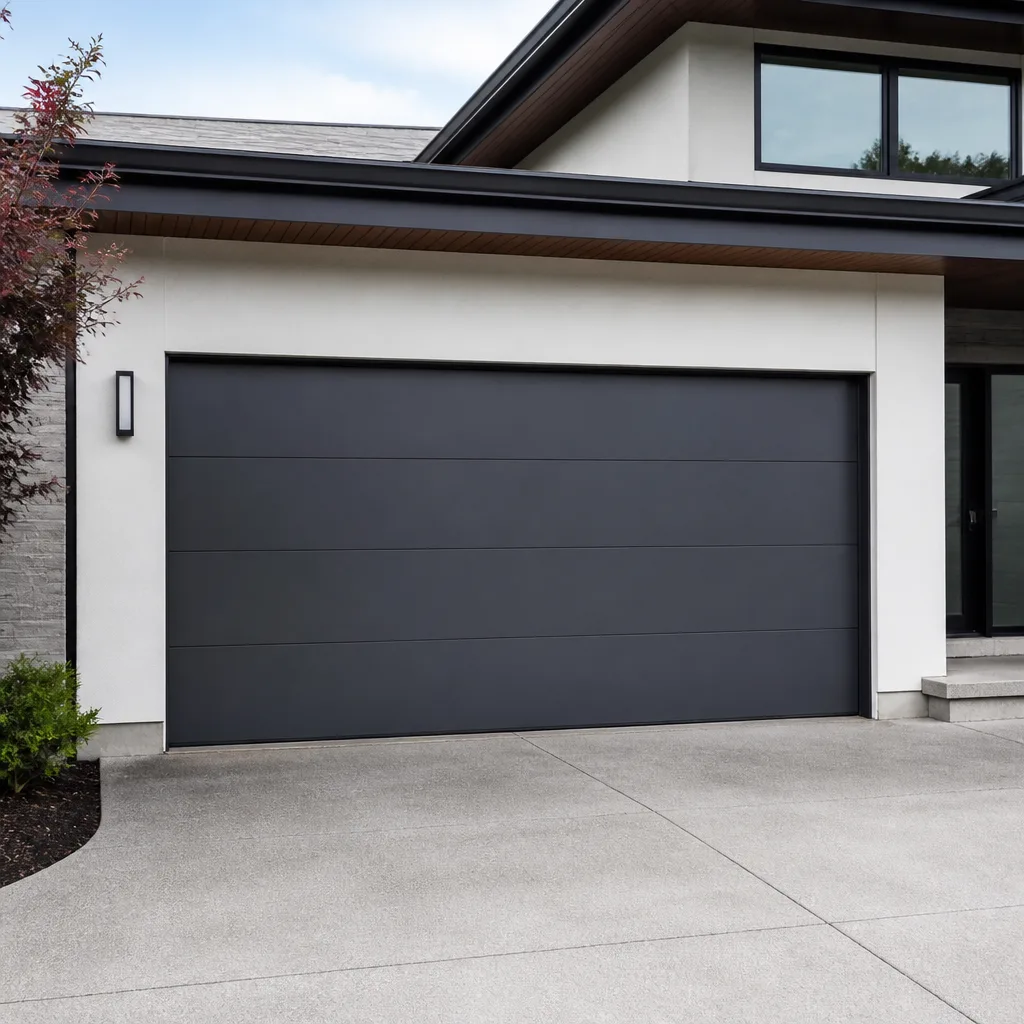
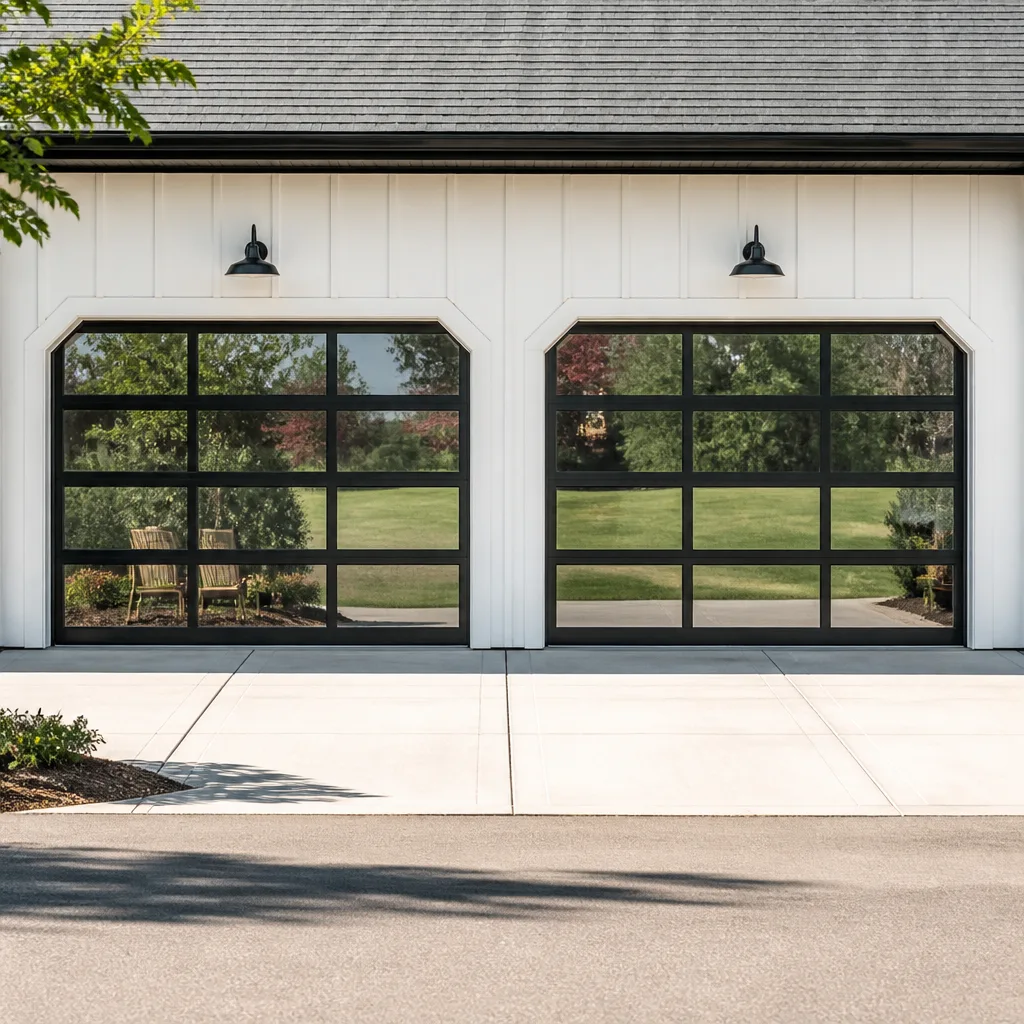
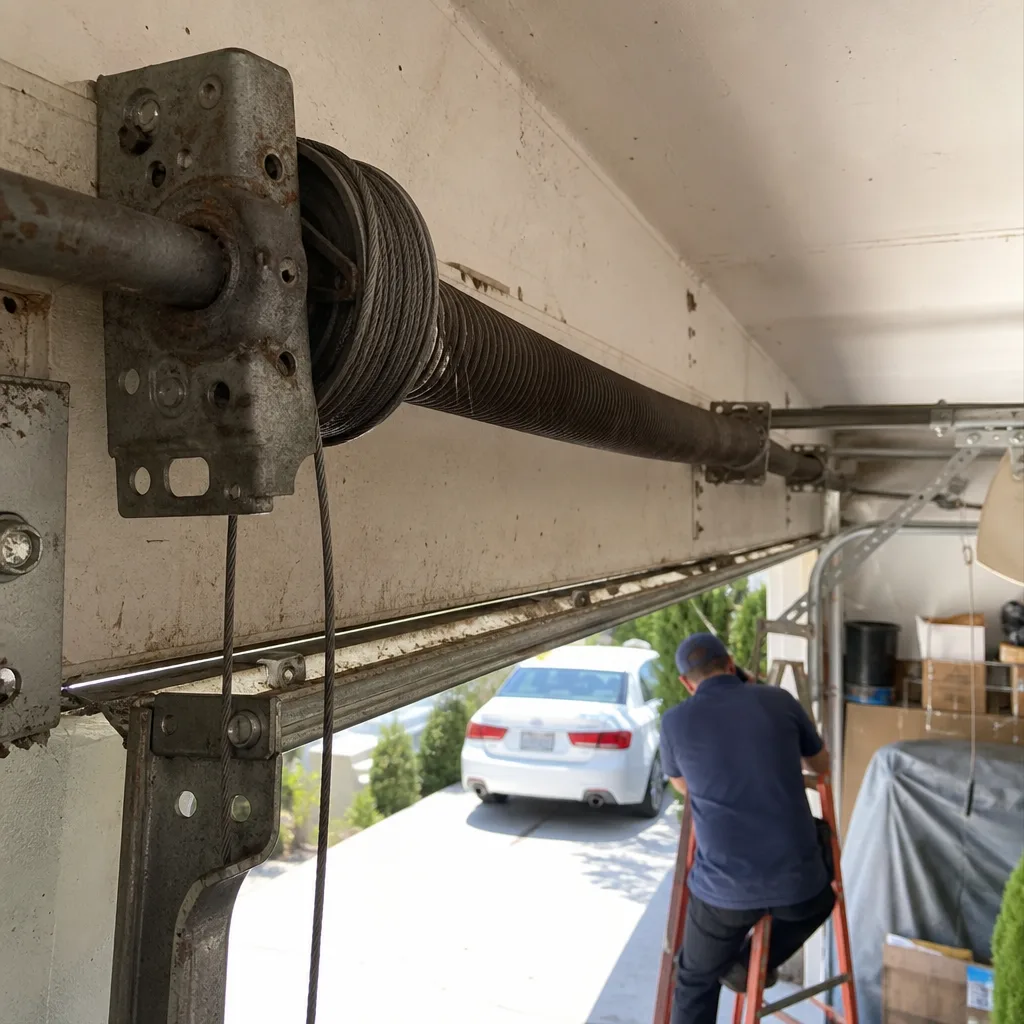 Before
 After
After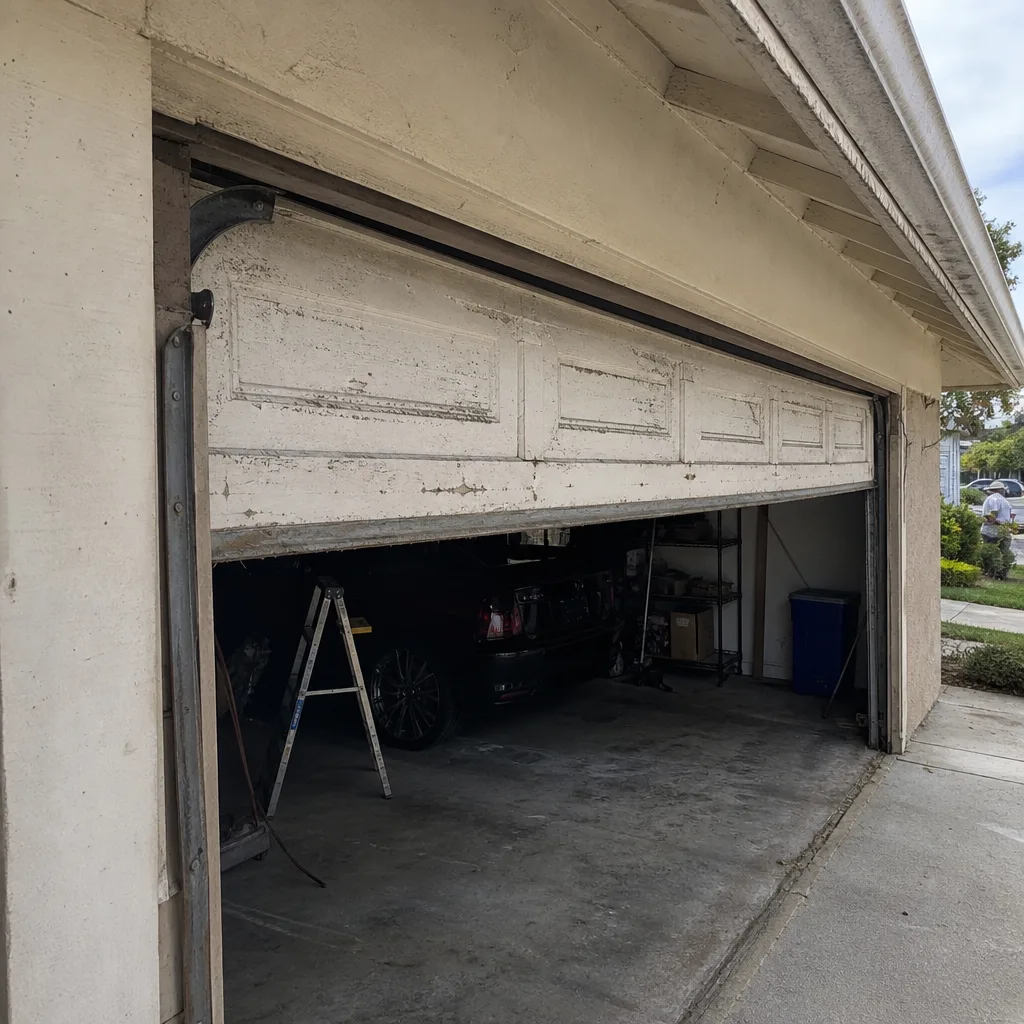 Before
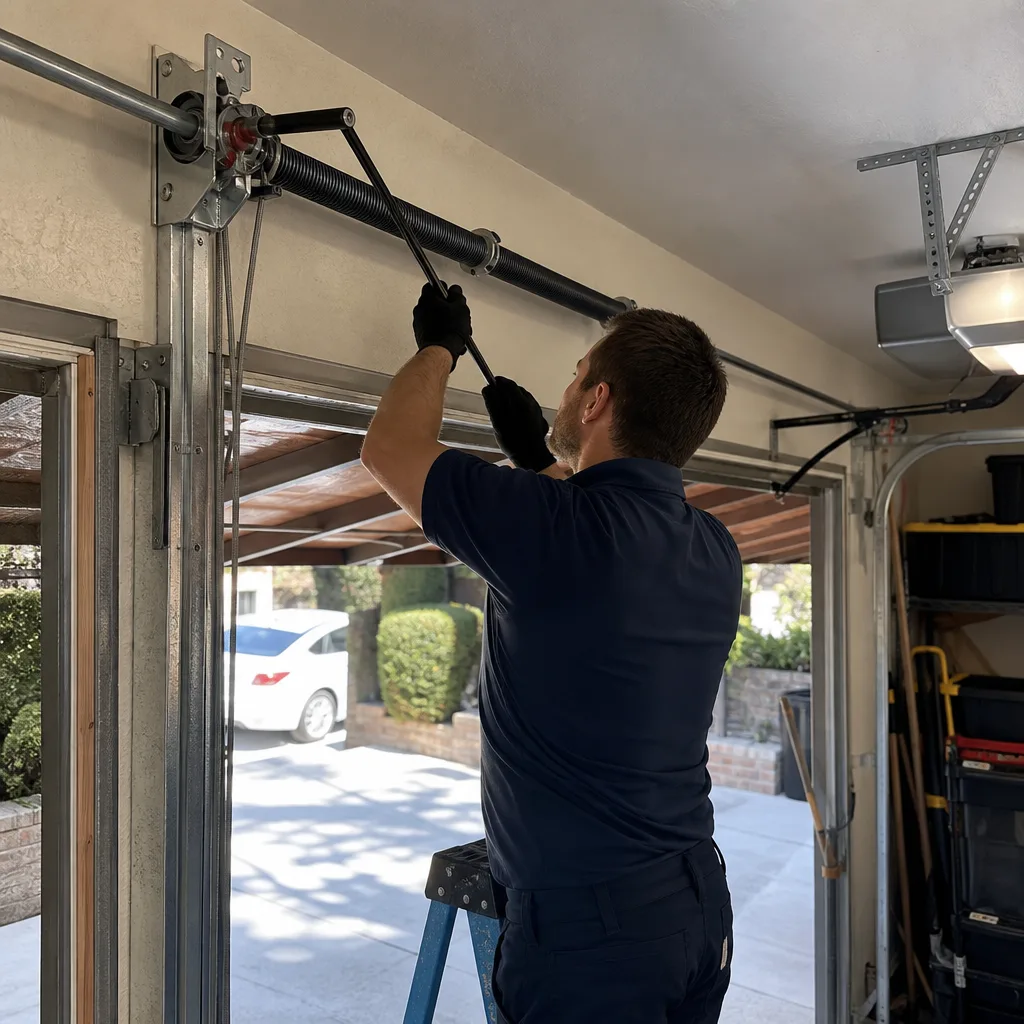 After
After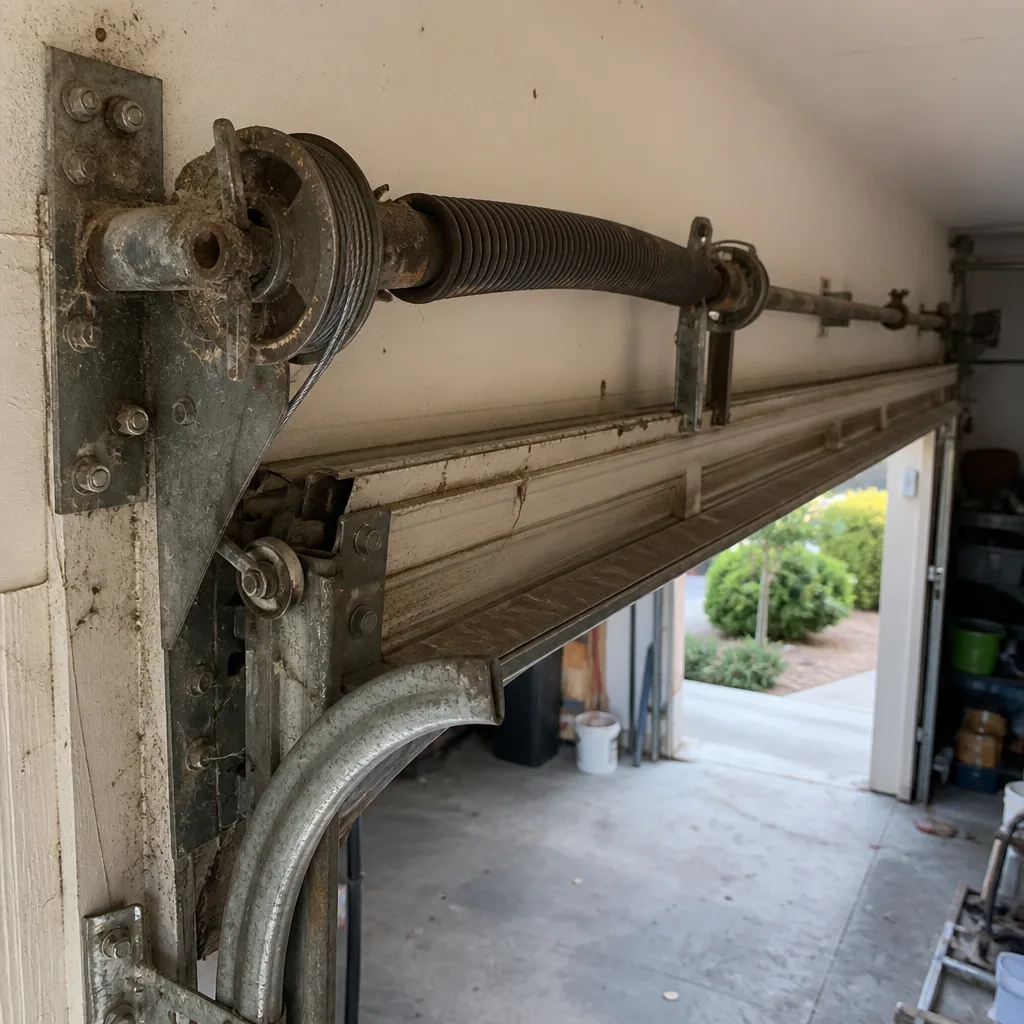 Before
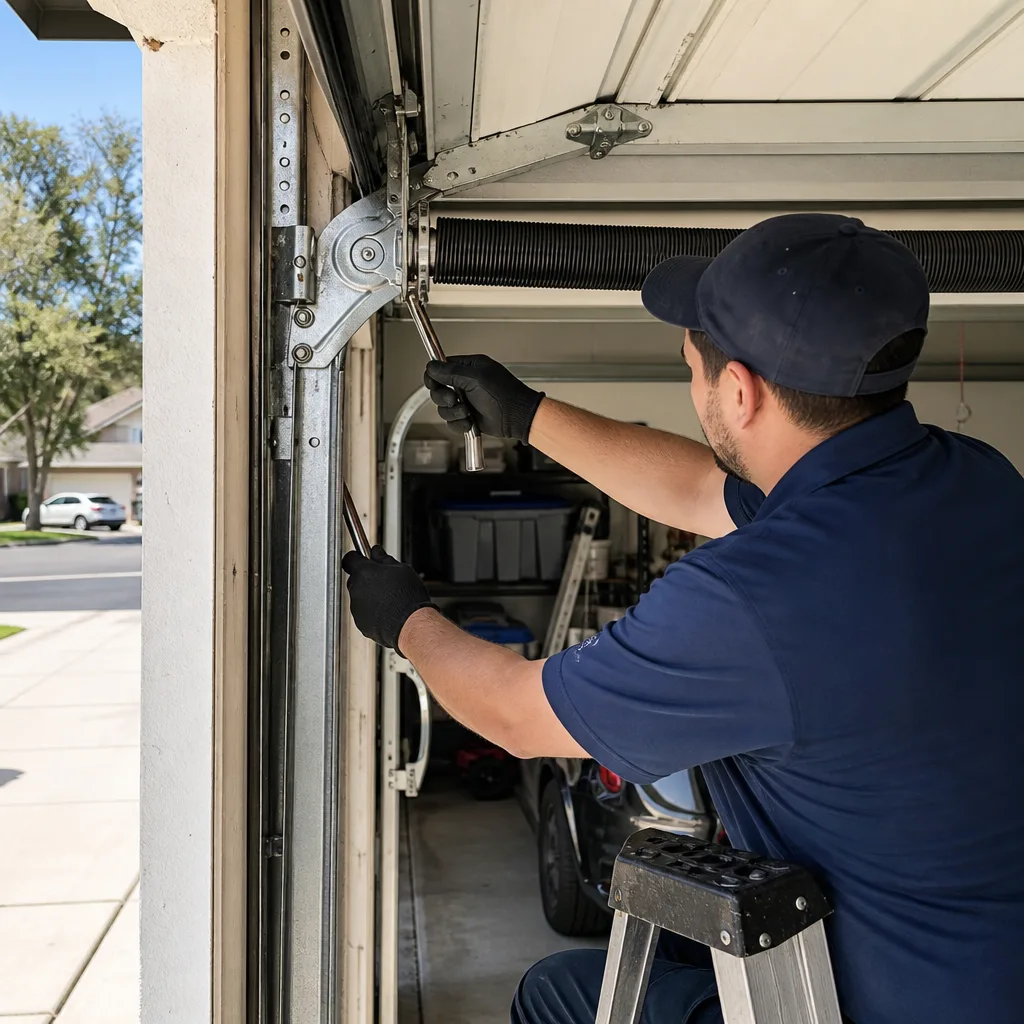 After
AfterHow to Hire a Garage Door Contractor in Thousand Oaks: A Step-by-Step Guide
The second most-searched phrase after “garage door repair Thousand Oaks” is “garage door scam.” That’s not a coincidence. It’s a pattern I’ve watched play out on customers’ driveways in Thousand Oaks for twenty years now. A California phone number rings, a van shows up, and the person holding the invoice has no license to verify, no local address, and no intention of ever coming back. This guide walks you through the exact steps to separate a real tradesperson from a phone-room operation, so the next garage door contractor you hire in Thousand Oaks is one you’d be happy to run into at the hardware store on Saturday. For more guides & resources, visit our blog.
Quick Answer
To hire a garage door contractor in Thousand Oaks, verify their California contractor license on the CSLB website, ask for a written line-item estimate that itemizes parts and labor, require a physical local address rather than just a local phone number, and confirm who backs the warranty in writing. A garage door weighs 200 pounds or more and rides on high-tension springs, so this is not a job where a low phone quote should outweigh a verifiable paper trail and a name you can find in person when something goes wrong.
Table of Contents
- Step 1: Verify the California Contractor License in Under Two Minutes
- Step 2: Understand Why “Locally Owned” and “Locally Operated” Are Not the Same Thing
- Step 3: Recognize the Three Bid Red Flags Specific to Garage Door Work
- Step 4: Know What a Fair Written Estimate Looks Like Line by Line
- Step 5: Ask the Warranty Questions That Actually Matter
- Step 6: Run Your Final Red-Flags Checklist Before Anyone Touches the Door
- Common Mistakes to Avoid
- When to Call a Professional
- Frequently Asked Questions
Step 1: Verify the California Contractor License in Under Two Minutes
The Contractors State License Board website, cslb.ca.gov, is the single most important tool you have before letting anyone work on your garage door in Thousand Oaks. Go to the site, click “Check a License,” and enter either the contractor’s name or their license number. That search tells you whether the license is active, what classification it covers, who the qualifying individual is, and whether the contractor carries workers’ compensation insurance for employees.
Here’s what an active license actually tells you: the person named on it passed a trade exam, posted a bond, and has not had the license suspended or revoked. That’s a meaningful floor. Here’s what it doesn’t tell you: whether the person who shows up at your door is the same person on the license, whether they do good work, or whether they’ll answer the phone in eighteen months. A license is a starting point, not a guarantee.
- Go to cslb.ca.gov. Click “Check a License” in the top navigation.
- Enter the license number. If the contractor won’t give you a license number before the visit, that’s your first red flag. A legitimate Thousand Oaks garage door contractor will have it printed on the truck, the invoice, and the business card.
- Confirm the classification matches the work. Garage door work generally falls under C-61 or D-28 (Door and Access Controls) or a general building classification. If the license is for landscaping, that’s a problem.
- Check the business address. The CSLB listing shows a physical address. Compare it to what the contractor told you. A Thousand Oaks phone number paired with an address in Sacramento or Los Angeles tells you who you’re really dealing with.
- Look at the bond and insurance status. Active bond, active workers’ comp. If either shows as canceled, walk away.
I’ve kept a published address and license number on every invoice since 2004. Any Thousand Oaks homeowner can check me on the CSLB site before the truck ever leaves the shop. That’s not a marketing tactic. It’s the bare minimum of what a local business owes the people who let us into their driveways at nine at night.
Step 2: Understand Why “Locally Owned” and “Locally Operated” Are Not the Same Thing
Almost every garage door company that does business in Thousand Oaks will call itself “local.” The word means almost nothing on its own. What matters is who answers the phone, who shows up, who prices the job, and who stands behind the work when the spring fails again in March.
A locally owned company might still route your call to a national dispatch center in another state, who then sends a subcontractor they’ve never met to your home. That subcontractor is incentivized to upsell, because they’re paid per ticket, not per relationship. A locally operated company is different. The person who answers the phone knows the roads, knows the neighborhoods, knows what a summer heat wave does to a spring cycle count in Westlake Village versus Newbury Park.
How to tell which one you’re dealing with, before anyone shows up:
- Look up the physical address on the CSLB listing. Is it a storefront or a P.O. box in another county? If the address is a P.O. box, that’s a phone-room operation. A real Thousand Oaks garage door business has a real address where you could, in theory, walk in and ask for the owner.
- Call after hours. Not to test anyone, just to see what happens. A local operation has a live person answering at 9 p.m., often the owner. A phone-room operation has a voicemail tree. When a spring lets go at night and your car is sealed inside the garage, the difference matters enormously.
- Ask who actually does the work. Is it the person you’re talking to, or an unnamed sub they’ll “send out”? There’s nothing wrong with a crew. There’s something very wrong with not being able to name the person who’ll be at your door.
- Check how long they’ve served Thousand Oaks specifically. A company that opened six months ago but claims “over 20 years of combined experience” across three owners is not the same as one name that has been in the same county since 2004.
I’ve been owner-operated since the first call. The name on the van is the name on the license and the name on the invoice. When you call at nine at night because your door is stuck half-open, you get me or someone who works directly for me, not a call center reading a script from Phoenix. That’s the difference between a local business and a local marketing campaign.
Step 3: Recognize the Three Bid Red Flags Specific to Garage Door Work
Garage door repair attracts a particular species of bad operator because the work is urgent, the markup potential is high, and most homeowners know nothing about springs, cables, or openers. After two decades in Thousand Oaks garages, I can tell you the three specific bid patterns that signal trouble. If you’re weighing whether to tackle maintenance yourself, see our DIY vs Professional Garage Door: The Thousand Oaks Homeowner’s Decision Guide.
Red flag one: unusually low spring pricing. A pair of torsion springs for a standard residential door costs a real amount of money, and installation takes real skill and real time because you’re working with hundreds of pounds of stored tension. If a phone quote comes in at half of what everyone else charges, the contractor is planning to make their margin somewhere else. What happens next is predictable: the tech arrives, the spring “isn’t the problem,” and suddenly the door needs new cables, a new opener board, and a “tune-up” that wasn’t on the ticket. The low phone quote was the hook.
Red flag two: vague “parts and labor” quotes with no itemization. A quote that says “door repair, parts and labor: $450” is not a quote. It’s a blank check. You should never be asked to agree to a price without knowing what spring is going on your door, what opener is in the box, and how much is labor versus parts. I quote the job on the phone and hold the number when I get there because I already know what the job costs. If someone won’t tell you what the parts are, it’s because they don’t want you comparing prices.
Red flag three: diagnosing over the phone without seeing the door. Some diagnosis over the phone is normal. “The spring broke, the door won’t open, the opener makes a grinding noise” gives me a good idea of what to stock on the truck. But the moment someone says, “I know exactly what’s wrong, it’ll be $X,” without asking you to describe the door’s age, brand, weight, and what it’s actually doing, you’re dealing with a sales script, not a tradesperson. I count spring cycles the way you count tire miles, and I can often tell you what’s left on yours. The diagnosis happens in person, not from a cubicle.
Step 4: Know What a Fair Written Estimate Looks Like Line by Line
A fair written estimate is the difference between an apples-to-apples comparison and a guess. When I write an estimate for a Thousand Oaks homeowner, it includes specifics. Here’s what you should expect to see on the page, and what each line actually means.
Spring type and size. A torsion spring isn’t just “a spring.” It’s a specific wire gauge, a specific inside diameter, a specific length, and a specific winding direction, matched to the weight and balance of your specific door. The estimate should name the spring type (torsion vs. extension), the size, and whether it’s a standard or high-cycle spring. High-cycle springs cost more up front and last far longer. A contractor who can’t tell you what size spring you’re getting is a contractor who’s putting whatever is cheapest on the shelf into your door. For a full breakdown of what to expect year-round, see Seasonal Garage Door Care for Thousand Oaks: Year-Round Homeowner’s Guide.
Opener model number. If the work involves an opener, the estimate should name the exact model. “New opener” is not a quote. “LiftMaster 87504-267” is a quote. That model number lets you look up the unit price, the features, and the warranty yourself. I’ve worked across LiftMaster, Chamberlain, Craftsman, and Raynor openers for two decades, and I’ll tell you the model number before I tell you the price, because I want you to know exactly what you’re buying.
Labor: flat-rate or hourly, spelled out. Some jobs are flat-rate, like a standard spring replacement. Some are hourly, like a full door replacement that requires custom track work. The estimate should say which is which, and how much. “Labor included” with no number next to it is not a number. It’s a placeholder for whatever the tech decides to charge at the end.
Line items for every part. Cables, rollers, hinges, brackets, springs, opener unit, weather seal. Each one should have a dollar amount next to it. Not “door repair: $495.” The whole point of a line-item estimate is that you can see what you’re paying and make choices. Maybe you skip the weather seal and do it yourself. Maybe you upgrade the rollers. Those choices belong to you, not to whoever shows up with a clipboard and a payment app.
If you already have a written estimate from someone else and you want a second set of eyes on it, that’s a service I offer free of charge inside the home county: a Free Second Opinion on any written estimate, no trip charge. Bring me the paperwork, and I’ll tell you line by line whether it’s fair, inflated, or hiding something.
Step 5: Ask the Warranty Questions That Actually Matter
Every contractor will tell you their work is “guaranteed.” The word is nearly meaningless until you’ve asked three questions. The answers tell you whether the guarantee is a real promise or a scripted line.
Question one: who backs the warranty? Some warranty paper leads to the manufacturer, which is fine for parts. Some leads to the contractor, which is fine for labor if you can actually reach that contractor. Some leads to a third-party warranty company that will deny claims more or less as a business model. Ask the question out loud: “If this fails in a year, who do I call, and who pays?” If the answer is vague, so is the warranty.
Question two: what does it cover, exactly? A spring warranty that covers the part but not the labor to replace it means you’re paying $150 for labor on a spring that failed in month three. That’s not much of a warranty. A real warranty covers parts and labor, in writing, for a stated period. My 90-Day Done Right Promise means ninety days, in writing on every job, and if something is not right, one call brings me back to make it right. No claim forms, no third-party adjuster, no forty-minute hold.
Question three: will the person on the phone still be reachable in eighteen months? This is the one people forget to ask. Look up the company’s address and ask how long they’ve been there. A warranty from a company that no longer exists is a warranty on paper only. I’ve been at the same work in Thousand Oaks since 2004. Ask anyone on your street. The warranty is only worth as much as the person who signed it.
Step 6: Run Your Final Red-Flags Checklist Before Anyone Touches the Door
Before you sign anything or hand over a dime, run through this list. Every “no” is a reason to stop and call someone else.
- License verified on cslb.ca.gov, active, matching the name on the estimate. If the license number isn’t on the truck and the invoice, ask why.
- Physical address confirmed. Not a P.O. box in a different county. A real street address in Thousand Oaks or the immediate area, where you could find the contractor in person if you needed to.
- Written estimate with line items. Spring type and size, opener model number, each part named, labor explicitly stated as flat-rate or hourly.
- Warranty in writing, including who backs it and what it covers. Not a verbal “don’t worry, we’ll take care of you.” Paper. Ink. Signature.
- The same person who quoted the price is the person showing up. Or a named crew member who works directly for the licensed contractor. Not an unnamed subcontractor with no connection to the license.
- Pricing agreed before work starts, with a clear statement that it won’t change. If the contractor hedges on this, they’re already planning to exceed the quote.
- You know who to call if something fails. Name, phone number, and confidence that this person exists and will answer.
For a deeper look at the repair process itself, see how garage door repair in Thousand Oaks work or check what a new garage door installation in Thousand Oaks involves when replacement is the smarter move.
Common Mistakes to Avoid
- Hiring the first company that shows up in the search ads. Paid listings are paid. A big ad budget doesn’t mean a good tradesperson, and the contractor paying the most per click often has the most to hide. Take twenty minutes and verify.
- Trusting a local phone number. Any national call center can buy a 805 number. The phone number tells you nothing. The CSLB listing tells you everything.
- Accepting a verbal quote. If it’s not in writing, it didn’t happen. A written line-item estimate is the only number that matters when the invoice lands.
- Forgetting to ask about the warranty’s labor coverage. Parts warranties are standard. Labor warranties are not. Ask before you sign, not after the spring fails.
- Assuming “insured” means the same thing everywhere. Some contractors carry liability insurance that doesn’t cover damage to your property, and some carry none at all. Check the CSLB listing for bond and insurance status before you hand over a key.
- Skimping on spring quality. In Thousand Oaks heat, a cheap spring wears out faster and can snap sooner. A high-cycle spring costs more up front and more than earns it back in lifespan. I count spring cycles like you count tire miles.
- Calling a handyman for high-tension work. A garage door is a heavy, spring-loaded machine. The springs and cables are genuinely dangerous if you don’t know exactly what you’re doing. A handyman with a YouTube video is not a substitute for a licensed contractor who does this every day.
When to Call a Professional
A garage door is not a DIY project for the brave. The torsion springs on a standard residential door hold enough tension to cause severe injury or worse if they let go while you’re working on them. Same goes for the cables, which ride on the same tension system. If you’re dealing with a broken spring, a snapped cable, a door that’s off its tracks, or an opener that’s making grinding noises, that’s a professional job. Period. The diagnosis itself needs eyes on the door, and the repair needs tools and training most homeowners don’t keep in the garage. Otto’s Garage Door offers free estimates in Thousand Oaks, and a full garage door opener service in Thousand Oaks covers everything from a quiet LiftMaster belt drive swap to a full opener replacement. Call (805) 519-7431 and you’ll get a live person, not a queue.
Frequently Asked Questions
Go to cslb.ca.gov and click “Check a License,” then enter the contractor’s name or license number. You’ll see the license status, the business address, the qualifying individual, and the bond and insurance status. A legitimate Thousand Oaks garage door contractor will volunteer this number before you ask. If they hesitate, that’s your answer. Call (805) 519-7431 and we’ll give you ours before we even discuss the job.
Garage door repair in Thousand Oaks typically runs $180 to $340 for a standard spring replacement, $150 to $300 for cable replacement, and $150 to $450 for opener repairs, depending on the model and the specific failure. Full door replacements in Ventura County run from $1,200 to $4,500 and up depending on material, insulation, and size. For an exact number on your specific door, call (805) 519-7431 and we’ll quote it on the phone, in writing, before anyone shows up.
Ask for their California contractor license number and verify it on the CSLB site, ask for a written line-item estimate naming the specific spring or opener model, ask who backs the warranty and whether labor is covered, and ask for a physical business address. A local, licensed contractor will answer all four without hesitation. Anyone who hedges is telling you something important.
Check the physical address on the CSLB license listing, call after normal business hours to see who actually answers, and ask how long the company has served Thousand Oaks specifically. A phone number with an 805 area code means nothing. An address you can drive past, a live voice at nine at night, and two decades in the same county mean something.
We serve all of Thousand Oaks and the surrounding county, from Newbury Park to Westlake Village to the Conejo Valley, and everywhere the 805 covers within the county. We have been here since 2004, and we’ll be here when you need us again. Call (805) 519-7431 and tell us what street you’re on. We probably know it, and we definitely service it.
No. I quote the job on the phone, and I hold that number when I get there. The price you hear is the price you pay, unless you ask for something additional while I’m there. And if I find something that changes the picture, I’ll bring it to you in writing and we’ll talk about it before any work is done. That’s the whole point of hiring a local owner-operator instead of a phone room.
The Bottom Line
Hiring a garage door contractor in Thousand Oaks comes down to one thing: can you verify the name? For everything else you need to know, read The Complete Guide to Garage Door in Thousand Oaks. Not just the phone number, not just the logo on the van, but the actual name on the license, the address where they work, and the person who’ll answer when something fails. Check the CSLB listing. Require a line-item written estimate. Demand a warranty in writing that names who backs it and what it covers. And if the price seems too good, it’s because someone is planning to find the margin somewhere else. The cheapest quote is rarely the cheapest invoice. A door is 200 pounds riding on two springs. Respect it, and hire someone who respects it too.
Ready to get a straight answer? Call Otto’s Garage Door at (805) 519-7431 for a free estimate. A live person will answer, and the price you hear is the price you’ll pay.
Written by Otto Reinhardt, Owner at Otto’s Garage Door, serving Thousand Oaks since 2004.