
Last updated September 10, 2026
Full 25-point door and opener safety check with every visit - springs, cables, rollers, tracks, and your LiftMaster or Chamberlain opener included
You get a price before we start. It does not change when the truck arrives.
 Before
 After
After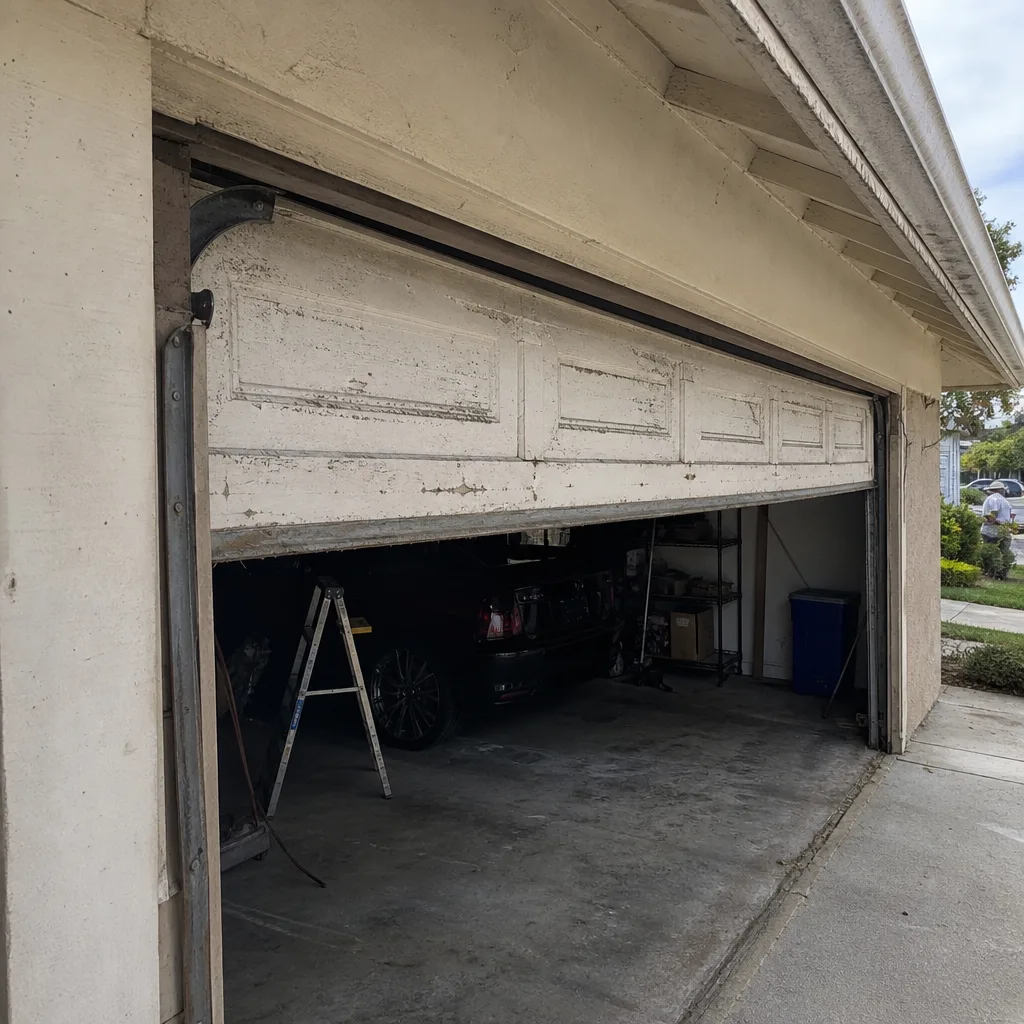 Before
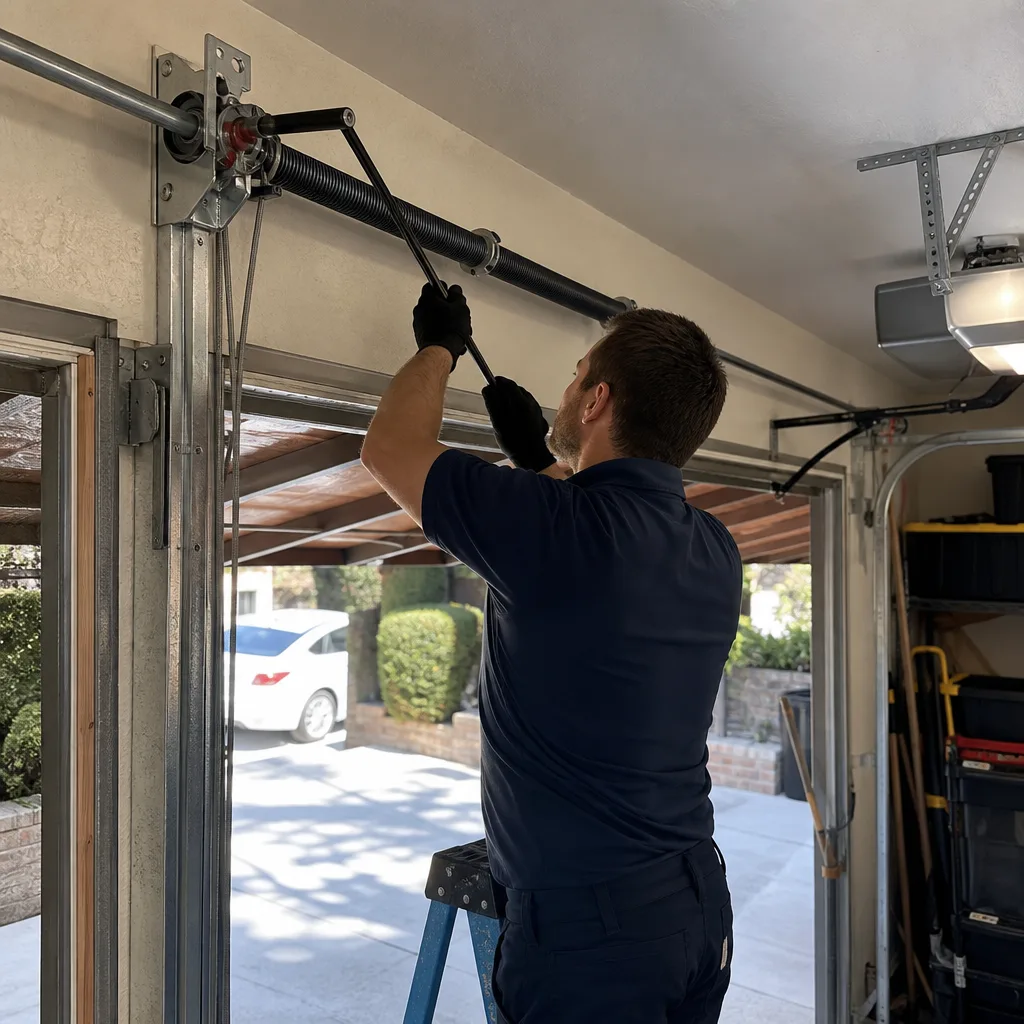 After
After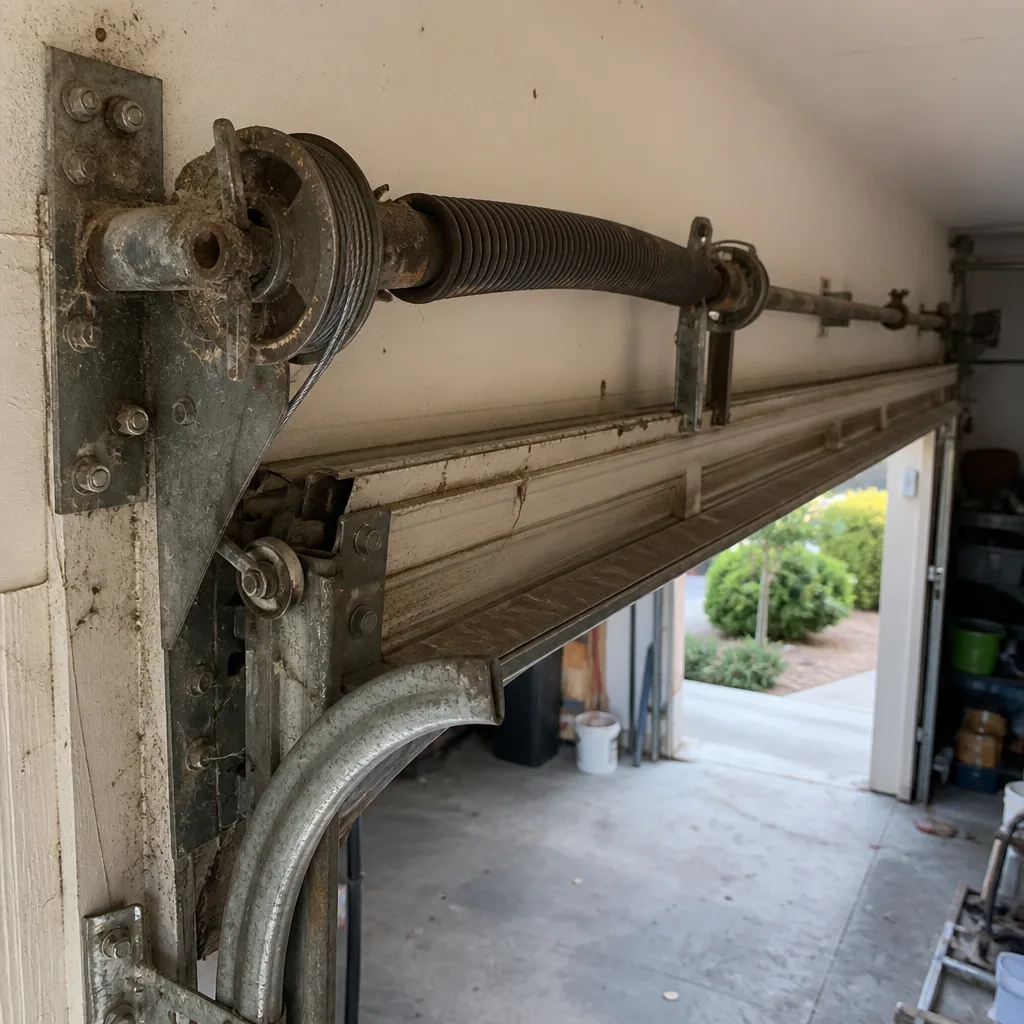 Before
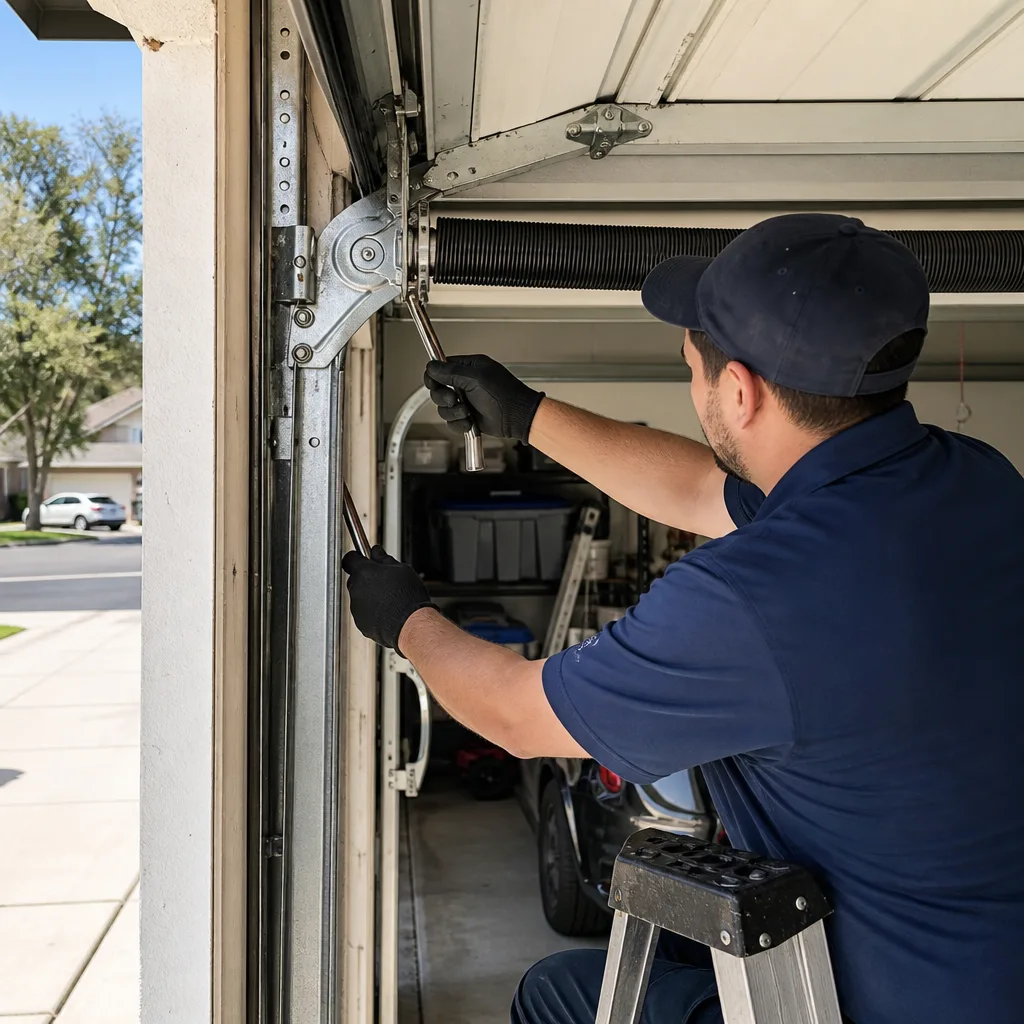 After
AfterDIY vs Professional Garage Door: The Thousand Oaks Homeowner’s Decision Guide
Most garage door guides are written by people who have never knelt on a Thousand Oaks driveway at 6 a.m. watching a homeowner try to figure out why their door is crooked. I’m Otto Reinhardt, and I’ve spent over two decades doing exactly that. Here’s what nobody tells you about the DIY versus professional question: it’s not a debate about skill. It’s a question about which jobs store enough energy to hurt you, which ones wreck your warranty, and which ones simply aren’t worth an afternoon of your life. This guide gives you the straight answer on all three, no fluff and no fear-mongering.
Use the links below to jump to the section that matches your situation, or browse our more guides & resources. And if you’d rather just talk it through with a human, call me at (805) 519-7431. I answer my own phone.
Quick Answer
For Thousand Oaks homeowners, some garage door work is genuinely DIY-friendly: lubricating moving parts, replacing a bottom weatherstrip, swapping keypad batteries, and reprogramming remotes. But torsion spring replacement, cable work, and bottom bracket jobs should always go to a professional, because those parts store enough tension to cause serious injury. When in doubt, a free estimate call answers the question faster than any YouTube video.
Table of Contents
- The DIY-Safe List: Four Jobs You Can Absolutely Do Yourself
- The Call-a-Pro List: What Actually Stores the Danger
- The Gray Zone: Panel Dents, Sensor Alignment, and Logic Boards
- California Liability and Insurance: What Homeowners in Thousand Oaks Should Know
- The YouTube Problem: Why the Right Repair with the Wrong Method Still Fails
- Brand-Specific Realities: Wayne Dalton, LiftMaster, and the Others
- Common Mistakes to Avoid
- When to Call a Professional
- Frequently Asked Questions
- The Bottom Line
The DIY-Safe List: Four Jobs You Can Absolutely Do Yourself
I grew up fixing things before I ever had a license. In Thousand Oaks, where half the houses were built between 1965 and 1990, the garage doors are older, the climate is dry, and the parts wear out in predictable ways. There are four jobs I genuinely encourage homeowners to do themselves. They take less than an hour, require tools you probably already own, and carry essentially zero risk when done with a little care.
- Lubricating hinges, rollers, and springs. In the Conejo Valley, our dry heat and occasional Santa Ana dust storms mean garage door moving parts get noisy faster than they do at the coast. Buy a can of white lithium grease or a silicone-based lubricant (not WD-40, which actually strips the lubricant off over time), and apply it to the hinge pins, roller stems, and along the torsion spring. Do this twice a year and you’ll extend the life of your door hardware by years. What you won’t do is push a finger into the spring while it’s moving. Keep hands on the can, not the spring.
- Replacing the bottom weatherstrip. This is the rubber strip along the bottom of the door that keeps leaves, dust, and the occasional lizard out. In Thousand Oaks, with our hot summers and cool winter mornings, this strip cracks and shrinks every four to six years. The replacement costs about $15 to $30 depending on your door brand, and the process is straightforward: loosen the old strip from the retainer channel, slide the new one in, trim to length. No springs, no cables, no danger.
- Swapping a dead keypad battery. The exterior keypad on a LiftMaster or Genie opener takes a standard 9-volt or AA battery. If your keypad has gone dead, pop the cover off, note the battery type, and replace it. Then reprogram the code if needed. This takes five minutes and there is nothing on a keypad that can hurt you.
- Reprogramming a remote. If your remote stopped working after a power outage or a diehard battery change, you can usually reprogram it by pressing the “Learn” button on the opener unit (that’s the square button on the back of the motor housing on most LiftMaster and Chamberlain models), then pressing the remote button within 30 seconds. Check your manual for specifics, but this is a job any patient homeowner can handle on a Saturday morning.
If any of these jobs turns out to be more than you expected, don’t force it. One call to Garage Door Opener in Thousand Oaks will sort it out, and I’ll tell you on the phone whether it’s something you can finish yourself or whether I should come look.
The Call-a-Pro List: What Actually Stores the Danger
Now we get to the part where I stop being the neighbor who encourages you to fix it yourself and start being the guy who’s seen what happens when someone underestimates a garage door. A door is 200 pounds riding on two springs. Respect it.
Torsion spring replacement
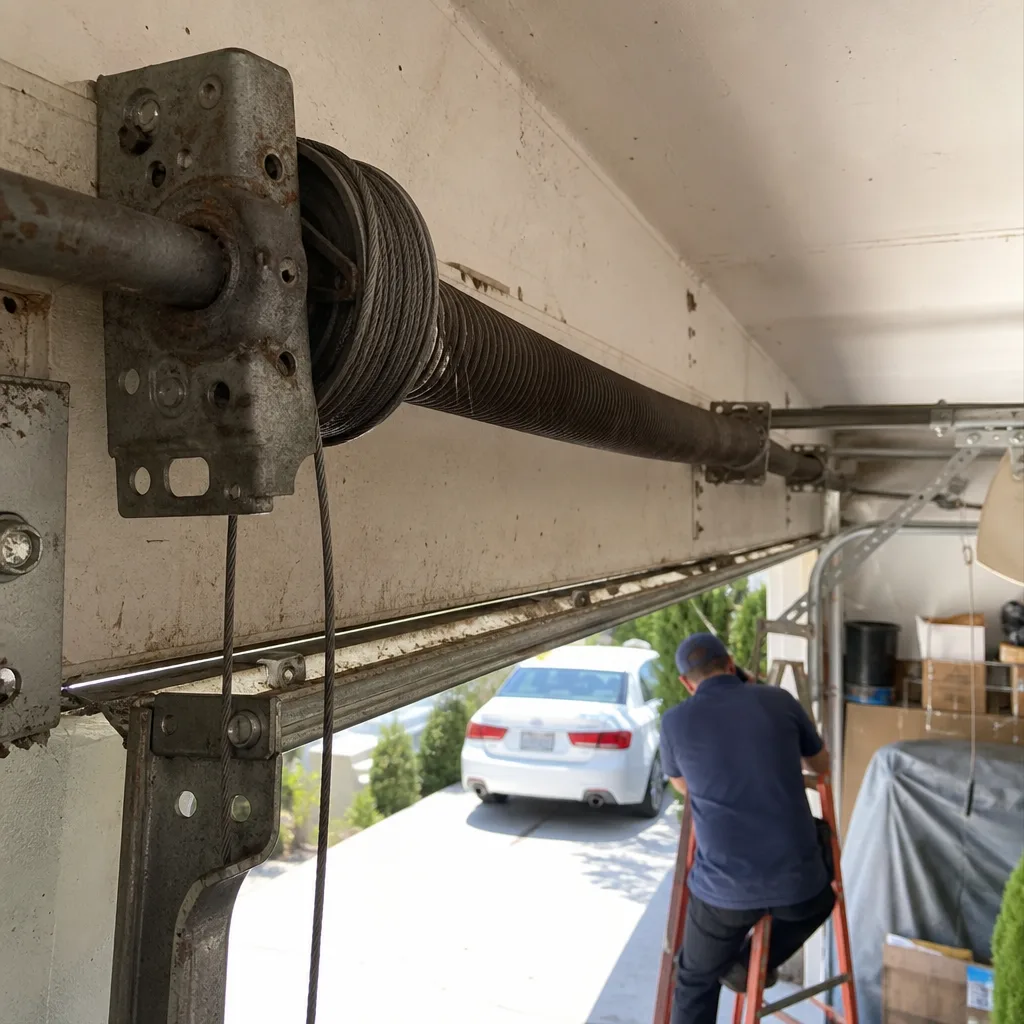
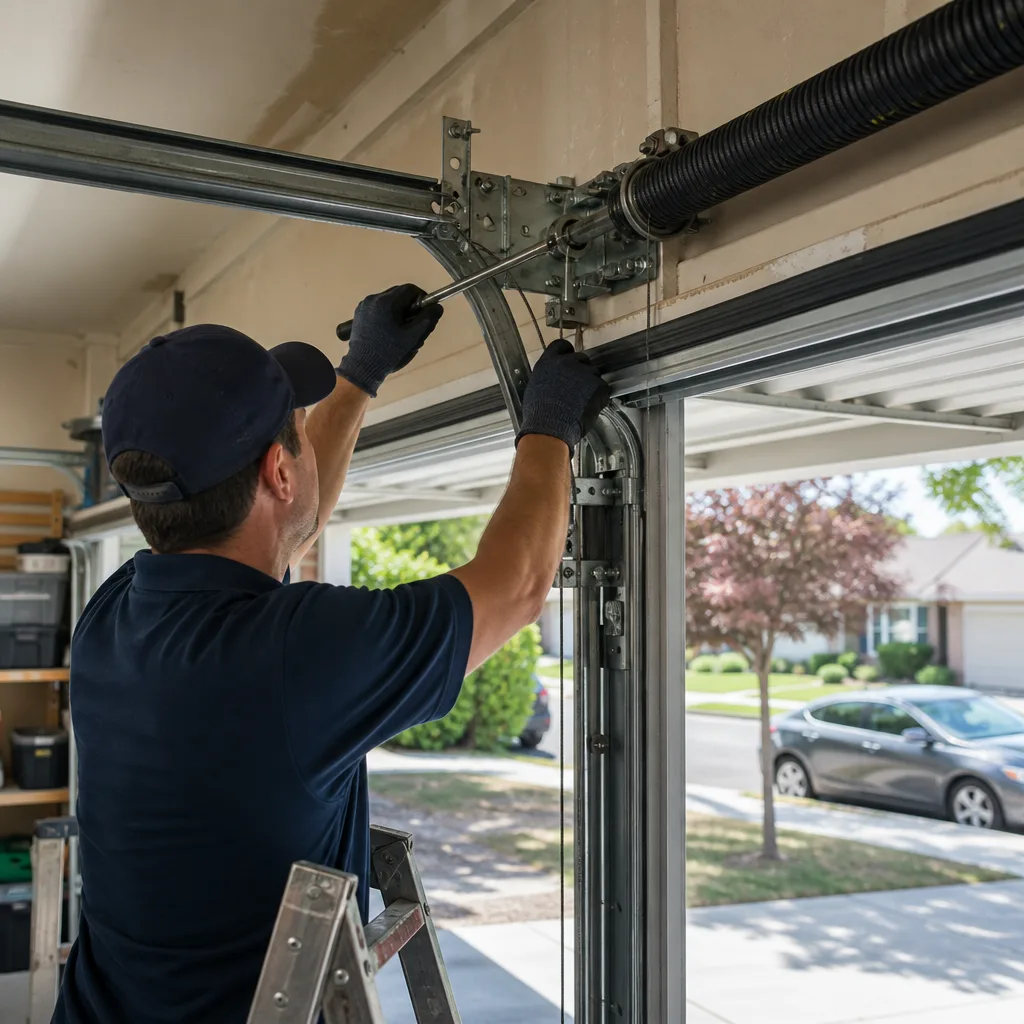
Let me be direct: this is the one job I will never walk a homeowner through over the phone, and I’ve talked grown men out of doing it more times than I can count. A torsion spring is the long coil mounted on a shaft above your door. When it’s wound, it stores energy equivalent to a loaded firearm. That’s not a metaphor. The spring is wound tight enough to lift a 200-pound door, which means if it slips while you’re winding it, the release of energy can shatter a forearm or put a winding bar through a wall. In our experience at Otto’s Garage Door, we’ve seen springs that broke and took out the drywall along the track. Imagine that happening near your face.
I count spring cycles the way you count tire miles. Standard torsion springs are rated for 10,000 cycles, which in a typical Thousand Oaks household translates to seven to ten years. When they break, the door often comes down hard, and the spring itself is still under partial tension. Replacing it requires winding bars, precise counting of turns, and a healthy respect for what you’re doing. This is not a gray zone. Call a professional.
Cable replacement
The cables on either side of a garage door run from the bottom brackets up to the spring system. They carry the door’s weight every time it opens. When a cable frays or snaps, the door can drop suddenly, and the remaining tension in the system can injure anyone underneath. Replacing cables means releasing and rewinding spring tension, which loops right back to the torsion spring warning above. If you see a frayed cable, leave the door alone and call someone.
Bottom bracket replacement
Bottom brackets are the metal plates bolted to the bottom corners of the door, anchoring the cables. They’re under continuous tension. I’ve seen homeowners unbolt a bottom bracket without releasing cable tension, and the cable whipped loose fast enough to lacerate a hand. On older Thousand Oaks doors, the bolts are often corroded from years of dry heat and occasional rain, which makes them harder to remove and more likely to snap. This is a professional job, full stop.
Spring-related or opener-motor replacement on doors over 10 years old
If your door is older and you’re hearing grinding from the opener, the problem is rarely the opener itself. If the opener is straining, the problem is almost never the opener. It’s usually a door that’s become harder to lift due to worn rollers, misalignment, or a failing spring. Replacing the motor without fixing the underlying resistance just burns out the new motor faster. A professional will diagnose the door before selling you a motor, and that’s the difference between a $90 repair and a $600 mistake.
For a deeper look at what goes into door-level repairs, see our Garage Door Repair in Thousand Oaks page.
The Gray Zone: Panel Dents, Sensor Alignment, and Logic Boards
Not every job is clearly safe or clearly dangerous. There are three I’d put in the gray zone, where your skill, patience, and tool collection determine whether you should attempt it or call someone.
Panel dent repair
In Thousand Oaks, panel dents usually come from two sources: a car that got too close, or a basketball game in the driveway. Most panel dents on steel doors can be hammered out from the inside with a rubber mallet and a block of wood, then touched up with matching paint if you still have the can from the original installation. If the dent has creased the metal or the panel is aluminum (common on older Craftsman and Raynor doors), you’re better off replacing the panel. A sloppy hammer job makes the dent more visible, not less. The threshold for calling me is simple: if you can run your hand over the dent and the crease feels sharp, it’s not a hammer job.
Opener sensor alignment
The safety sensors near the bottom of the door tracks are the little eyes that keep the door from closing on a child or a dog. If your door reverses immediately after touching the ground, or blinks without closing, the sensors are usually dirty, misaligned, or both. Clean the lenses with a soft cloth, then check that the small LED lights on each sensor are both solid (not blinking). If one is blinking, adjust the bracket gently until the beam lines up. This is a job most Thousand Oaks homeowners can handle in fifteen minutes, and it’s safe. No springs involved.
Opener logic board replacement
If your opener runs but won’t respond to remotes, or if it opens but won’t close, the logic board may be dead. On a LiftMaster opener under ten years old, a replacement board costs $80 to $150 and requires unplugging the opener, removing the cover, and swapping one circuit board. This is doable for a homeowner who is comfortable with a screwdriver and paying attention to wire connections. But if the opener is over fifteen years old, replacing the entire unit usually makes more sense than repairing a board that may fail again within a year. When you’re at that decision point, call and I’ll tell you honestly whether repair or replacement makes more sense for your specific model.
If the gray zone feels more gray than you’d like, our Garage Door Installation in Thousand Oaks page covers when it’s smarter to replace than repair.
California Liability and Insurance: What Homeowners in Thousand Oaks Should Know
Here’s the part most DIY garage door articles skip, and it matters more than most people think. In California, your homeowner’s insurance policy typically covers accidents that happen on your property. But what it covers is a separate question from what it will pay out for, and there’s a real gap when it comes to unlicensed work.
If you replace a torsion spring yourself and the spring fails, damaging your car or injuring a family member or a visitor, your insurance company will investigate. The first thing they’ll look at is whether the work was done by a licensed contractor or by the homeowner. If it was done by you, and they determine the failure was due to improper installation, they may deny the claim on the grounds that the damage resulted from unlicensed work. That’s not a hypothetical. That’s a conversation I’ve had with homeowners in Thousand Oaks more than once, always after the fact. The cost of a spring replacement from a licensed professional is almost always less than the deductible they were trying to avoid.
There’s also a permit question for larger work. In California, a new garage door installation doesn’t require a permit in most residential cases, but if structural changes are involved (like modifying the header or the opening), the city of Thousand Oaks may require one. That’s a conversation to have before the work starts, not after. The right professional will know the local code and will tell you straight if the job needs a permit.
Beyond the legal side, there’s the warranty question. Most garage door manufacturers, including Wayne Dalton and LiftMaster, void the warranty on a door or opener if it’s installed or repaired by someone other than a licensed professional. So if you spend a Saturday replacing a spring yourself and the door later fails, you may have no warranty recourse. That’s worth knowing before you start.
The YouTube Problem: Why the Right Repair with the Wrong Method Still Fails
I have no beef with YouTube. I’ve learned things from it myself. But the danger with garage door tutorials is that they show a method for a specific door setup, and too many Thousand Oaks homeowners assume their door is the same. It often isn’t.
Here’s what to check before you follow any tutorial:
- Spring size and type. Torsion springs are not universal. A spring rated for a single-car door with a 90-pound panel will not work on a double-car door with an insulated 180-pound panel. The tutorial may show a spring of a certain diameter and wire gauge that doesn’t match yours. Winding that spring is a recipe for disaster.
- Door weight. A hollow-core aluminum door from the 1990s weighs dramatically less than a modern insulated steel door. The number of winding turns on the spring is determined by door weight and drum size. Follow the tutorial’s turn count on the wrong door and you’ll either under-wind or over-wind the spring. Both are dangerous.
- Header clearance. Some Thousand Oaks garages have low headroom or obstructions above the door, especially on older hillside homes. That changes how the spring and cable system is configured. The tutorial’s method may not even apply to your geometry.
- Track style. Standard lift, high lift, and vertical lift tracks all behave differently. A tutorial filmed on a standard-lift door will not transfer to a high-lift setup.
The wrong method on the right repair is still the wrong repair. If you can’t verify that the tutorial’s door matches your door in weight, spring size, and track style, the smart move is to call someone who works with your specific door configuration every week.
And if you’re dealing with a brand like Wayne Dalton, which uses a proprietary spring system on many of its doors, the odds of a generic tutorial matching your setup drop sharply. More on that below.
Brand-Specific Realities: Wayne Dalton, LiftMaster, and the Others
Not all garage door brands are created equal when it comes to DIY work. Some make it easier, some make it nearly impossible, and knowing your brand changes the decision.
Wayne Dalton
Wayne Dalton doors are common in Thousand Oaks, especially in homes built in the late 1990s and 2000s. They use a proprietary TorqueMaster spring system on many models, which is a tube-style spring that sits inside a shaft above the door rather than the traditional visible torsion spring. The catch is that TorqueMaster springs use proprietary winding components and are not serviceable with the standard winding bars you’ll see in most tutorials. If you have a Wayne Dalton door and the spring fails, the honest answer is this: I replace entire TorqueMaster spring assemblies as a unit, and so should you. Attempting to rebuild one without the right components will not end well.
LiftMaster
LiftMaster is the workhorse of Thousand Oaks garage door openers. Their openers are generally reliable, and the brand is relatively DIY-friendly when it comes to remotes, keypads, and even logic board swaps. But their newer models include MyQ connectivity and encrypted signal protocols that make programming more finicky than older units. If you’re replacing a remote on a LiftMaster opener less than five years old, use the exact remote model the opener manual specifies. Universal remotes often fail to program cleanly.
Craftsman, Raynor, and the rest
Older Craftsman openers are common in Thousand Oaks because Sears was the default choice for decades. Their logic boards and sensors are replaceable, but the motors are often noisier than modern units, which leads homeowners to think the opener is failing when it’s actually just loud. Raynor doors use a standard torsion spring system like most of the industry, so the spring geometry is more consistent across models, but the weight and lift style still matter. There is no brand where you can safely skip the verification step.
Our team works with all these brands, and we carry parts for most of them, so if you’re looking for something specific, call me and I’ll tell you honestly whether it’s something I can patch up for you or whether you need the original manufacturer part. No guesswork, no rerouted calls.
Common Mistakes to Avoid
- Ignoring the spring when the opener starts struggling. If the opener is straining, the problem is almost never the opener. The door is likely out of balance because the spring has lost tension or broken. Replacing the opener motor won’t fix the underlying problem and will cost you hundreds more than a spring service.
- Using WD-40 on garage door moving parts. WD-40 is a penetrant and a moisture displacer, not a lubricant for high-cycle hardware. It can strip away the grease that keeps your rollers and hinges running smoothly. Use white lithium grease or a silicone-based spray.
- Attempting a spring replacement with pipe wrenches instead of proper winding bars. This is one I’ve seen too many times in Thousand Oaks. Winding bars are designed to fit securely in the spring cone. Pipe wrenches slip. A slipped wrench on a wound spring is a trip to the ER.
- Unbolting the bottom bracket without releasing cable tension. The cable is under full door weight. The moment the bracket bolts come loose, the cable whips loose and the door can drop. This happens fast, and it doesn’t care how handy you are.
- Assuming all remotes program the same way. LiftMaster, Chamberlain, Genie, and Craftsman each have their own programming sequences. Grabbing a universal remote from the hardware store and hoping it syncs will waste an afternoon and probably not work.
- Judging a door repair estimate only by the quoted price. The cheapest quote in Thousand Oaks is often a national chain that will send a subcontracted tech who finds “additional work” once the door is open. Upfront pricing that does not change between the phone and the driveway is the only kind worth accepting.
- Letting a small problem ride because the door still opens. A frayed cable or a noisy spring doesn’t fix itself, and it tends to fail at the worst moment, like a Sunday night when your car is sealed inside and your kids have school the next morning. Catching it on a weekday saves you stress and often money.
When to Call a Professional
Call a professional when the job touches a spring, a cable, a bottom bracket, or any component under tension. Call when the door won’t lift or drops hard, when you hear a loud bang from the garage, or when a frayed cable is visible. Call when your opener is over fifteen years old and needs major component replacement, because that’s often when a new unit is the better investment. And call when you’ve already started a repair and something doesn’t feel right. There is no shame in stopping halfway through and handing the job to someone who does it every day, because that’s exactly what I would do with any job outside my trade.
Otto’s Garage Door offers free estimates in Thousand Oaks. Call (805) 519-7431 and talk to a live person. We’ll tell you straight what the job requires and what it costs before any work begins.
Frequently Asked Questions
Most garage door repairs in Thousand Oaks run between $90 and $340 depending on the part and the labor involved-see our Garage Door Cost Breakdown: The Thousand Oaks Homeowner’s Reference for 2026 for full details. A basic service call for a misaligned sensor or a noisy door is typically $90 to $150. A torsion spring replacement is usually $180 to $340 depending on whether you have one spring or two and the spring’s cycle rating. Cable replacements run $120 to $220. Call (805) 519-7431 for a specific quote on your door. Estimates are free, and the price is locked before any work starts.
For repair and emergency work, yes, we offer same-day service in Thousand Oaks and the surrounding county. A live person answers the phone 24/7, and I’ll quote the job on the call and hold that number when I arrive. For installation and replacement work, we schedule a free measurement and provide a written price, since new doors are ordered and built to the opening.
No. When we quote a price on the phone, that’s the price. Upfront pricing that does not change between the phone and the driveway is a line in the sand with us, because the name on the van is the name on the invoice, and I will see you at the hardware store on Saturday. The 90-Day Done Right Promise is written on every invoice: if it’s not done right, we make it right, and one call brings me back, not a customer-service queue.
We carry the most common replacement parts for LiftMaster, Chamberlain, Genie, Clopay, Amarr, Wayne Dalton, Craftsman, and Raynor on the truck, including springs, cables, rollers, hinges, sensors, and remotes. If your part is an oddball that we don’t stock, I’ll tell you honestly and get it ordered. There is no charge just to come look, inside the county.
Not necessarily, but noise is usually the first symptom of something that will become dangerous if ignored. Squeaking often means dry rollers and hinges, which is a simple lubrication job. Grinding or popping often means the spring is failing or the opener is working against resistance. If the noise changes suddenly or gets worse, call a professional, because the next stage is often a component failure that drops the door.
Yes, if the panel is a cosmetic dent and you have the original paint or the door is a standard steel model where panels are still available. But panel replacement requires aligning the new panel with the existing track and hinges, and a misaligned panel can bind the door and strain the opener. If you’re comfortable with that, go ahead. If not, call (805) 519-7431 for a free estimate. We’ll tell you straight whether it’s worth repairing or whether a new door makes more sense.
The Bottom Line
Garage door work is not uniformly dangerous and not uniformly safe. It splits cleanly: lubrication, weatherstrips, keypad batteries, and remote programming are fair game for any Thousand Oaks homeowner with a little patience. Spring replacement, cable work, and bottom bracket jobs are not, because those parts store enough energy to hurt you or worse. The gray zone in between depends on your comfort level and your door’s specific setup. The smartest move is to verify your door’s details before following any tutorial, and to know your warranty and insurance exposure before you start-our Garage Door Repair Maintenance Checklist for Thousand Oaks Homeowners can help. If the job touches a spring or a cable, call a professional. If you’re not sure, call and ask. The call is free, and I’d rather help you avoid a mistake than clean one up afterward.
Written by Otto Reinhardt, Owner at Otto’s Garage Door, serving Thousand Oaks since 2004.
For more on what we do and how we can help, start at the Otto’s Garage Door home page or call (805) 519-7431. A live person answers, and the quote you get on the phone is the price you’ll pay at the door.