
Last updated September 10, 2026
Full 25-point door and opener safety check with every visit - springs, cables, rollers, tracks, and your LiftMaster or Chamberlain opener included
You get a price before we start. It does not change when the truck arrives.
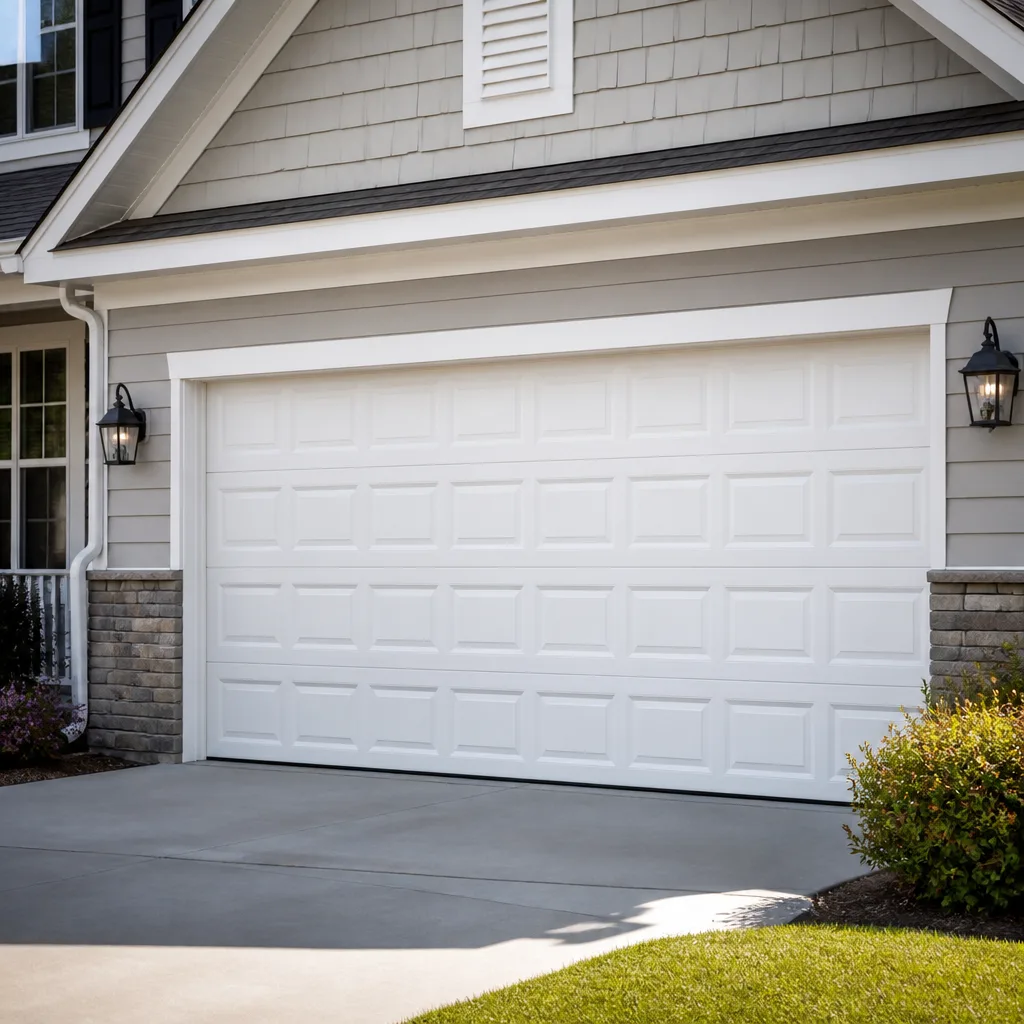
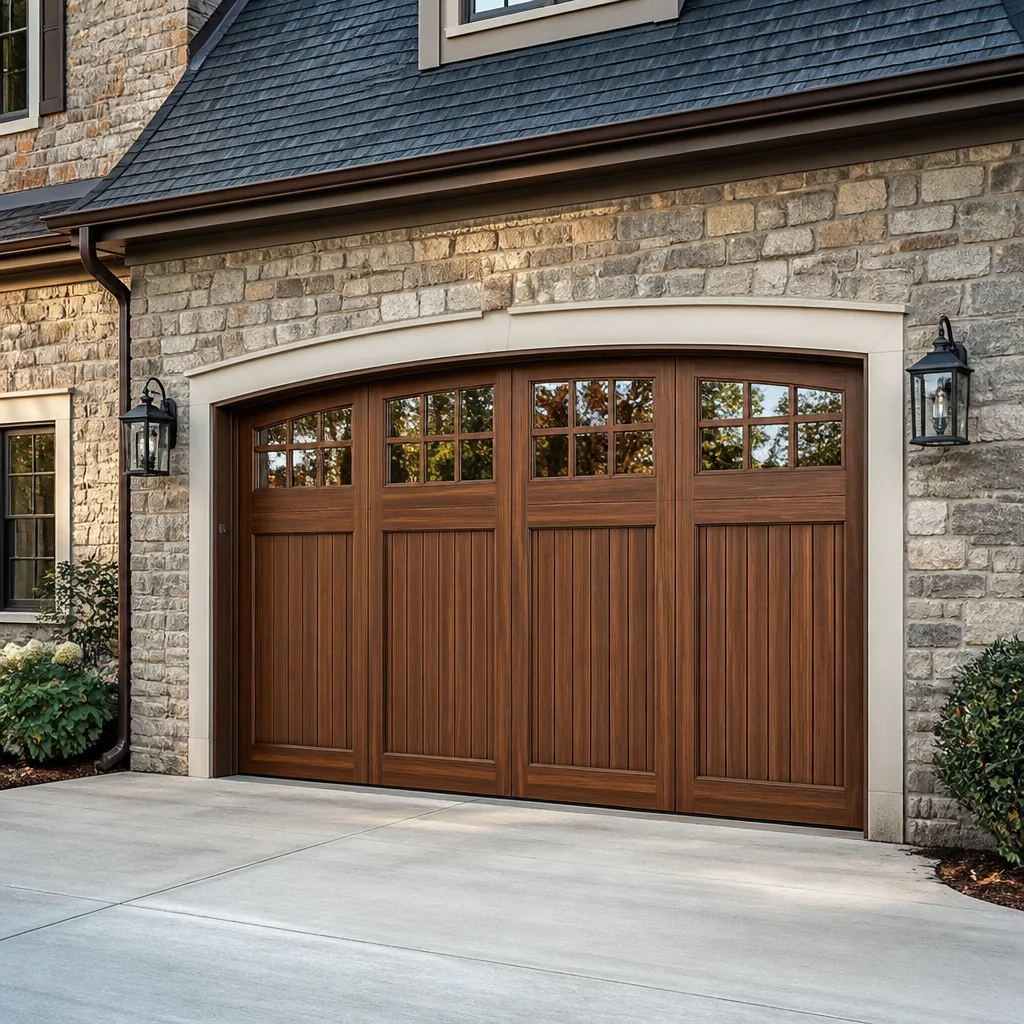
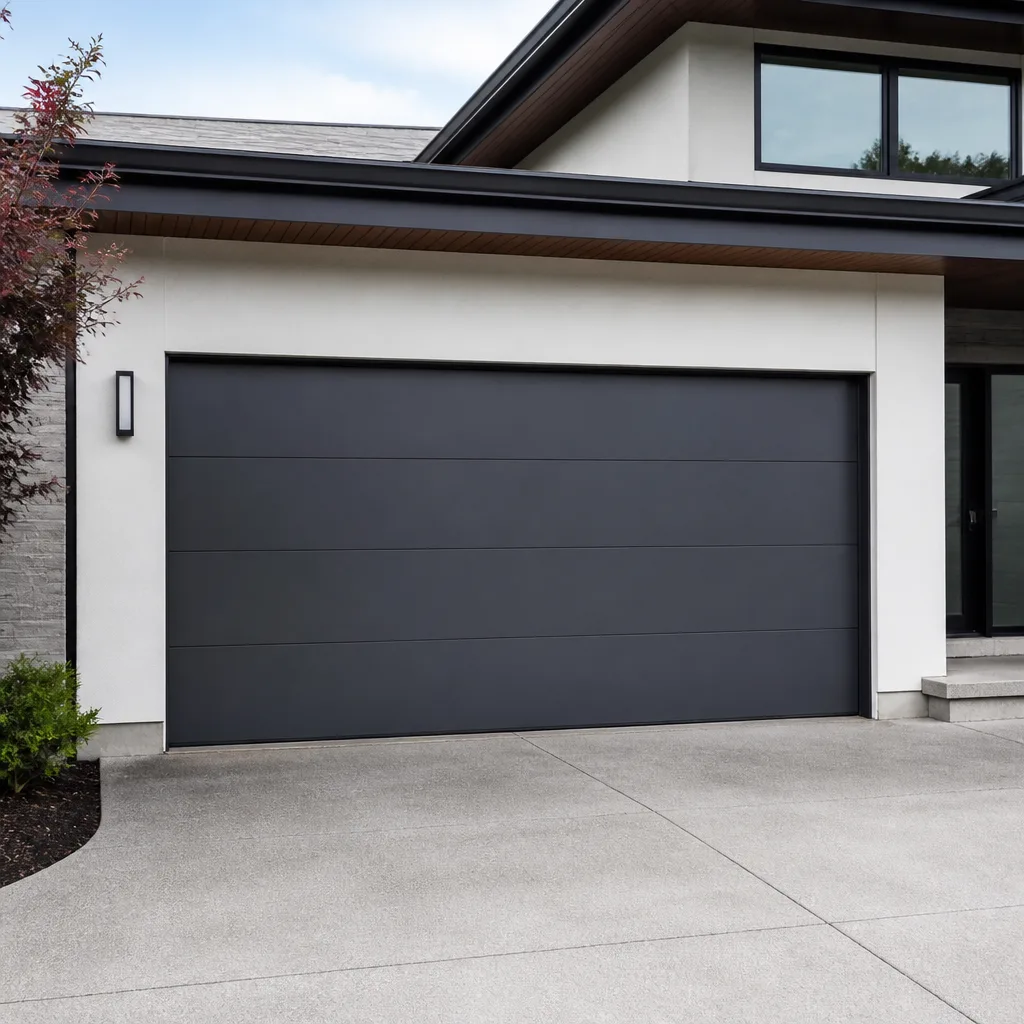
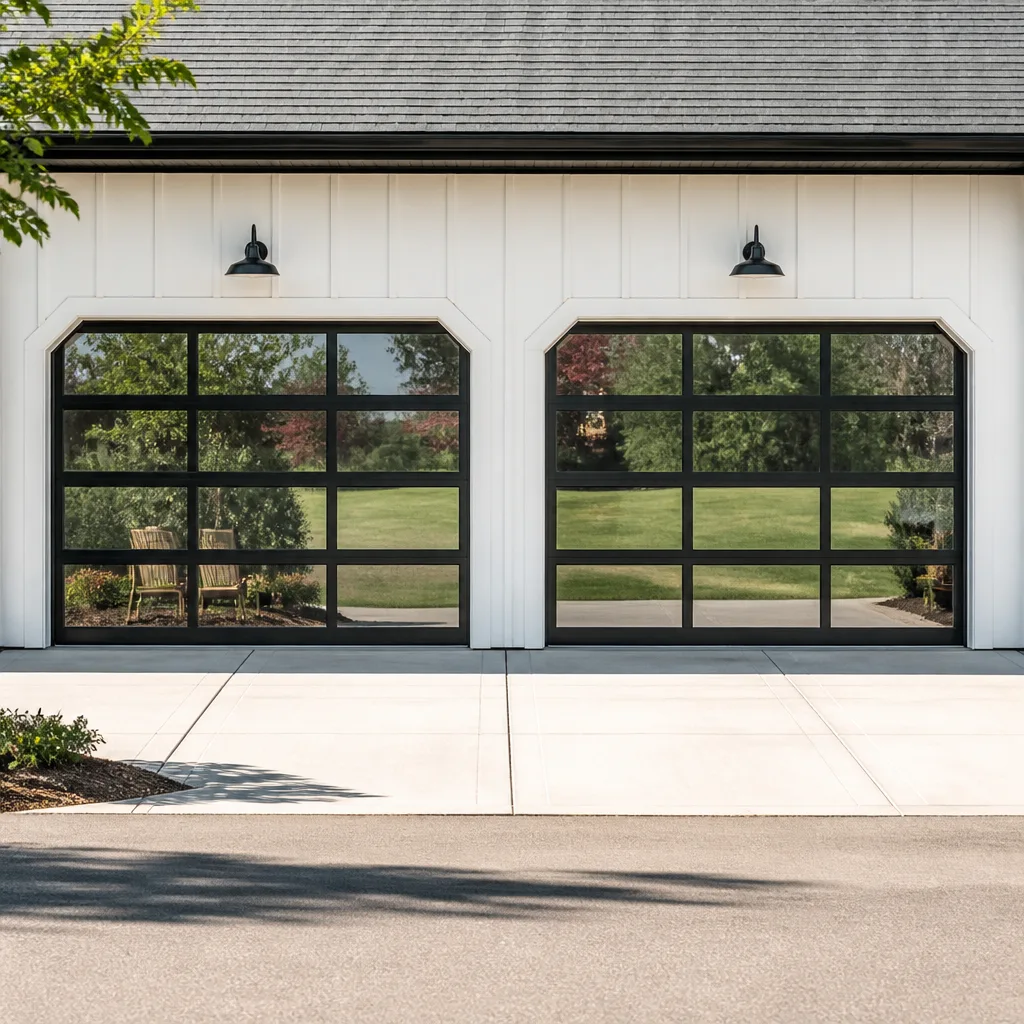
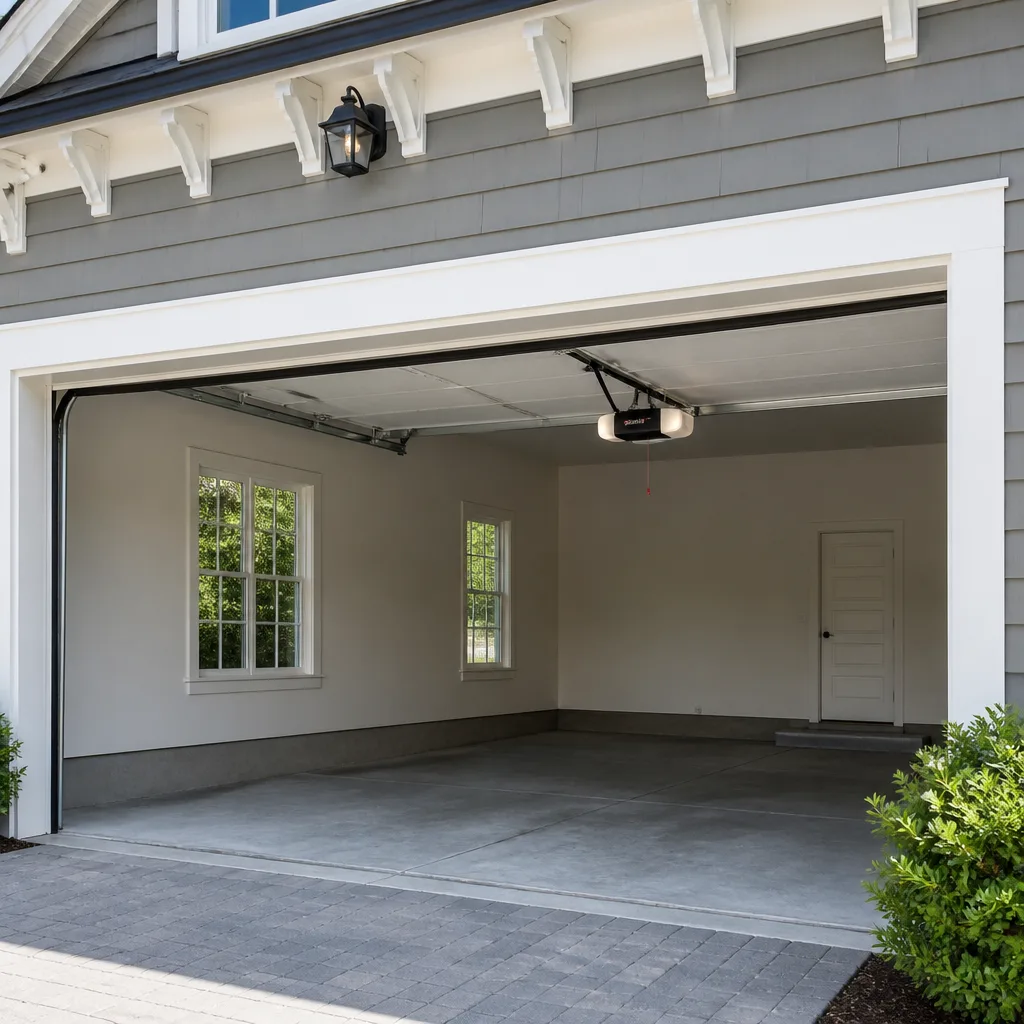
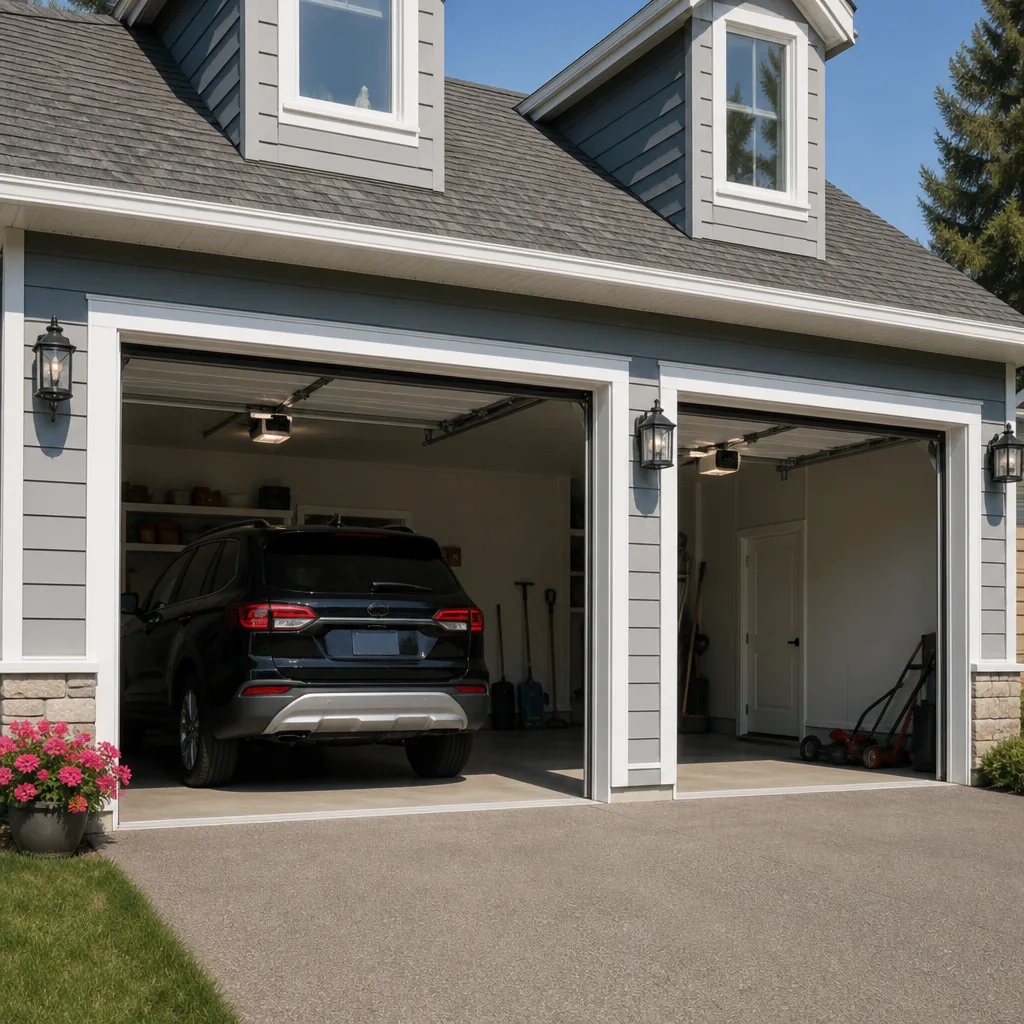
 Before
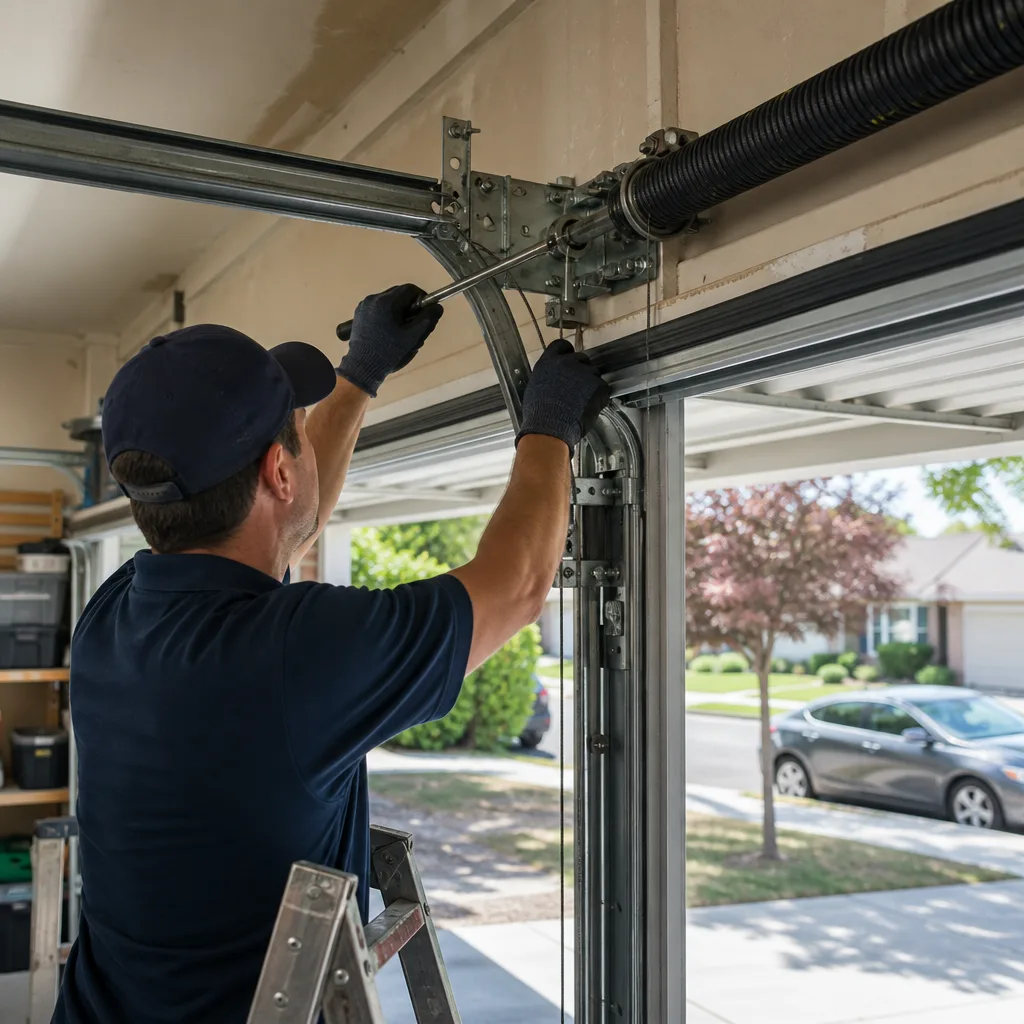 After
After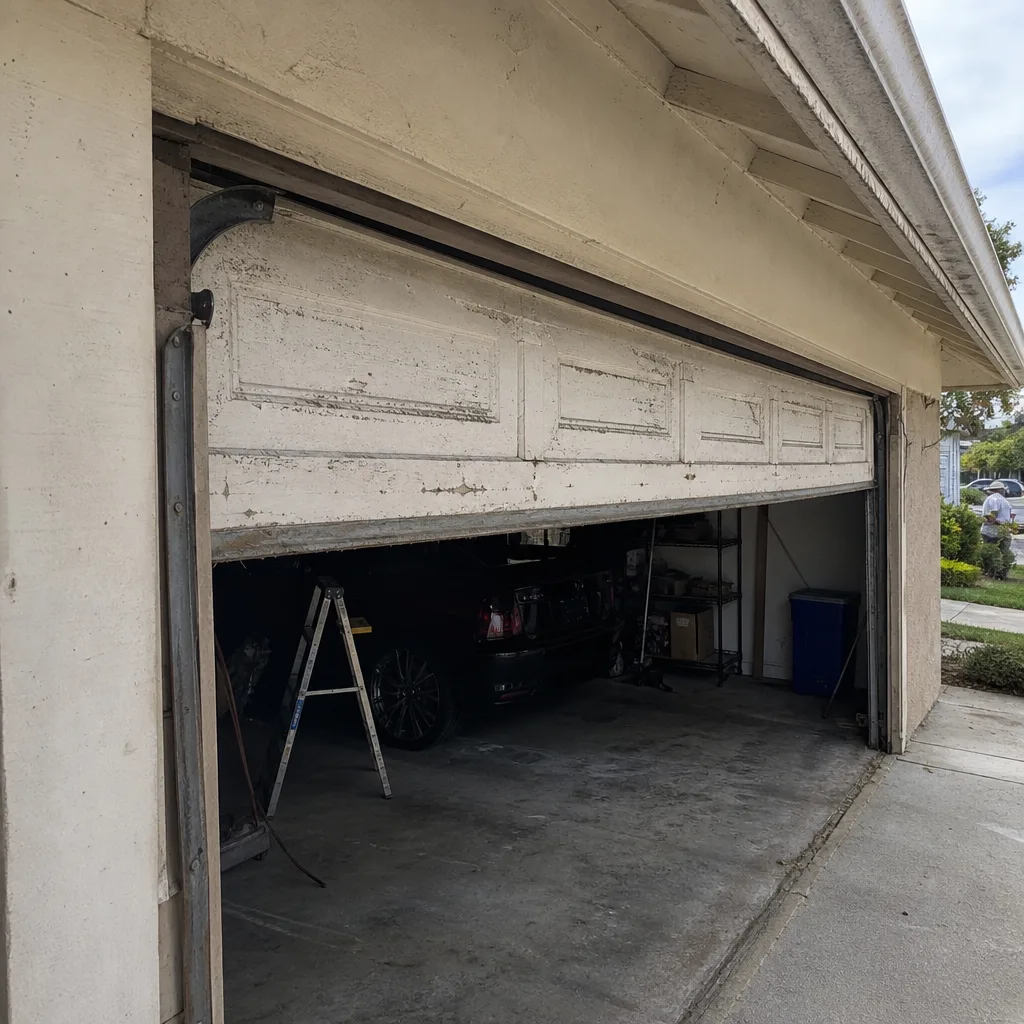 Before
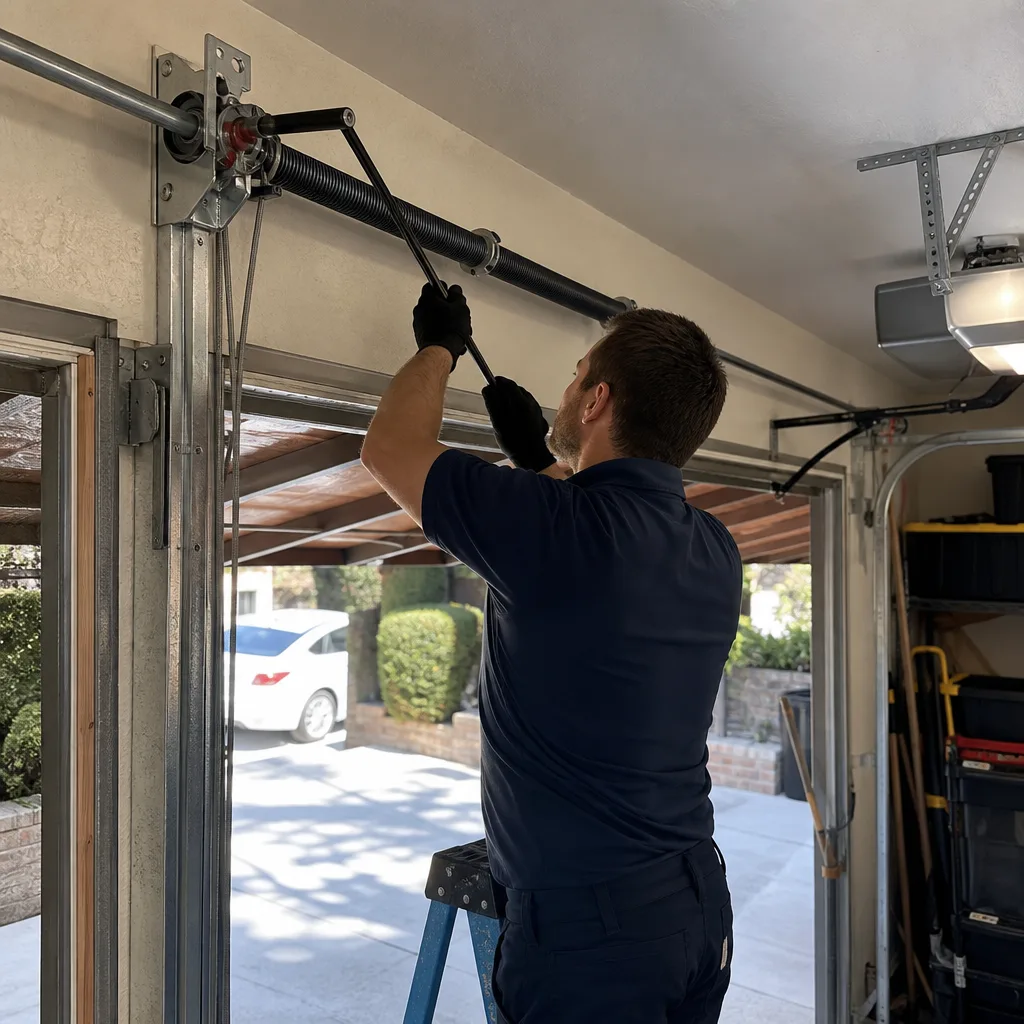 After
After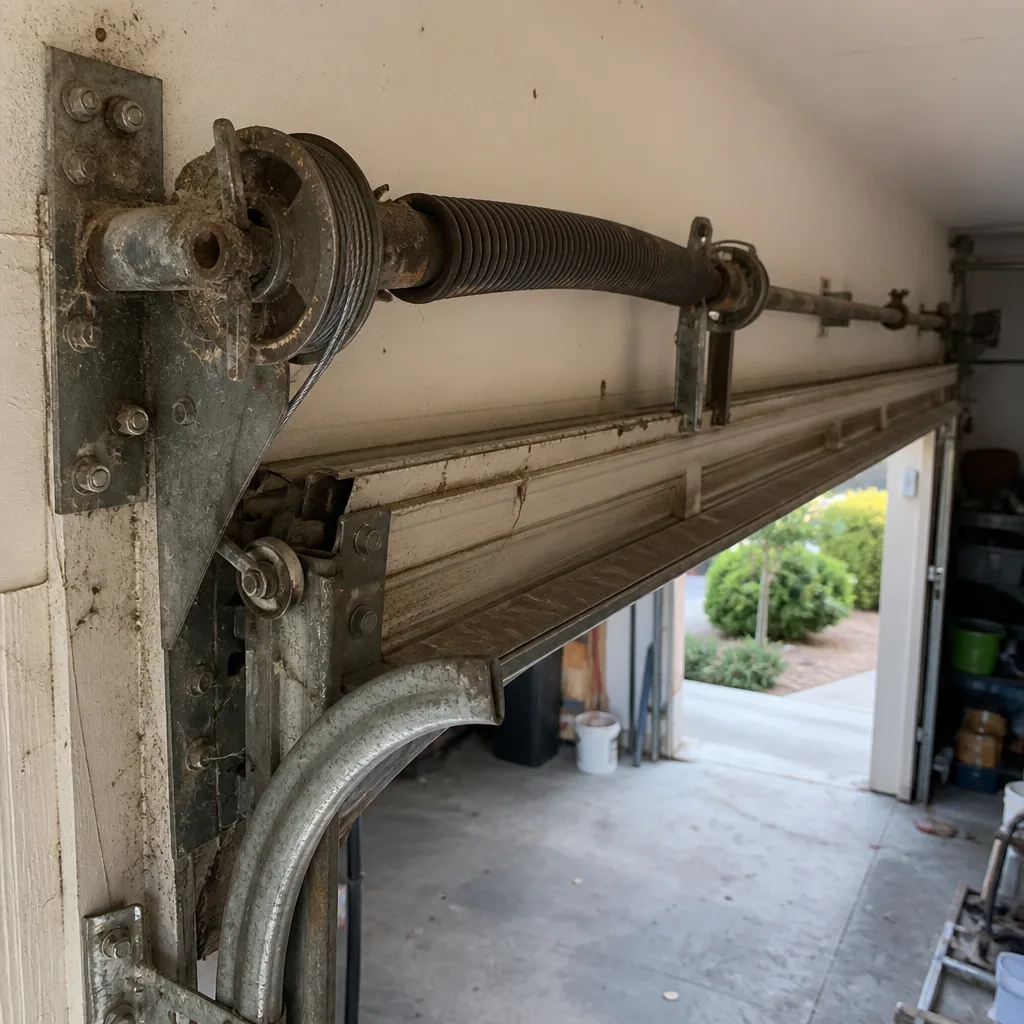 Before
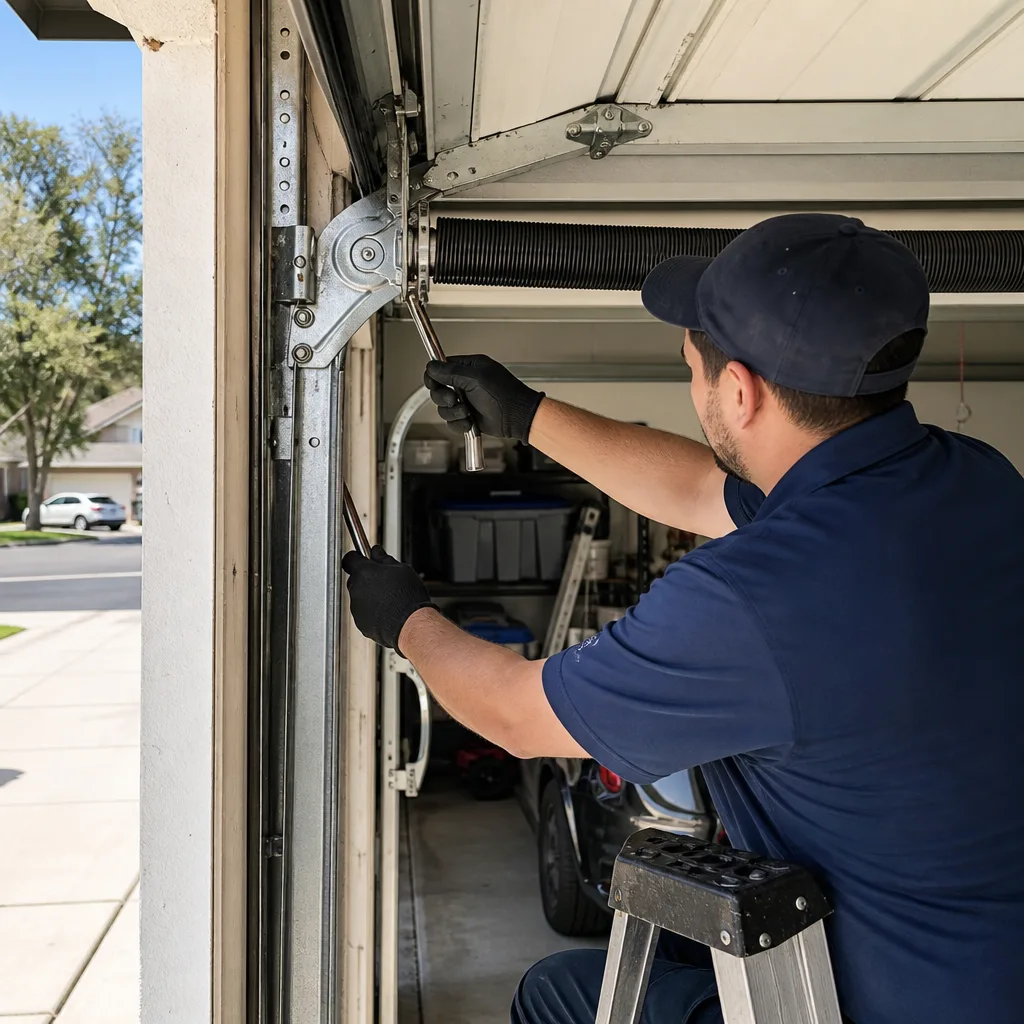 After
AfterThe Complete Guide to Garage Door in Thousand Oaks
Your garage door moves more times per year than your front door, back door, and every window in your house combined. It’s also the single largest moving object in your home - often 200 pounds or more riding on two springs that are quietly counting down their cycle limit. Most Thousand Oaks homeowners never think about it until 7 a.m. on a school day, when the door refuses to open and the car is trapped inside. This guide changes that. You’ll learn how your door actually works, what Thousand Oaks’ climate does to it, what repairs should cost, and when replacement makes more sense than another patch job. For DIY vs Professional Garage Door: The Thousand Oaks Homeowner’s Decision Guide and more, keep reading.
Quick Answer
A garage door in Thousand Oaks is a mechanical system - springs, cables, rollers, tracks, and an opener - that needs inspection roughly twice a year and spring replacement every 7 to 10 years, depending on use. The biggest local factors are marine-layer humidity, Santa Ana wind-blown grit, and homes built in the 1980s and 90s with doors that predate current California energy and safety codes. If your door is over 15 years old, making noise, or not sealing tightly, the most cost-effective fix is usually a spring-and-cable tune-up (around $180 to $340) rather than a full replacement - but only if the door panels and tracks are still structurally sound.
Table of Contents
- How Your Garage Door Actually Works
- What Thousand Oaks Climate Does to Your Door
- Signs Your Door Needs Attention (and What They Mean)
- Cost to Repair vs. Replace in Thousand Oaks
- Pre-Purchase Garage Door Walkthrough
- Energy Efficiency and Your Garage Door
- Garage Door Opener Guide
- Common Mistakes to Avoid
- When to Call a Professional
- Frequently Asked Questions
How Your Garage Door Actually Works
Here’s what most people don’t realize: your garage door opener is not what lifts the door. The springs do the lifting. The opener just guides the door along the track and keeps it from flying up or slamming down. That’s why a broken spring means a door that won’t budge, even if the opener motor runs perfectly.
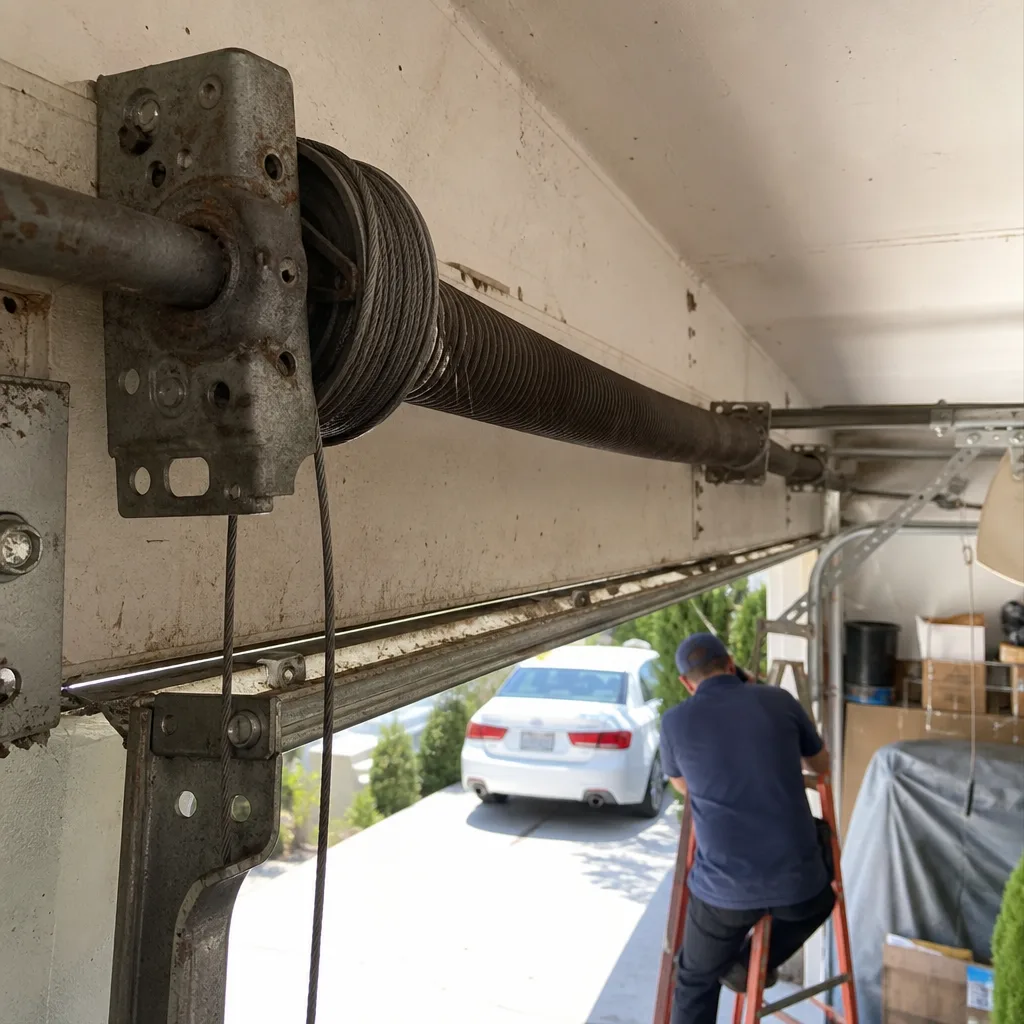
There are two spring systems. Torsion springs sit on a shaft above the door and store mechanical energy when the door closes. Extension springs run alongside the horizontal tracks and stretch as the door lowers. Most doors in Thousand Oaks built after 1995 use torsion springs, while older tract homes in Oak Park and Lynn Ranch often still have extension spring setups from the original build.
The other components that matter:
- Steel cables - These work with the springs to balance the door. A frayed cable under tension is a loaded weapon. Do not touch it.
- Rollers - Nylon rollers run quieter and last longer than steel. Worn rollers stress the opener motor and the hinges.
- Hinges - The connectors between panels. A seized hinge twists the panel and can crack it at the corner.
- Tracks - The rails the door rides on. Out-of-alignment tracks cause the door to bind or jump.
- Bottom seal - The rubber strip at the door’s base that keeps water, bugs, and rodents out.
- Opener - The motor and logic board that automate the process, along with safety sensors and a remote or keypad.
When a door is properly balanced, you should be able to lift it manually with one hand. If it feels heavy, the springs are losing tension or failing. That’s the single most important test you can do. More on that below.
What Thousand Oaks Climate Does to Your Door
Thousand Oaks sits in a specific weather band. Mornings bring marine layer humidity pushing in from the coast through the Conejo Valley. Afternoons, especially in fall, can turn dry and hot when Santa Ana winds howl down from the passes. That daily moisture-to-dryness swing does things to a garage door that generic national maintenance guides never cover.
First, the humidity. Those marine-layer mornings leave condensation on exposed metal - especially on the torsion spring shaft, cable drums, and bottom brackets. Over years, that causes surface rust. A spring with surface rust isn’t necessarily unsafe, but rust points are weak points. We’ve replaced springs in Thousand Oaks that snapped right where a rust ring had formed, even though the spring was only six years old.
Second, the Santa Ana winds. They don’t just dry out your landscaping. They kick up fine grit and dust that settles into the door tracks and rollers. That grit acts like sandpaper. It accelerates roller wear, makes the door noisier, and can score the track surface over time. Doors in neighborhoods near open hillsides - think Lang Ranch or Newbury Park edges - collect more of it than doors in interior subdivisions.
Third, the sun. UV exposure on a west-facing or south-facing garage door in Thousand Oaks fades paint, warps lightweight panels, and degrades weatherstripping faster than on a door that faces east or sits under a shaded lot. We see this all the time in Dos Vientos, where afternoon sun beats directly on garage facades.
What this means practically:
- Lube your moving parts twice a year with a garage door-specific lubricant - not WD-40, which is a cleaner and evaporates.
- Wipe down exposed spring shafts and cable drums with a dry cloth after humid mornings if you notice moisture buildup.
- Clear grit from the lower track sections every few months, especially after Santa Ana wind events.
- Check the bottom seal for cracking and gaps at least once a year. A worn seal lets in fine dust, water, and mice.
Signs Your Door Needs Attention (and What They Mean)
A garage door that’s about to fail rarely gives you no warning. It gives you warnings you haven’t learned to read yet. Here’s what your door is telling you.
1. The door is noisy
A squeaking or grinding noise means dry rollers, a dry chain, or loose hardware. A banging or popping noise is more serious - it can mean a torsion spring binding, a roller coming off the track, or cable drums slipping. Noise is never normal. A well-maintained door should be quiet enough that you can hear the opener motor without that metallic grinding behind it.
2. The door opens unevenly or hesitates
If one side rises faster than the other, your cables are unbalanced or a spring is weakening. This puts uneven load on the entire system. Left unchecked, it will warp the panels and eventually snap a cable. The fix is a spring adjustment or replacement - not something you should attempt yourself. Torsion springs under tension store enormous energy.
3. The door feels heavy when you lift it manually
Pull the red release cord when the door is down. Lift the door halfway. It should stay put with almost no effort. If it drops, the springs are shot. If it lifts on its own, the springs are over-wound. Both are problems.
4. The opener motor runs but the door doesn’t move
This is almost always a broken spring, a stripped gear inside the opener, or a disconnected trolley. Check for a broken spring first - look for a visible gap in the coil above the door. If the spring is intact, the opener gear may be stripped. LiftMaster and Chamberlain openers from the mid-2000s are notorious for this in Thousand Oaks homes of that era.
5. Visible wear on cables, drums, or bottom brackets
These are the parts under the highest tension. Frayed cable strands, a drum with deep grooves, or a bottom bracket pulling loose are all signs the door needs professional attention immediately. These are not cosmetic issues. A snapped cable can whip across the garage and a door that comes off its track can fall.
Cost to Repair vs. Replace in Thousand Oaks
Here’s the honest math on what you’ll pay and when each option makes sense. These are the numbers we see in Thousand Oaks as of 2025. See our Garage Door Cost Breakdown: The Thousand Oaks Homeowner’s Reference for 2026 for deeper detail.
Repair costs
- Spring replacement (pair) - $180 to $340. This is the most common repair. Installers use springs rated for a specific cycle count. Standard springs are rated for about 10,000 cycles, which equals roughly 7 to 10 years of normal use. High-cycle springs last longer and cost slightly more.
- Cable replacement - $120 to $250. Usually done with springs, since one failure often means the other is close behind.
- Roller replacement (set) - $80 to $180. Nylon rollers with sealed bearings run quieter and last longer than the original steel ones.
- Track realignment - $100 to $250 depending on the severity of the misalignment and whether hardware needs replacing.
- Opener repair - $100 to $350 for a gear, logic board, or sensor issue. Full opener replacement with a new LiftMaster or Genie unit typically runs $400 to $800 including labor.
Replacement costs
A new garage door in Thousand Oaks, installed, runs from $1,500 to $4,500. The spread depends on the door’s material, insulation value, size, and hardware. A basic single-car steel door starts near the low end. A double-car insulated door with carriage-house styling, told by a Clopay or Amarr dealer, lands near the high end or beyond.
When repair makes more sense: The panels are straight, the tracks are aligned, the door is under 15 years old, and the issue is isolated to springs, cables, or rollers. That’s a $180 to $500 fix that keeps your door running for years.
When replacement makes more sense: The panels are dented or rusted through, the tracks are bent, the door is over 20 years old with failing insulation, or you’re missing the safety features required by current code. Spending $400 on a door that’s near the end of its service life is false economy.
See our detailed breakdown on Garage Door Repair in Thousand Oaks and Garage Door Installation in Thousand Oaks for more specific numbers.
Pre-Purchase Garage Door Walkthrough
If you’re buying a home in Thousand Oaks - and much of the local inventory in Oak Park, Lynn Ranch, and Conejo Oaks was built between 1975 and 2005 - you need to look at the garage door before you sign. Here’s the walkthrough I use on every estimate, and it works just as well for a buyer.
- Check the spring type. Torsion springs above the door are the modern standard. If you see extension springs on the sides, the door predates the mid-1990s and likely has thinner panels and less insulation.
- Look for rust on the spring shaft, cable drums, and bottom brackets. Surface rust is common in Thousand Oaks. Deep pitting is a sign that cables and springs are close to failure.
- Lift the door manually. Pull the release cord and lift. A healthy door feels balanced - not heavy, not spring-loaded. If it slams to the ground, budget $250 to $400 for spring and cable work on day one.
- Run the opener with the door down. Listen for grinding or straining. A struggling opener tells you the door is out of balance, the opener is undersized, or both.
- Inspect the bottom seal. Cracks and gaps mean cold air, dust, and rodents. In Thousand Oaks, where mornings are damp, a failed seal also accelerates rust on the door’s interior bottom edge.
- Check for panel damage. Dents are cosmetic. Cracks at the hinge points are structural. A cracked panel usually means a full section replacement, which is often not cost-effective on an old door.
- Look for a manufacturer date sticker. Many doors have a date code on the inside edge of a panel or on the opener rail. If the door is older than 20 years, plan for replacement within your first few years of ownership.
Walk through these seven points and you’ll know more about the garage door than 90% of buyers who skip it. It’s the largest moving part of the house, and it’s rarely mentioned in a standard home inspection report beyond a single line.
Energy Efficiency and Your Garage Door
Your garage door is a giant hole in your house’s thermal envelope. A single-panel steel door with no insulation turns your garage into an oven in summer and a refrigerator in winter. Thousand Oaks doesn’t have the extreme cold of the mountains, but summer heat is real, and so is the cost of cooling the living spaces above or beside the garage.
Insulation matters in three ways here:
- Temperature buffering. An insulated door keeps the garage 10 to 20 degrees closer to inside temperature. That matters if you have a bedroom above the garage, which is common in two-story Thousand Oaks floor plans.
- Noise reduction. Insulated doors are noticeably quieter, both from the door itself and from outside street noise. In denser neighborhoods near Thousand Oaks Boulevard or the 101 corridor, this is a real quality-of-life factor.
- Door longevity. Insulated panels are sturdier. They resist warping and denting better than thin single-layer steel.
California’s Title 24 energy code requires new garage doors and replacement doors in climate zones where the garage is attached or conditioned to meet minimum insulation values. That’s relevant for Thousand Oaks homeowners replacing an original door from the 1980s or 90s. Check Garage Door Permits, Codes & Inspections in CA: What You Need to Know before you schedule work. Clopay and Amarr both make insulated lines that meet Title 24 requirements. Expect to pay $300 to $800 more for an insulated door versus an uninsulated one of the same size. The payback in comfort and energy savings usually comes within three to five years.
Garage Door Opener Guide
The opener is the part people interact with most, and it’s the part they most often replace unnecessarily. Here’s what you need to know when choosing or maintaining one.
The big three brands in Thousand Oaks garages are LiftMaster, Chamberlain, and Genie. LiftMaster and Chamberlain are made by the same parent company - Chamberlain Group - with LiftMaster positioned as the professional-grade line. Genie is the other major player with a strong presence in older homes.
What actually matters in an opener:
- Horsepower. A 1/2 HP opener is fine for a single-car door. A double-car door, especially a heavy wooden or insulated one, needs 3/4 HP or more. Underpowered openers burn out gears and motors prematurely.
- Drive type. Belt drives are the quietest. Chain drives are loud but durable and cheaper. Screw drives are rare now. If your bedroom is above the garage, go belt drive - the difference is dramatic.
- Safety features. Since 1993, federal law has required all openers to include photo-eye sensors that reverse the door when something crosses the beam. Test yours monthly by putting a roll of paper towels in the door’s path and closing it. If it doesn’t reverse, fix it immediately - this is a child-safety issue.
- Backup battery. New California building code requires backup batteries on all new garage door opener installations. If you live in an area that’s lost power during fire season or the occasional wind event, this is worth having retrofitted.
- Smart features. MyQ built into LiftMaster and Chamberlain openers lets you open and close the door from your phone and get alerts when it’s left open. Useful, but not essential. A good opener without smart features beats a mediocre one with them.
For a deeper dive, see our Garage Door Opener in Thousand Oaks page. One note from real-world experience: if the opener is straining, the problem is almost never the opener. A door that’s out of balance makes the opener work twice as hard. Fix the door first, then evaluate the opener.
Common Mistakes to Avoid
- Ignoring the noise. That grinding, banging, or squealing is your door telling you something’s wrong. By the time it stops making noise, it’s usually because something broke entirely.
- Replacing the opener when the door is the problem. If the opener runs but the door won’t move, check the spring first. We’ve seen Thousand Oaks homeowners buy a new opener, only to realize the spring was broken the whole time.
- Attempting a DIY spring replacement. Torsion springs carry hundreds of pounds of stored tension. A wrong move can cause catastrophic injury. This is the one repair where even seasoned home improvement enthusiasts should call a professional.
- Using WD-40 on the door. WD-40 is a solvent, not a lubricant. It cleans grease away and leaves metal dry. Use a proper garage door lubricant on springs, hinges, and rollers.
- Skipping the manual balance test. The one-handed lift test takes 30 seconds and tells you more about spring health than anything else. Most people go years without doing it.
- Replacing panels on an old door. Section replacements on a door over 15 years old usually cost 50-70% of a full replacement and leave you with a mismatched door that’s still old. Replace the whole door instead.
- Ignoring the bottom seal. A $40 seal is the difference between a garage that stays dry and one that grows mold in the corners after Thousand Oaks’ foggy mornings.
When to Call a Professional
Call a professional when the springs break, when cables fray, when the door comes off its tracks, or when the door won’t open and your car is stuck inside. These are not projects for a Saturday afternoon. The springs alone carry enough stored energy to cause serious injury or death if mishandled.
Call a professional when you’re selling your home and the door looks tired. A working, well-maintained door passes a buyer’s inspection with flying colors. A creaky, rust-speckled door sends a signal that the rest of the house hasn’t been maintained either.
Call a professional when you want a free estimate and honest guidance on whether to repair or replace. Otto’s Garage Door home is the locally owned, owner-operated shop in Thousand Oaks - Otto Reinhardt has run the business since 2004, and his published address and license number are right there for anyone to verify before the truck shows up. Otto’s Garage Door offers free estimates in Thousand Oaks - call (805) 519-7431.
Frequently Asked Questions
A steel garage door in Thousand Oaks lasts 15 to 30 years, depending on the quality of the door, the quality of the installation, and how well it’s maintained. The springs fail long before the door does - typically every 7 to 10 years. The Thousand Oaks marine layer and Santa Ana grit accelerate wear on components, so doors here often need attention sooner than the national average. Call (805) 519-7431 for a free assessment if your door is over 10 years old.
Spring replacement costs $180 to $340, cable replacement $120 to $250, roller replacement $80 to $180, and opener repair $100 to $350. A full door replacement runs $1,500 to $4,500 installed. Every job at Otto’s Garage Door gets a fixed price quoted before we start, and that number does not change between the phone call and the driveway - it’s written on the invoice and backed by the 90-Day Done Right Promise. Call (805) 519-7431 for an exact quote.
Our trucks carry the most common parts - torsion springs in multiple sizes, cables, rollers, hinges, brackets, and seals - so we fix most doors on the first visit. If your door needs a specialty part, we order it and schedule the repair, often within a few days. Call (805) 519-7431 and we’ll tell you what we can do on the first visit.
For spring failures and doors that won’t open, we prioritize same-day service. A live person answers the phone 24/7 - often Otto himself - and he’ll quote the job on that call and hold the number when he gets there. In Thousand Oaks, most emergency repair calls are resolved within a few hours. Call (805) 519-7431 to check availability.
No. The price quoted on the phone is the price on the invoice. We’ve worked this way in Thousand Oaks since 2004, and it’s one of the reasons homeowners keep calling back. If we find something else during the repair, we stop and get your approval before doing anything. No surprise charges, ever.
Yes. Estimates are free, and we offer a Free Second Opinion on any written estimate inside the home county. If you’ve got a quote from another garage door company, call (805) 519-7431 and Otto will give you an honest read on whether it’s fair, too high, or missing something.
The Bottom Line
Your garage door is the largest moving part of your Thousand Oaks home, and it’s one of the few mechanical systems in the house that gives you clear warning signs before it fails. Listen for noise, check the balance, watch the cables, and test the safety sensors. Understand that Thousand Oaks’ specific climate - marine layer mornings, Santa Ana afternoons - does real work on the metal parts that generic guides never mention. When something breaks, or when you’re unsure whether to repair or replace, call someone whose name and reputation are on the line. Browse our more guides & resources any time, or call for a free estimate. Otto’s Garage Door has been locally owned and owner-operated in Thousand Oaks since 2004. Otto answers the phone, quotes the job, and shows up with the parts on the truck. Call (805) 519-7431 for a free estimate.
Written by Otto Reinhardt, Owner at Otto’s Garage Door, serving Thousand Oaks since 2004.