
Last updated September 10, 2026
Full 25-point door and opener safety check with every visit - springs, cables, rollers, tracks, and your LiftMaster or Chamberlain opener included
You get a price before we start. It does not change when the truck arrives.
 Before
 After
After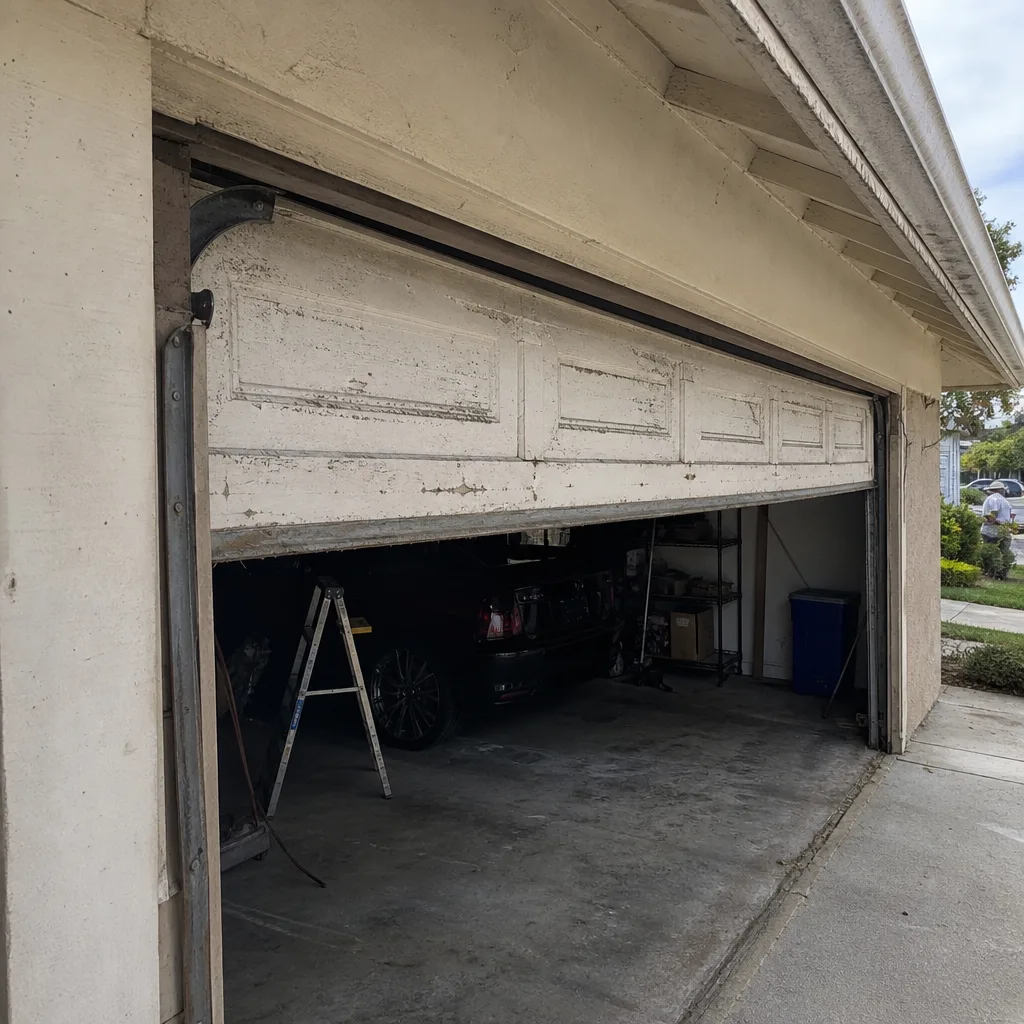 Before
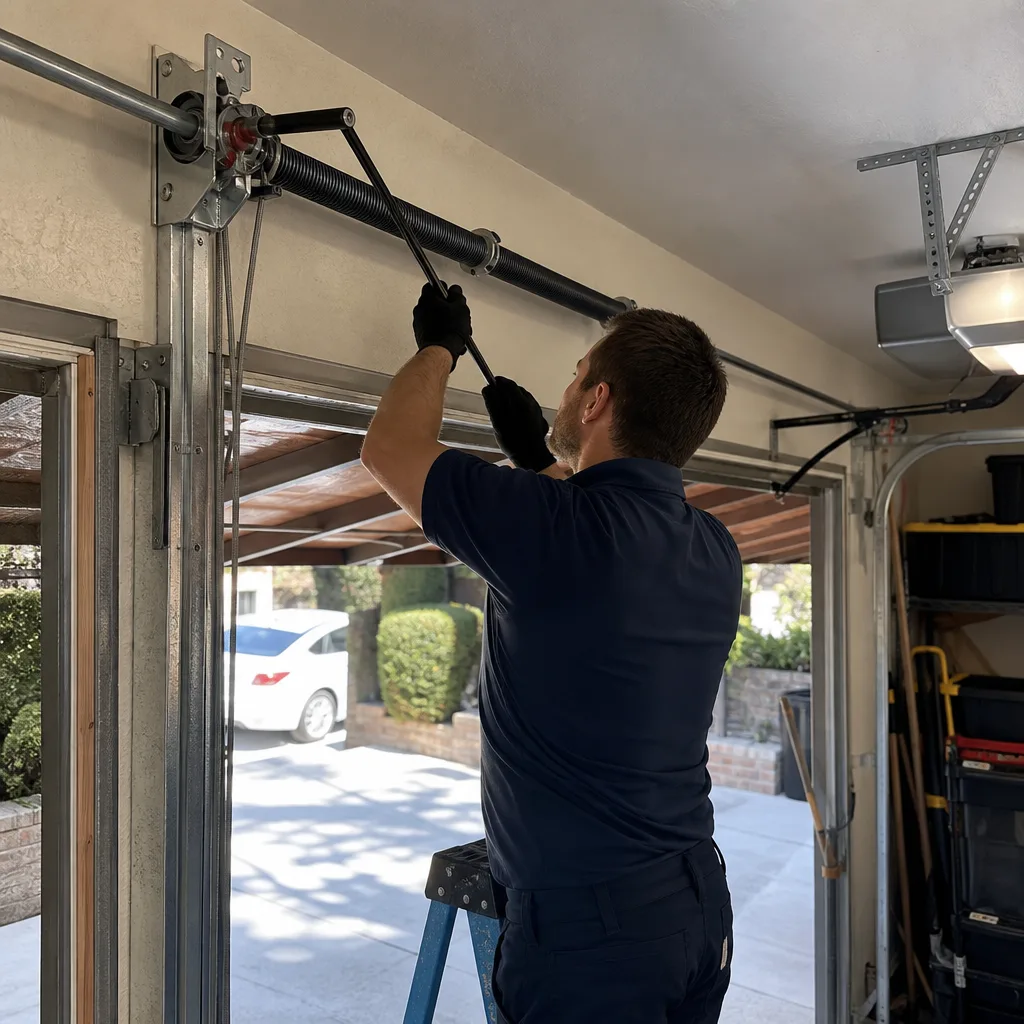 After
After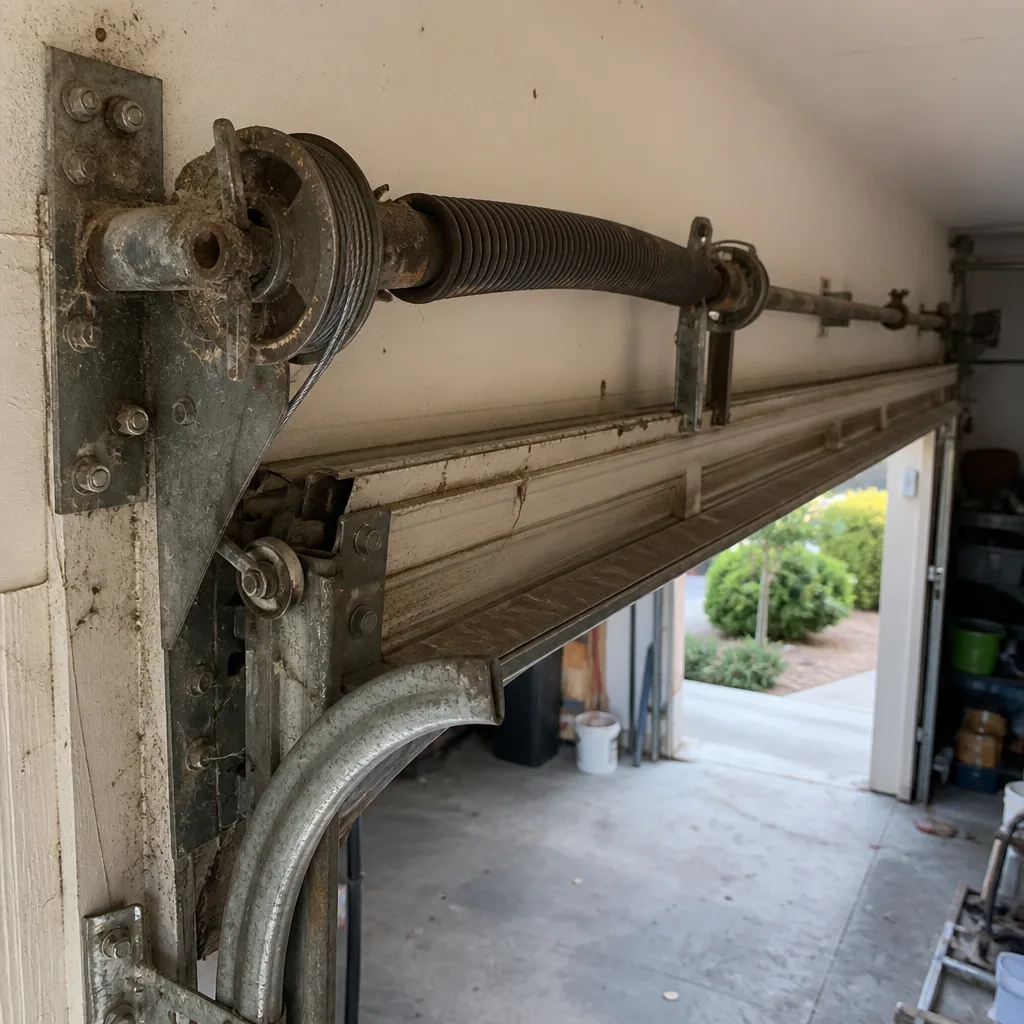 Before
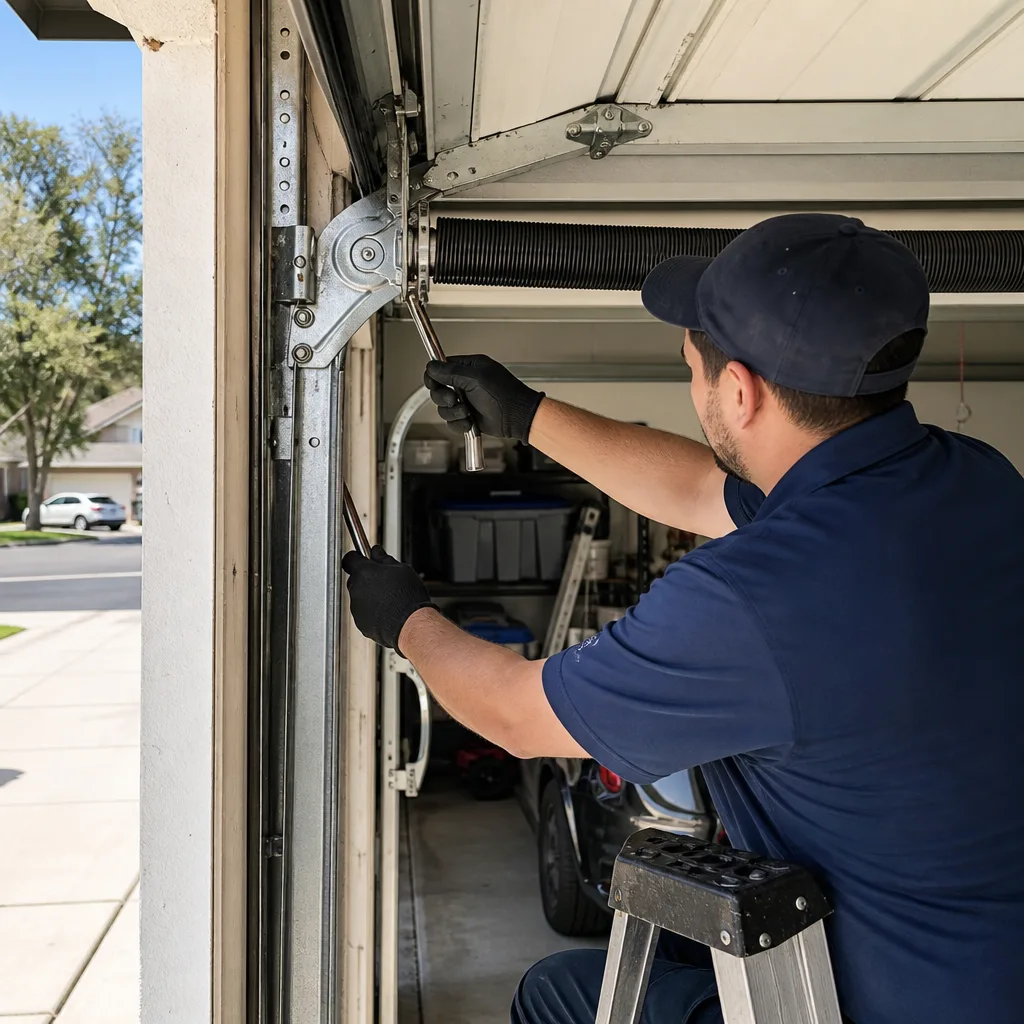 After
AfterGarage Door Repair Maintenance Checklist for Thousand Oaks Homeowners
Ninety percent of the emergency calls Otto gets could have been caught two months earlier if the homeowner had known what to look at. And it wasn’t the thing they thought was wrong. Most people in Thousand Oaks assume the motor is the problem when a door starts acting up. It rarely is. What actually fails, in order, is predictable: rollers wear first, then cables fray, then springs lose tension, and only then does the opener start straining. This checklist follows that failure sequence, which means you’ll catch the $40 problem before it becomes the $400 one. We’re going to walk through exactly what to check, what’s normal wear versus a problem, and when to call someone who does Garage Door Repair services every day.
Quick Answer
A garage door maintenance checklist for Thousand Oaks homeowners should follow the order parts actually fail: check rollers and hinges monthly, test the balance every two months, lubricate only the three points that need it (rollers, hinges, springs, never the track), test auto-reverse before summer heat hits, and replace weatherstripping before the rainy season. Most emergency repairs in the Conejo Valley trace back to a frayed cable or worn roller that gave visible Garage Door Warning Signs: A Thousand Oaks Homeowner’s Reference Guide weeks earlier.
Table of Contents
- The Monthly 30-Second Visual Check That Catches Fraying Cables and Cracked Rollers
- What to Lubricate and What to Leave Alone: The Thousand Oaks Lubrication Guide
- The Balance Test: How to Do It, What the Result Means, and When to Call a Pro
- Seasonal Timing for the Conejo Valley: Auto-Reverse, Weatherstripping, and Heat Warping
- The Maintenance Log That Matters for Resale and Warranty Claims
- Common Mistakes to Avoid
- When to Call a Professional
- Frequently Asked Questions
The Monthly 30-Second Visual Check That Catches Fraying Cables and Cracked Rollers
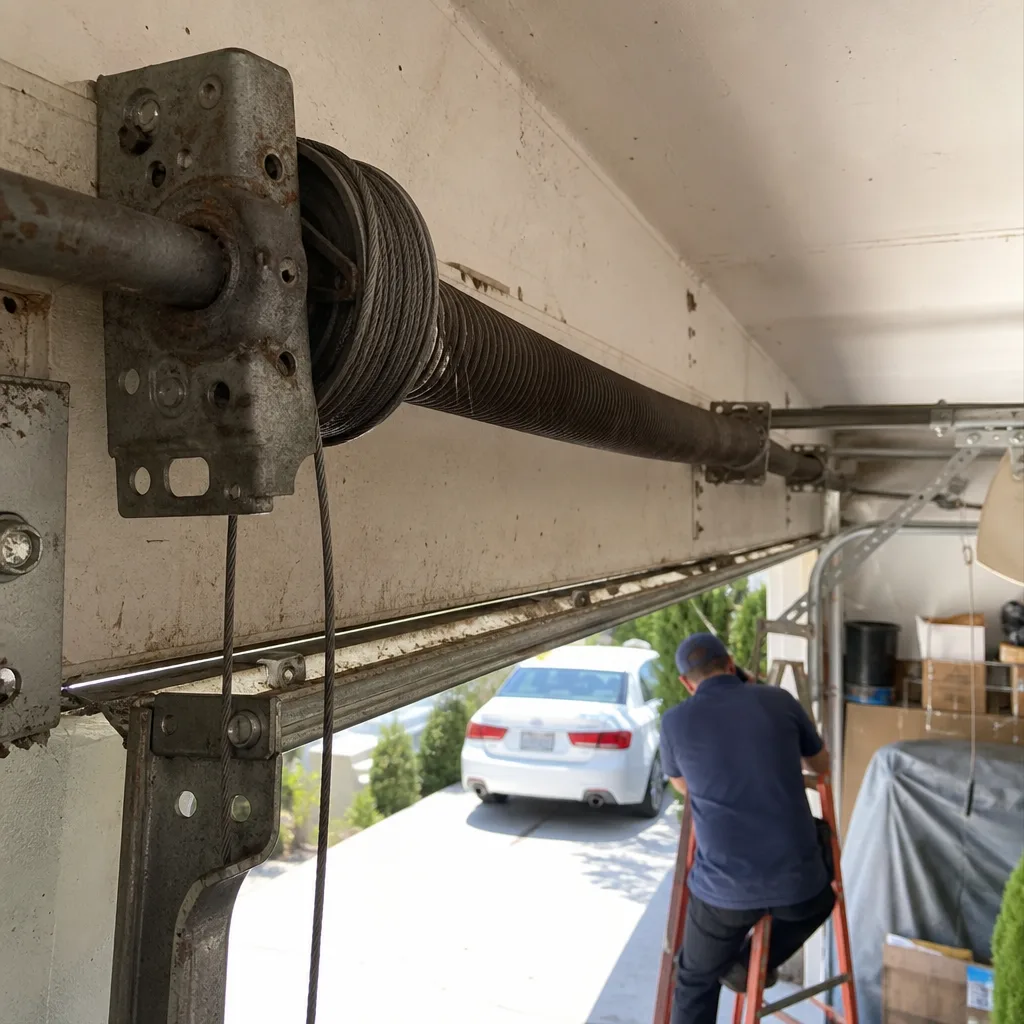
This is the single highest-value habit you can build as a homeowner, and it takes less time than brushing your teeth. Once a month, with the door closed, stand inside the garage and look at both sides of the door. You’re looking for four things. Cables: these are the thick steel wires running along both sides, attached to the bottom brackets. On a healthy door, they’re straight and the individual strands lie flat. When a cable starts to fray, you’ll see one or two strands peeling away from the body of the cable, usually near the bottom bracket or where it wraps around the drum at the top. That’s your warning. A cable that frays today snaps next month, and a snapped cable sends 200 pounds of door dropping hard to one side. In Thousand Oaks, we replace frayed cables every week, and in almost every case the homeowner noticed something looked “off” weeks earlier but didn’t know what they were seeing.
Rollers are the second thing to check. They’re the small wheels on the sides of each door section that ride inside the vertical tracks. Look for cracks in the plastic or nylon rollers, flat spots, or wobble. A roller that’s worn doesn’t just make noise. It drags, which forces the door off balance, which puts uneven load on the springs, which shortens spring life. A single cracked roller costs under $40 to replace. A broken spring, which comes later in the failure chain, runs $250 to $400 in this market.
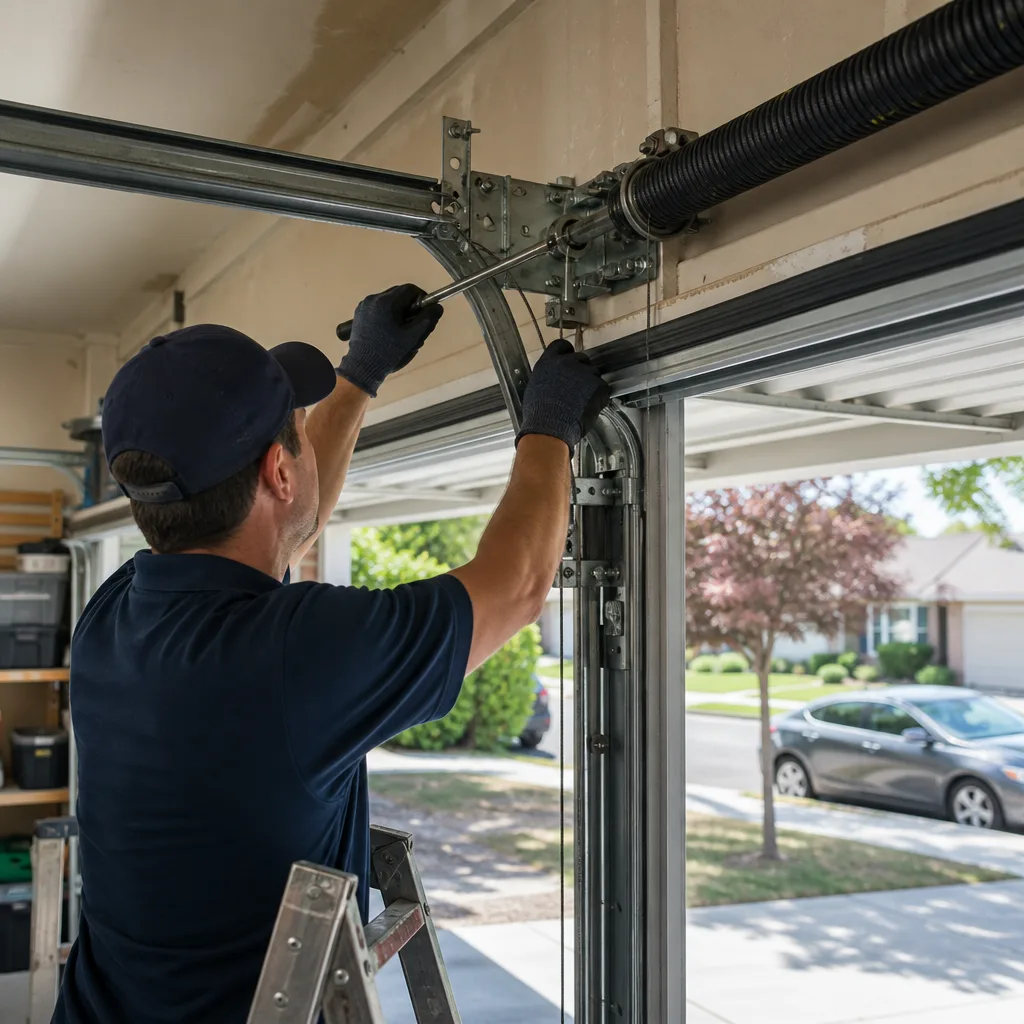
Third, look at the hinges that connect each door panel. They’re the metal brackets at the edges of each section. Loose hinge bolts show up as slight gaps between panels or a hinge that’s shifted off-center. When a hinge gets loose, the panel can bind against the jamb and throw the whole door out of track. Tighten loose bolts with a socket wrench. That’s a genuinely safe DIY task. If a hinge is cracked or bent, replace it before it fails.
Fourth, run your eyes along both tracks. The track is the metal rail the rollers ride in. Look for any new dent, a widening gap between the track and the door jamb, or signs the track is pulling away from the wall. Tracks don’t fail on their own. A bent track almost always means something else failed first, like a loose roller or a snapped cable that yanked the track sideways. If you see a dent or gap, don’t try to hammer it straight. That’s a call-a-pro situation.
During this monthly check, do one more thing while you’re standing there: open and close the door once and listen. A healthy door is steady and even. Any new grinding, scraping, or high pitched squealing is the door telling you a specific part is unhappy. The sound will point you to where to look.
What to Lubricate and What to Leave Alone: The Thousand Oaks Lubrication Guide
Here’s the single most misunderstood maintenance topic Otto runs into across Thousand Oaks: lubrication. Most homeowners over-lubricate the wrong parts and under-lubricate the right ones. Let’s be exact about it.
Lubricate these three points, twice a year. That’s it. Rollers: if you have nylon rollers with exposed bearings, a few drops of light machine oil or a garage door specific lubricant on the bearing will keep them quiet. If your rollers are all-nylon with sealed bearings, skip them entirely. They’re designed to run dry. Hinges: a light spray lubricant on the hinge pivot points keeps the door sections moving smoothly as the door rounds the curve of the track. Springs: a light coat of lubricant on the torsion springs above the door, or the extension springs along the sides, slows rust and reduces friction. In the Conejo Valley, where we get coastal moisture in the morning and dry heat by afternoon, springs rust faster than people expect. A light coat twice a year makes a measurable difference in spring life.
Now the part that surprises most homeowners: never lubricate the track. The track looks like it should be greased, but it’s not a bearing surface. The rollers ride on the inside of the track on their own bearings. Grease in the track collects dust and grit from the Thousand Oaks air, turns into a grinding paste, and actually increases wear on the rollers and hinges. It also stains and drips onto your car. Every week, Otto’s crew sees tracks packed with old grease from a previous homeowner’s well-meaning attempt at “maintenance.” If your track is dirty, wipe it with a dry cloth. That’s all it needs.
The other common mistake is using the wrong product. WD-40 is a solvent and water displacer, not a lubricant. It will clean a hinge, but it won’t do much to lubricate it long-term. Use a garage-door specific spray, a light machine oil, or white lithium grease for the hinges. For the springs, anything light that coats without attracting dust works.
One more Thousand Oaks specific note: if you live in the hills, like parts of Newbury Park or up toward Wildwood, the dry brush dust gets into everything. The more dust in the air around your home, the more important it is to keep lubricant light and sparse. Heavy grease in a dusty environment turns abrasive quickly. Light and steady beats heavy and occasional.
The Balance Test: How to Do It, What the Result Means, and When to Call a Pro
This test takes twenty seconds and tells you more about the health of your springs than any other check. The balance test is the threshold between “I can see what’s happening” and “I need someone who fixes this every day.” Here’s how to do it safely.
First, close the door. Pull the red emergency release handle that hangs from the opener rail. This disconnects the door from the opener so you’re testing the door itself, not the motor. Do not do this with the door open. With the door disconnected, lift the door by hand from the bottom. You’ll feel what kind of weight you’re actually dealing with. A properly balanced door will rise smoothly with one hand’s worth of effort, stay put at the halfway point if you let go, and lower gently on its own without dropping. The springs are doing their job: counterbalancing the weight of the door.
What you’re feeling for is imbalance. If the door shoots up or takes two hands and real effort to lift, the springs are out of adjustment or losing tension. If you let go at the halfway mark and the door creeps down or slams down, the springs are failing. If the door drops fast when you lower it, call before it gets worse. A door that drops is a door whose springs are no longer holding tension, and every cycle from here on is doing damage to the rollers, the track, and the opener.
This is where the line is. Adjusting or replacing torsion springs is not a DIY job. The spring holds the weight of a 200 pound door under tension, and that tension is dangerous. If you’re not trained and you release it wrong, the spring unwinds violently. This isn’t a soft recommendation. Call a pro for anything involving spring work.
What you should do if you’re not going to call yet: note which direction the imbalance goes and check how many cycles you’re getting per week. If the door is drifting more each month, you’re on borrowed time. We’ve seen homeowners in Thousand Oaks nurse a failing spring for weeks, and the result was a snapped cable or a bent track that turned a spring replacement into a much bigger job. The balance test tells you early. That’s the whole point.
Seasonal Timing for the Conejo Valley: Auto-Reverse, Weatherstripping, and Heat Warping
Thousand Oaks has a specific climate pattern, and your garage door maintenance should follow it. We don’t get real winter freezes, but we get intense summer heat, Santa Ana winds, and a rainy season that starts in late October or November. Each of those does something specific to a door.
Summer heat is the hardest on doors and openers. The metal panels expand, the door frame around the opening shifts slightly as the surrounding wood or stucco absorbs heat, and the opener’s gears run hotter. Before the real heat arrives, usually by May in Thousand Oaks, test your auto-reverse. Place a 2×4 flat on the ground under the door where the door will close. Hit the close button. The door should touch the 2×4 and reverse direction within about two seconds. If it doesn’t reverse, your safety sensor system isn’t working correctly, and that’s a call-a-professional issue, not a tinker-with-it issue. The auto-reverse is what keeps the door from closing on a child, a pet, or a grandkid. It’s a federal safety requirement dating back to 1993. It should be tested monthly, but the May test before summer is non-negotiable.
Heat warping is real in the Conejo Valley. A door that operates perfectly in spring can start binding in August as the panels expand. If you notice the door getting stiffer as summer progresses, don’t ignore it. The frame warping is part of it, but the fix is often an opener adjustment for force limits or a slight track realignment. This is one of those “it’s not the opener, it’s what the opener is connected to” situations Otto sees constantly. If the opener starts straining, the problem is almost never the opener.
Weatherstripping is the other seasonal job. The rubber seal along the bottom of the door and the weatherstripping around the sides of the opening keep out rain, dust, and pests. In late October or early November, before the rainy season starts, run your hand along the bottom seal and check for cracks, gaps, or flattening. A flat bottom seal lets water in under the door during winter storms, and standing water in a garage leads to rusted track, rusted springs, and damp damage to anything stored there. Replacing a bottom seal is a straightforward job most homeowners can do with basic tools. If the side weatherstripping is pulled away or cracked, that’s also replaceable. If your door doesn’t seal well at the bottom, now is the time to fix it, before the first Pacific storm of the season arrives.
Santa Ana winds are worth a mention too. High winds blowing against an old door stress the hinges and push the panels inward. If your door has any loose hinges or worn rollers, the winds in October will find them. If you do one maintenance pass in early October and one in late spring, you’ll cover the two times of year Thousand Oaks doors actually fail.
The Maintenance Log That Matters for Resale and Warranty Claims
Most garage door maintenance guides tell you what to do. This one will also tell you to write it down. A documented log of what you checked, what you lubricated, and what you replaced does two things. First, it protects your warranty. Clopay and Amarr doors, and most opener manufacturers, require documentation of periodic maintenance if you ever file a warranty claim. Saying “I’ve done it” doesn’t hold up. Dates, notes, and replacement parts do. We’ve had Thousand Oaks homeowners get denied opener warranty work because they couldn’t show a single maintenance record. The manufacturer assumes neglect. A simple log changes that entirely.
Second, a maintenance log is a real asset at resale. Buyers in this market are looking for houses that were cared for, and a garage door is one of the most expensive single items in a home after the roof and HVAC. When a buyer sees a document showing the door was serviced regularly, they bid with more confidence. It’s also a negotiating chip: a maintained door with records is a door with five to ten more years of life. That’s worth something on a closing table.
Keep it simple. A single sheet of paper in a plastic sleeve taped to the inside of the garage door jamb works. Note the date, what you checked, and any action you took. Example: “March 2025: checked cables and rollers, no fraying, lubricated springs, tested balance, steady at halfway, replaced bottom seal.” That’s the whole log. If you have Otto out for a repair, ask for the invoice to include the repair details. File those. When the time comes, you’ll have a real service history.
Insurance adjusters also ask. If you file a claim for garage damage, storm damage, or a door that failed and damaged a vehicle, the adjuster will want to know if the door was maintained. Documentation of regular checks shifts the conversation from “negligence” to “unforeseen failure.” That matters. It’s the difference between a claim paid out and one denied.
Common Mistakes to Avoid
- Lubricating the track. This is the most common mistake Otto sees across Thousand Oaks. Grease in the track attracts grit, creates grinding paste, and causes more wear than it prevents. Wipe the track dry, lubricate only the rollers, hinges, and springs.
- Ignoring a noisy door because “it still works.” A grinding or scraping sound is a part wearing out. Fix the roller or hinge now, and you’re paying forty dollars. Four months from now, that same roller may take out a cable, and you’re paying four hundred.
- Pulling the emergency release with the door open. This disconnects the door from the opener while the door is under load, and the door can slam down hard enough to damage the door, the track, or whatever is underneath it. Always release with the door closed.
- Testing auto-reverse with a fragile object, like an empty cardboard box. The box folds before the sensor triggers, and you get a false result. Use a 2×4 or a solid object that the door will actually register contact with.
- Replacing the opener when the door is hard to lift. If the door is heavy or unbalanced, a new opener won’t fix it. The opener is not designed to lift the full weight of the door. The springs do that. If the door is hard to lift by hand, the springs need attention, not the motor.
- Doing spring work yourself. We can’t say this strongly enough. Torsion springs under tension are genuinely dangerous. Otto has been working on garage doors in this county for over two decades and still treats every spring with the same respect. A door is 200 pounds riding on two springs. Respect it.
- Waiting until it breaks to call. The whole point of a maintenance checklist is to catch problems before they fail. In Thousand Oaks, most emergency calls are preventable. The door was telling you something. The trick is learning to hear it.
When to Call a Professional
There’s a clear line in garage door maintenance between what any homeowner can handle and what needs a trained hand. Tightening hinge bolts, replacing weatherstripping, wiping tracks, and doing monthly visual checks are all on the homeowner side. Anything involving the springs, the cables under tension, realigning a track, or reprogramming an opener is on the professional side. Torsion springs store enough energy to cause serious injury if released incorrectly. Cables that snap under tension can do the same. If you see a frayed cable, a gap in the spring, or a track that’s visibly bent, don’t attempt to fix it yourself.
If your door is making a noise you can’t identify, or the balance test says the springs are losing tension, that’s the time to call. Otto’s Garage Door offers free estimates in Thousand Oaks. Call (805) 519-7431 and a live person answers, quotes the job, and holds that number when the truck arrives. No revision between the phone and the driveway. Never in over twenty years.
We’ve been handling Garage Door Repair in Thousand Oaks since 2004, and we’ve seen every failure mode this climate can throw at a door. If you’re not sure what you’re looking at, call. The estimate is free, and knowing is better than guessing.
Frequently Asked Questions
Do the 30-second visual check monthly, the balance test every two months, and lubrication twice a year, ideally in spring and fall to match the Conejo Valley’s hot summers and winter rain season. This cadence catches fraying cables and worn rollers before they turn into emergency repairs. For more guides & resources, visit our blog.
Basic DIY maintenance runs under $40 for lubricant and weatherstripping. A professional tune-up in Thousand Oaks typically runs $89 to $150 depending on what needs adjusting. The repairs you prevent, like a snapped spring at $250 to $400 or a bent track at $150 to $300, cost far more. Call (805) 519-7431 for a free estimate on any service.
You can lubricate the rollers, hinges, and springs yourself with a light lubricant. This is one of the simplest maintenance tasks and takes ten minutes. Avoid spraying the track, which causes grit to accumulate and increases wear. If you’re not sure which parts on your specific door need lubrication, ask us during any service call and we’ll point them out.
Heat causes the metal panels and track to expand, which changes how the rollers contact the track and puts extra load on the hinges. A door that’s quiet in April and noisy in August is often reacting to frame expansion. Lubricating springs and hinges helps, but if the noise persists, the rollers may be reaching the end of their life. The fix is usually under $150.
No. At Otto’s Garage Door, the quote you get on the phone is the price you pay, and Otto himself quotes every job and holds that number. Every job comes with the 90-Day Done Right Promise in writing on the invoice. If it’s not done right, one call brings Otto back. No runaround, no call center.
Yes. Otto stocks the truck with the common parts for all major brands, including Clopay, Wayne Dalton, Craftsman, and more. Most repairs in Thousand Oaks are completed in a single visit because the part that failed is already on the truck. Call (805) 519-7431 and we’ll tell you what we’re bringing before we leave.
The Bottom Line
Garage door maintenance isn’t about following a generic list. It’s about knowing the order parts fail and checking the right thing at the right time. Rollers and cables go first, springs second, opener last. Catch the first thing and you never see the second. A monthly 30-second visual check, a balance test every two months, lubrication twice a year, and seasonal attention to auto-reverse and weatherstripping will keep a Thousand Oaks door running quietly for years. Write it down. The log protects your warranty, helps at resale, and makes you the homeowner who knows what’s going on with their door. That’s the kind of homeowner Otto likes to work with at the Otto’s Garage Door home page. It’s also the kind who never sees an emergency repair bill. If you need a hand, we offer Garage Door Installation in Thousand Oaks and Garage Door Opener in Thousand Oaks service as well. Call (805) 519-7431 for a free estimate. A live person answers, and the number you hear is the number you pay.
Written by Otto Reinhardt, Owner at Otto’s Garage Door, serving Thousand Oaks since 2004.