
Last updated September 10, 2026
Full 25-point door and opener safety check with every visit - springs, cables, rollers, tracks, and your LiftMaster or Chamberlain opener included
You get a price before we start. It does not change when the truck arrives.
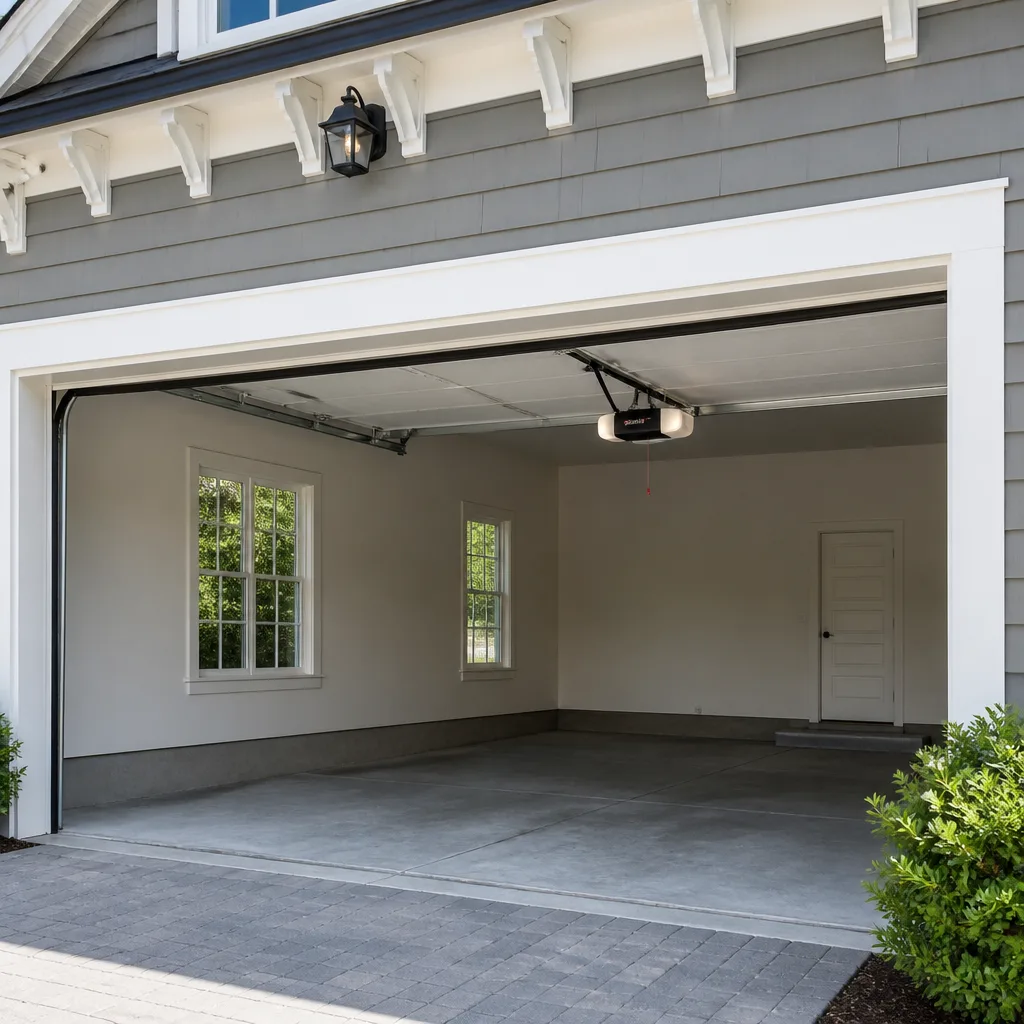
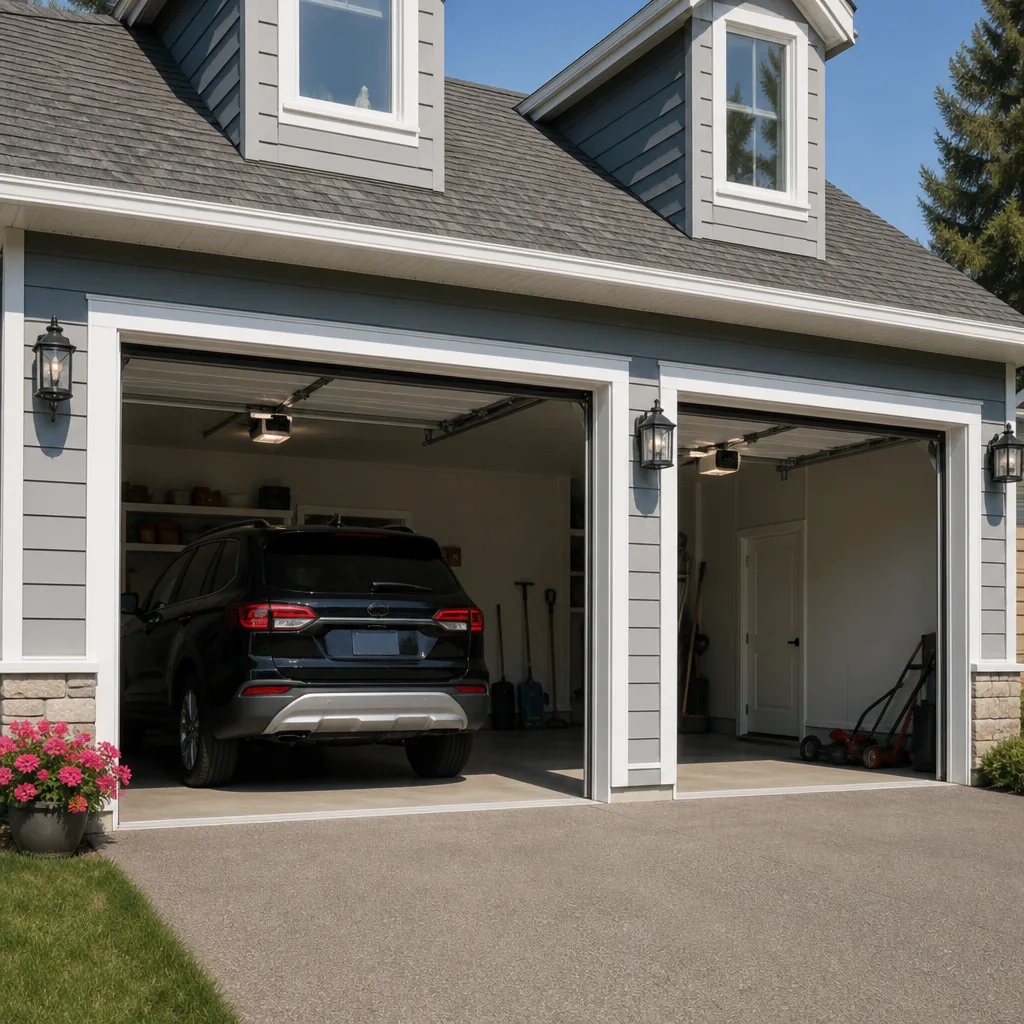
 Before
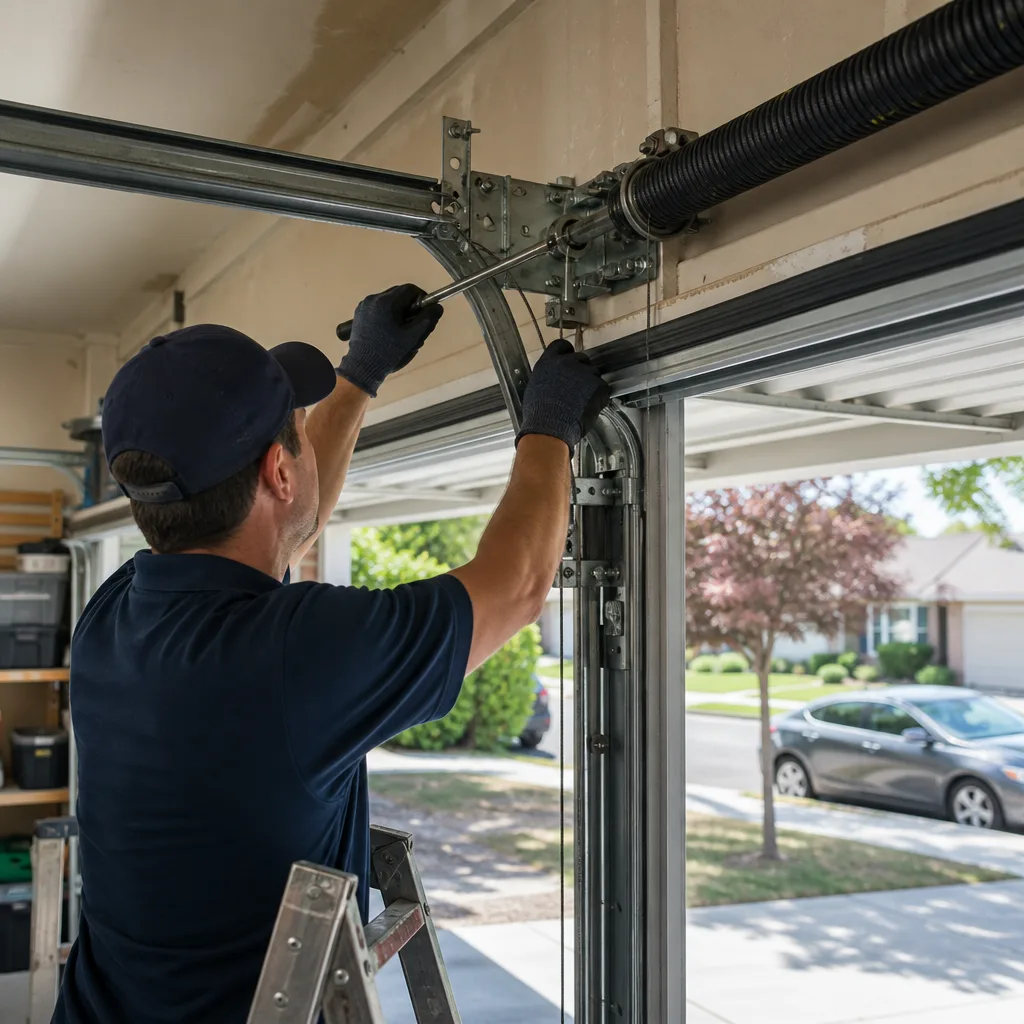 After
After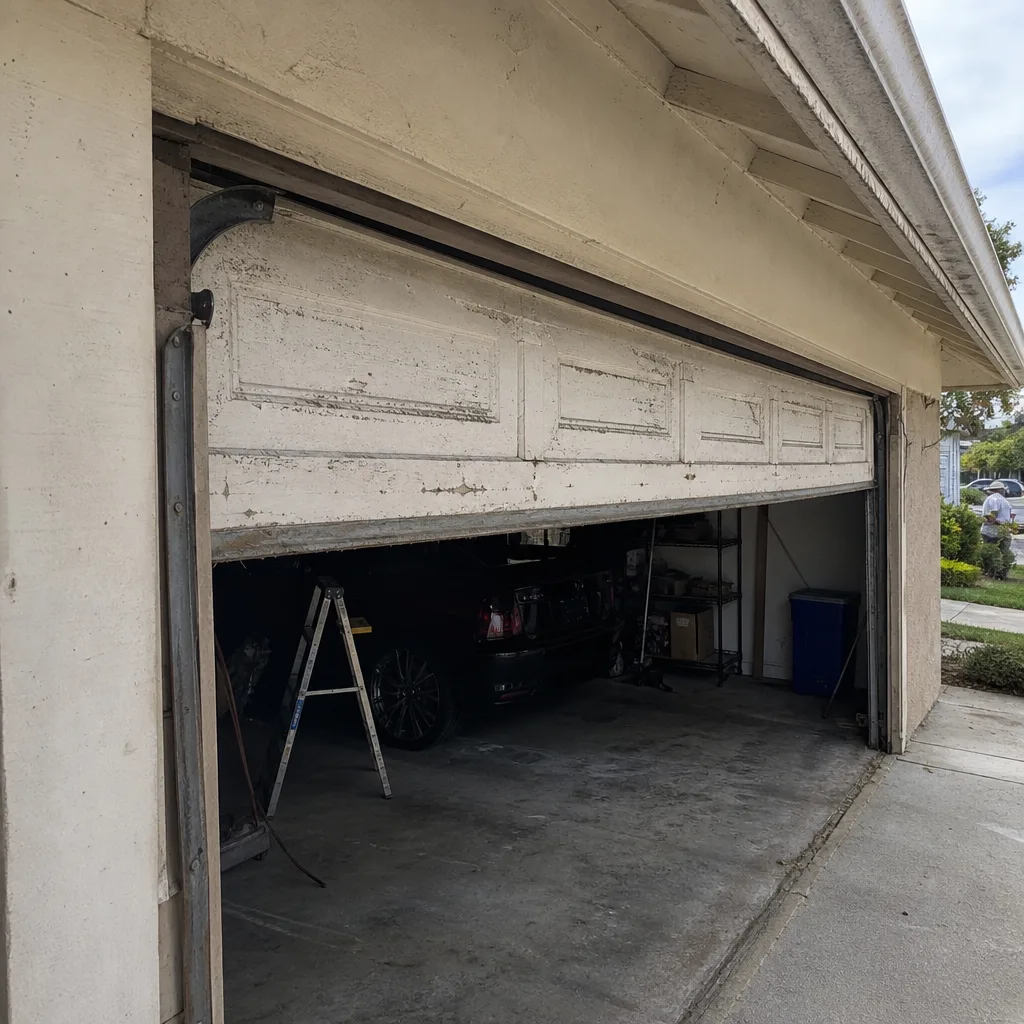 Before
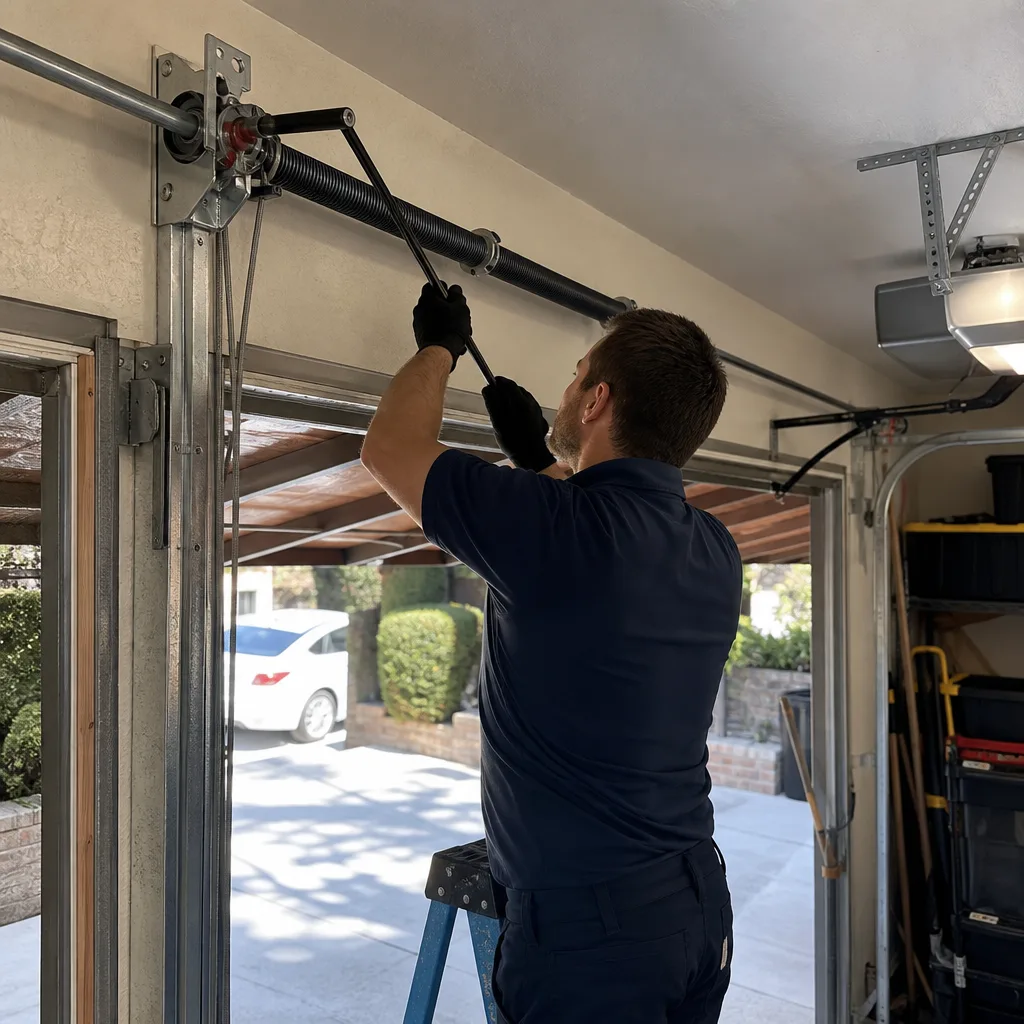 After
After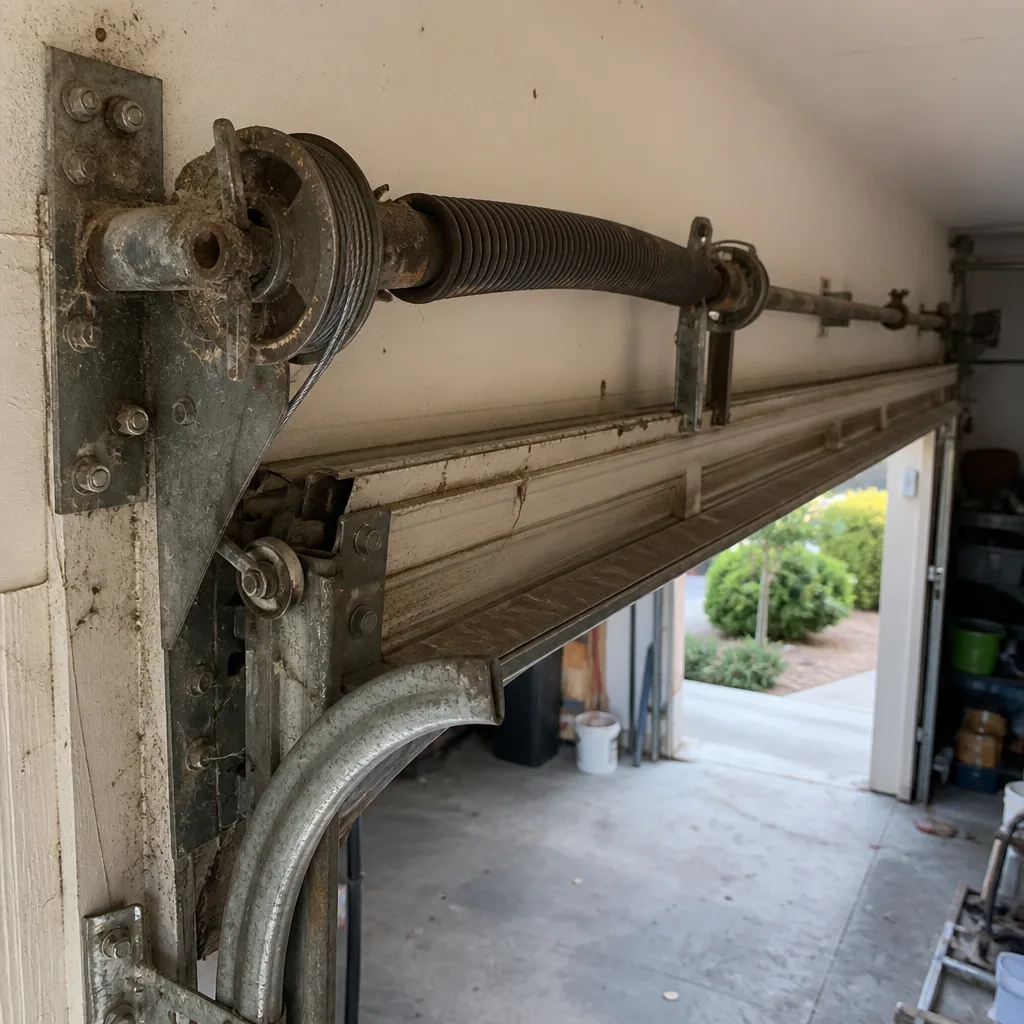 Before
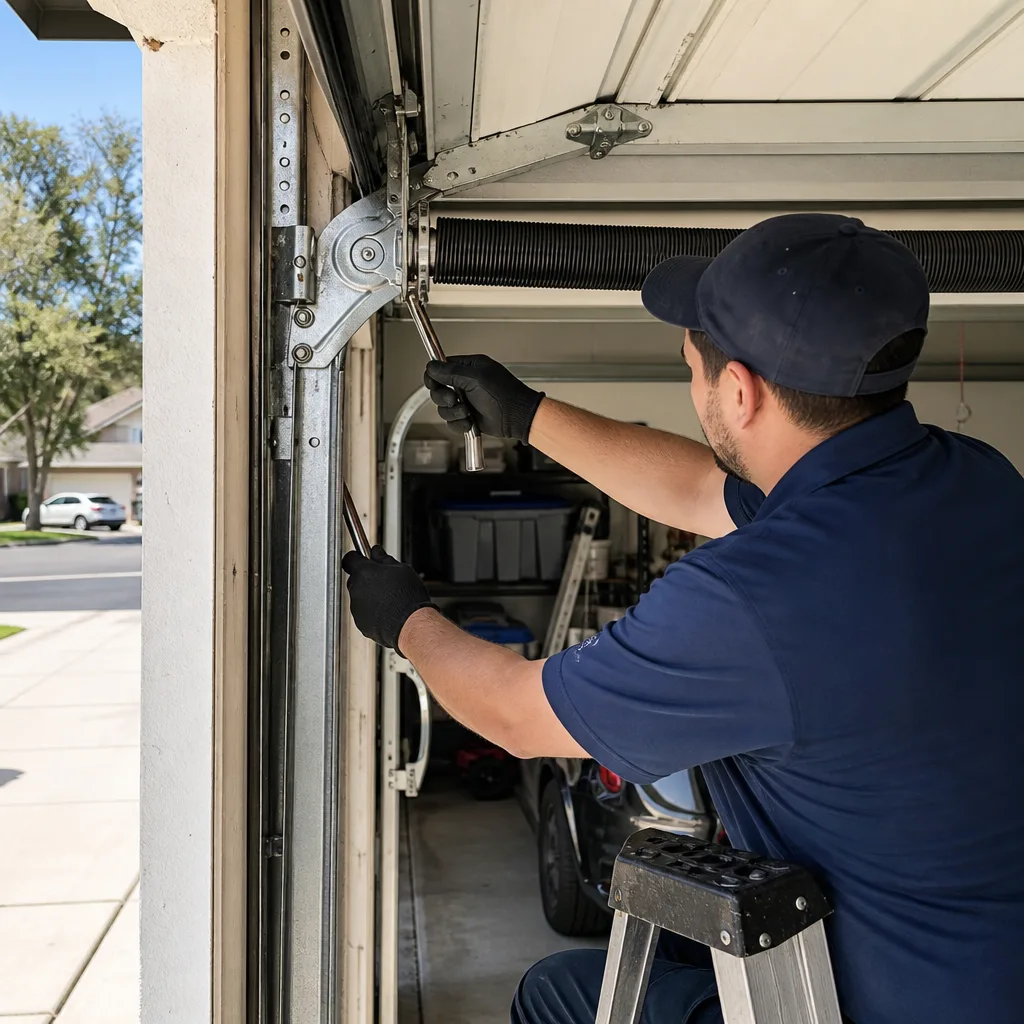 After
AfterGarage Door Cost Breakdown: The Thousand Oaks Homeowner’s Reference for 2026
The $89 service call that turns into a $600 invoice happens for one reason: the homeowner had no idea what a torsion spring costs wholesale or what a fair hour of labor runs in Ventura County. This guide fixes that. We’re going to name actual part costs, real labor rates, and the line items where Thousand Oaks homeowners routinely overpay, so you can read any quote the way a contractor reads it. By the end, you’ll know exactly what a fair price looks like for every major repair, when a new door is cheaper than another fix, and where the padding hides.
Quick Answer
Most garage door repairs in Thousand Oaks run between $150 and $450 in 2026, with torsion spring replacement being the most common job at $180 to $340. A full door replacement typically lands between $1,200 and $3,800 depending on material and insulation. The single biggest factor in whether you pay the low or high end is not the job itself; it’s whether the quote you’re holding was written to be fair or written to hide markup.
Table of Contents
- Torsion vs. Extension Springs: What They Cost and Why It Matters
- Cables, Rollers, and the Parts That Fail Quietly
- What a Fair Opener Installation Quote Looks Like in 2026
- Repair vs. Replace: The Real Math on an Aging Door
- How to Read a Quote for Hidden Costs
- Thousand Oaks Market Factors: What Local Conditions Do to Pricing
- Common Mistakes to Avoid
- When to Call a Professional
- Frequently Asked Questions
- The Bottom Line
Torsion vs. Extension Springs: What They Cost and Why It Matters
If you remember one number from this guide, make it this one: a torsion spring costs between $30 and $80 wholesale, and a fair installed price in Thousand Oaks is $180 to $340 for a pair. The springs themselves are not expensive. What you’re paying for is the labor, the knowledge to size them correctly, and the risk involved in winding a spring that holds several hundred pounds of tension. A door is 200 pounds riding on two springs; respect that, and you’ll understand why this is not a handyman-special job.
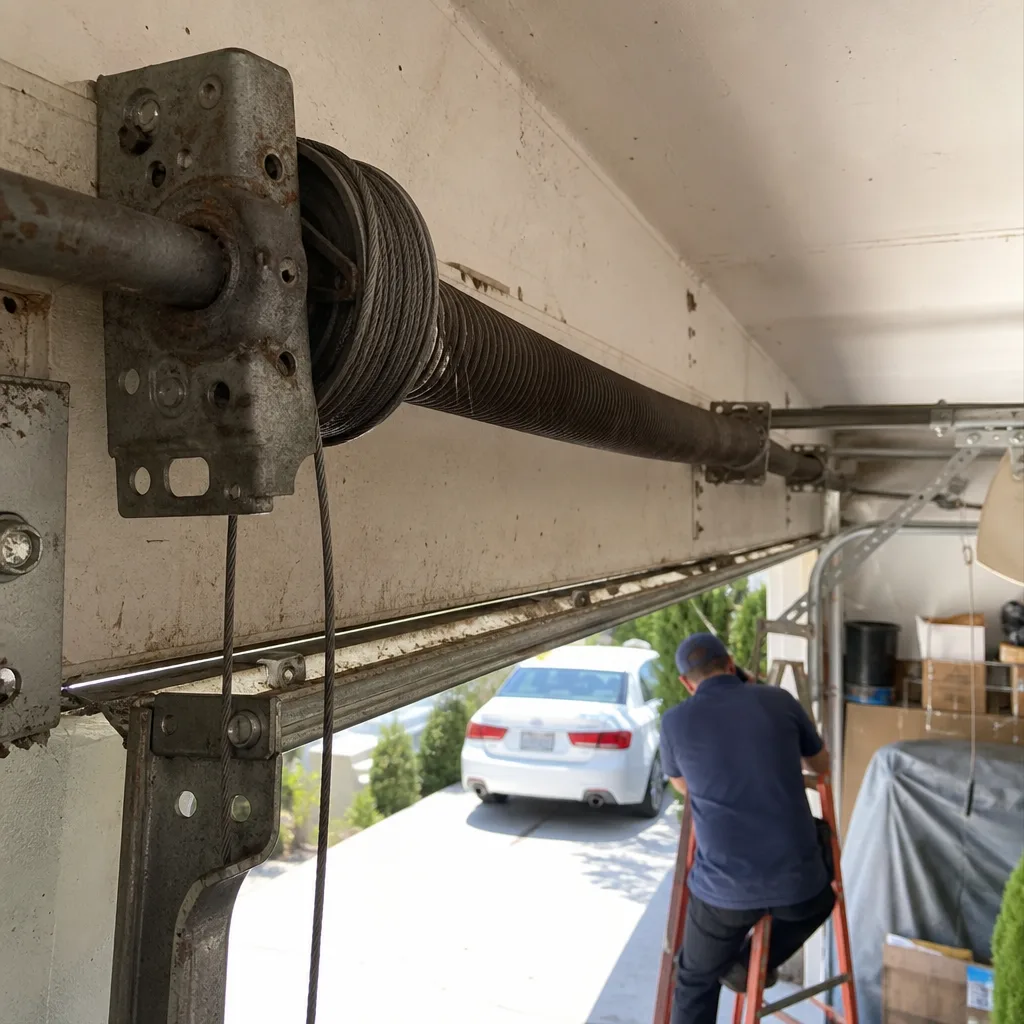
There are two spring systems on residential doors. Extension springs stretch along the horizontal track on either side of the door; they’re the older design and they fail with a visible snap, which is why you’ll see a cable and spring dangling when they go. Torsion springs mount on a horizontal shaft above the door opening and wind up to lift the door; they fail with a bang that sounds like a car backfiring in your garage. Here’s the market breakdown for both in Thousand Oaks as of 2026:
| Spring Type | Part Cost | Installed Range | Life Expectancy |
|---|---|---|---|
| Extension springs (pair) | $40-$80 | $140-$240 | 7,000-10,000 cycles |
| Torsion springs (pair, standard) | $60-$140 | $180-$340 | 10,000-20,000 cycles |
| Torsion springs (pair, high-cycle) | $100-$200 | $280-$450 | 25,000-40,000 cycles |
Why is torsion almost always worth the upgrade? Two reasons. First, lifecycle: a standard torsion spring lasts roughly twice as long as an extension spring, which means you’re not paying another service call in four years. Second, safety: when an extension spring breaks, it can send a metal cable whipping across the garage. Torsion springs stay on the shaft. That’s a real safety difference, especially in Thousand Oaks, where many homes in the Newbury Park and Westlake areas have bedrooms over the garage; that garage shares a wall with where your family sleeps.
How do you tell which system your door runs? Look above the closed door. If you see a horizontal shaft with one or two coiled springs wrapped around it, that’s torsion. If you see springs hanging along the side tracks, those are extension. If you’re not sure, a quick call to a local shop and a photo over the phone settles it in thirty seconds. Garage Door Repair in Thousand Oaks starts with identifying what you’ve got before anyone quotes a number, because the fix and the price depend on it.
In our experience, the neighborhoods where doors get the most use in the Conejo Valley see springs fail a little faster. A family with three drivers who cycle the door ten or more times a day in Thousand Oaks will run through a standard torsion spring in five to seven years. That’s fine; that’s normal. What’s not normal is paying $450 for a $70 spring because the quote was written to make you feel grateful it wasn’t worse.
Cables, Rollers, and the Parts That Fail Quietly
After springs, the next most common repair calls we see in Thousand Oaks are cables and rollers. These parts fail slowly, and they’re easy to ignore until the door starts jerking, grinding, or binding. Here’s what each job should cost in this market in 2026:
- Cable replacement (pair): Parts run $20-$40. Installed, expect $150-$250. The cable itself is inexpensive; the labor involves removing tension safely and re-threading the lift system. This is a job for a trained professional, period.
- Roller replacement (full set, 10-12 rollers): Nylon rollers run $8-$15 each, steel run $5-$10 each. Installed, expect $120-$250 for a full set. Upgrading from steel to nylon quiets the door dramatically and is worth the extra $30 or so on a door that rumbles when it opens.
- Hinge replacement (individual): $15-$30 per hinge installed. Most doors have 10 to 12 hinges, but they rarely all fail at once; replacing the two or three worn ones is a normal fix.
- Track adjustment or realignment: $100-$200. Bent track is different; a bent vertical track section may need replacement at $150-$300 depending on the door height.
Here’s the thing about cables and rollers in our part of Ventura County: the coastal-inland temperature swing puts stress on every moving part. Thousand Oaks sits in a sweet spot of fog-adjacent mornings and hot afternoons, and that cycling expands and contracts metal track more than a homeowner realizes. Rollers wear unevenly. Cables develop frays you won’t see until you look. A door that gets noisy over a summer in Lynn Ranch or Wildwood is usually a roller issue, and catching it at the roller stage is a $150 fix instead of a $600 repair after the cable lets go and the door comes down hard.
One more note on rollers: if your metal rollers are original to a door that’s ten years old or more, they’re eating your track. Every cycle grinds them down a little flatter, and a flange cracks, and then the door rides off-center, and then a cable gets chewed up. The sequence is predictable. The fix is cheap if you catch it early.
What a Fair Opener Installation Quote Looks Like in 2026
Opener prices have shifted in the last three years, mostly because Wi-Fi connectivity stopped being a premium feature and became standard. In Thousand Oaks in 2026, a complete opener installation including the opener, all hardware, and labor typically runs $400 to $800 depending on the drive type and whether you’re replacing an existing unit or installing a fresh one.
Here’s the honest breakdown:
- Chain-drive opener with Wi-Fi: Unit cost $180-$280; installed $400-$550. This is the workhorse. It’s what we recommend for most homes because it’s proven and parts are everywhere.
- Belt-drive opener with Wi-Fi: Unit cost $250-$400; installed $500-$750. Quieter than chain and worth it if there’s a bedroom above the garage. In Thousand Oaks, most detached garages don’t need belt, but attached garages with living space above absolutely benefit.
- Wall-mount (jackshaft) opener: Unit cost $350-$500; installed $600-$800. For garages with high ceilings or where ceiling clearance is tight. These used to be commercial-only; they’re now common in newer Thousand Oaks homes with 10-foot-plus ceilings.
Now, about that $199 opener special you see advertised. Here’s what it usually doesn’t include: the mounting bracket hardware, the photo-eye safety sensors if yours are outdated, the reinforced angle iron for the motor bracket, and the programming to sync your vehicle remotes. Those extras are not padding; they’re real parts that a complete installation requires. A legitimate quote will list them. The $199 quote that turns into $549 at the door is, in our view, the most common bait-and-switch in the garage door trade, and it works because the homeowner wasn’t told what “installation” actually involves.
When we quote an opener, the number you get on the phone is the number on the invoice. That includes brackets, sensors, remote programming, and testing the safety reversal. There’s no line item that says “hardware kit” because hardware is part of installing an opener, same as wheels are part of a car. If a quote itemizes “mounting hardware” as an extra charge, ask why it wasn’t in the base price. See also Garage Door Opener in Thousand Oaks for the full breakdown of opener brands we service, including LiftMaster, Chamberlain, and Genie.
Repair vs. Replace: The Real Math on an Aging Door
At some point, keeping an old door alive costs more than replacing it. The question is where that point sits. Here’s the math we walk homeowners through in Thousand Oaks, and it’s straightforward enough to run on your own door.
- Add up what you’ve spent in the last four years. If your door has needed three service calls in four years, you’ve likely spent somewhere between $600 and $1,500. That’s real money you won’t get back for a door that’s still old.
- Look at the door’s age and condition, not just its function. A steel door in Thousand Oaks lasts 20 to 30 years before the panels start rusting at the bottom, the insulation breaks down, and the wood frame around the opening softens. If your door is 20 years old and needs its second spring replacement, you’re looking at a door with maybe five useful years left.
- Compare the repair against one-third of replacement cost. If the repair you’re facing costs a third or more of what a new door would cost, lean toward replacement. A $450 high-cycle spring job on a 25-year-old uninsulated door is a third of a $1,400 new insulated door that’ll last 25 more years and cut your garage’s heat load every summer afternoon.
- Factor in what a new door gives you that repairs don’t. Insulation value, quieter operation, updated safety features, curb appeal if you’re thinking about selling. Conejo Valley real estate moves, and a garage door is one of the few home improvements that visibly faces the street.
The break-even point is different for every home, but as a rule of thumb: a door that’s under 15 years old with a single mechanical issue is nearly always a repair. A door over 20 years old with panels starting to go is nearly always a replacement conversation. Garage Door Installation in Thousand Oaks covers the full range of what a new door costs, from basic steel to custom wood-look.
How to Read a Quote for Hidden Costs
Most Thousand Oaks homeowners don’t get overcharged on the big number. They get overcharged on the small ones. Here are the line items to look for on any written estimate, and what to make of them:
- Trip charge. Most legitimate local companies charge a diagnostic fee that’s waived if you approve the repair. We don’t charge one inside our home county. If you’re being quoted a trip charge on top of an estimate, ask if it gets credited toward the work. If it doesn’t, that’s a company that’s making money whether they fix anything or not.
- Disposal fee. Removing and hauling an old opener or door usually costs a shop between $25 and $75 at the dump. A fair quote might show $50 to $100 for disposal. If you see $200, you’re paying someone else’s convenience.
- After-hours rate. Nights and weekends legitimately cost more; emergency labor in Thousand Oaks at 9 p.m. honestly runs 1.5 to 2 times the daytime rate. That’s fair. What’s not fair is charging an after-hours rate for a 3 p.m. Tuesday appointment because the call center classified it as “priority.” Ask when the clock on the rate actually starts.
- Parts procurement fee. This one is surprising. A “parts procurement fee” is an invented charge some companies add on top of already-marked-up parts. Parts don’t have a procurement cost for a shop that stocks them. If the quote shows a markup on the spring AND a separate line for obtaining the spring, that’s double-dipping. Walk away.
- Administrative fee, paperwork fee, or “processing” fee. Same category. A garage door repair is labor plus parts. There’s no third thing.
The best defense is a written quote with every line item spelled out before the work starts. If you get a quote where springs are one lump sum and there’s no breakdown, ask what’s in it. If the company won’t itemize, that’s an answer in itself. Our position is simple and we’ll put it in writing: the price quoted on the phone is the price on the invoice, and we quote the job before we do it, not after.
Thousand Oaks Market Factors: What Local Conditions Do to Pricing
Garage door pricing in the Conejo Valley is not identical to pricing in Los Angeles or the Inland Empire, and here’s why. First, Ventura County has fewer garage door companies per square mile than Los Angeles County does, which means less downward pressure from competition. That cuts both ways: established local shops in Thousand Oaks charge a little more because they’re not racing to the bottom, and they’re around to fix what they installed. Second, the housing stock matters: Thousand Oaks, Newbury Park, Westlake Village, and the surrounding communities skew toward two-car and three-car garages built in the 1970s through 2000s, which means torsion systems, standard 7-foot and 8-foot doors, and a lot of doors that are hitting their spring-replacement window right about now.
Third, the climate: our summer heat and our cool coastal nights create a temperature swing that puts more wear on springs and rollers than inland or coastal areas get separately. A spring that lasts 12 years in a mild climate might last 8 in Thousand Oaks just because of the expansion and contraction. When you’re budgeting for maintenance, plan on a spring replacement every 7 to 10 years if you use your door daily.
What does that mean for the numbers you’ll see? A torsion spring replacement that runs $250 in the Valley might run $300 here for the same job. That’s not a ripoff; that’s the cost of a shop that pays Ventura County rent and keeps a truck within twenty minutes of your house when the door fails at night. The line between fair and padded is not the total; it’s whether the quote itemizes what you’re actually paying for.
We’ve been in this county since 2004, and Otto is a palindrome; reads the same from either end, same as the door. The neighborhoods we’ve worked in the most over the years, Newbury Park, Lynn Ranch, Wildwood, Westlake, tell the same story: homeowners who get a straight quote from a name they can verify tend to call that same name the next time. That’s the L.O.C.A.L. code we run on: Local roots, On time, Community first, Accountable, Loyal. It’s not a slogan; it’s how you keep a customer for twenty years.
Common Mistakes to Avoid
- Accepting a phone quote that won’t be honored at the door. If a company quotes $89 over the phone and the technician “finds more damage” once he arrives, that’s a pattern, not a coincidence. The price should be the price.
- Paying for a spring “upgrade” without being told what the upgrade is. A high-cycle spring is a real product with a real benefit, roughly double the lifecycle for about $100 more. But if the quote says “premium spring” without specifying cycle count, that’s just a markup wearing a nice shirt.
- Letting a broken spring sit for weeks. A door with one spring down and one spring holding is running unbalanced, which destroys the remaining spring in a fraction of its normal life and puts extra strain on the opener. A $200 fix becomes a $500 fix if you wait.
- Replacing an opener because the door is slow or noisy. If the opener is straining, the problem is almost never the opener. It’s worn rollers, dry hinges, or an unbalanced door. A new opener on a bad door just burns out a new opener.
- Ignoring the safety reversal system. Since 1993, all openers have been required to reverse when the photo-eye beam is broken. If yours doesn’t reverse on a roll of paper towels, that’s a safety hazard, not an inconvenience. Test it monthly; fix it immediately if it fails.
- Choosing a company based on the biggest ad, not the longest history. The franchise name on the side of a national truck is a call center three states away with a contractor relationship. The local name on a local van is a person whose license is published and whose neighbors know him. In a small-town county like ours, that distinction is the whole game.
When to Call a Professional
Some jobs are honest weekend projects: replacing weatherstripping, tightening visible bolts, lubricating rollers and hinges with a garage-door-specific spray. Other jobs are not DIY under any circumstances. Torsion spring replacement is the big one: the spring holds hundreds of pounds of stored tension, and a wrong move can launch a steel rod faster than you can react. Cable replacement under tension is in the same category. Any repair involving the high-tension system is a trained professional’s job, not a YouTube afternoon.
Beyond safety, the professional question is about warranty and judgment. A shop that stands behind its work for 90 days in writing, with an owner you can call by name, is giving you something a handyman can’t: accountability when the fix doesn’t hold. Otto’s Garage Door offers free estimates in Thousand Oaks, and the number is (805) 519-7431. If you’re not sure whether a door issue is urgent or can wait, describe it over the phone and we’ll tell you straight what needs a technician today and what can wait until next week.
Frequently Asked Questions
A torsion spring pair replacement in Thousand Oaks typically runs $180 to $340 installed, including labor and both springs. Extension spring replacement runs $140 to $240. The variance comes from spring size, cycle rating, and whether the job is done during business hours or after-hours. Call (805) 519-7431 for an exact quote on your door; we quote the job on the phone and hold the number when we get there.
A new garage door in Thousand Oaks runs $1,200 to $3,800 installed depending on the material and insulation level. Entry-level steel with no insulation sits at the low end; insulated steel with a higher R-value or a wood-composite aesthetic sits at the high end. The quote should include removal and disposal of the old door, new track if needed, and a written warranty on the door itself.
Because the $89 was a diagnostic visit, and the $600 included parts with a markup plus labor plus a few line items you didn’t know to question. If a company won’t tell you the spring cost and the labor rate separately before starting, you’re buying blind. Ask for the itemized quote before approving any work, on any repair, every time.
In most cases, yes. We stock common torsion springs, cables, rollers, and openers on the truck, and a live person answers the phone around the clock, including at nine at night when a spring lets go and your vehicle is sealed inside. Same-day service in Thousand Oaks is our standard on spring and cable repairs, not an upgrade.
No. The price we quote is the price we charge, and it’s in writing before we start. If the door has an unusual configuration that changes the job, we’ll tell you before we touch anything, and you’ll approve the change in writing or we won’t do it. There’s no version of our process where you find out the real number after the work is done.
Yes. Torsion springs in the most common Thousand Oaks sizes, extension springs, cables, rollers, hinges, photo-eyes, and opener hardware are stocked on our trucks. What we can’t carry, we source from local suppliers the same day. Most single-issue repairs in Thousand Oaks are completed on the first visit because the truck showed up with what the job needed.
The Bottom Line
Garage door pricing in Thousand Oaks is knowable. The parts have real wholesale costs, the labor has a real market rate, and the only reason a quote runs higher than it should is that someone structured it to. Torsion springs at $180 to $340, cables and rollers at $150 to $250, openers at $400 to $800 installed, and a new door at $1,200 to $3,800 are the honest ranges for this market in 2026. The best money you’ll save is the money you never overpay in the first place, because you read the quote before you signed it. And if you’d rather not have to audit every line item, call someone whose license and address are published, whose name is on the van, and who’s been working these neighborhoods since before the current generation of doors was installed. That’s what we do. Call (805) 519-7431 for a free estimate, and see Otto’s Garage Door home for who we are and how we work.
Written by Otto Reinhardt, Owner at Otto’s Garage Door, serving Thousand Oaks since 2004. For more guides & resources, visit our blog.