
Last updated September 10, 2026
Full 25-point door and opener safety check with every visit - springs, cables, rollers, tracks, and your LiftMaster or Chamberlain opener included
You get a price before we start. It does not change when the truck arrives.
 Before
 After
After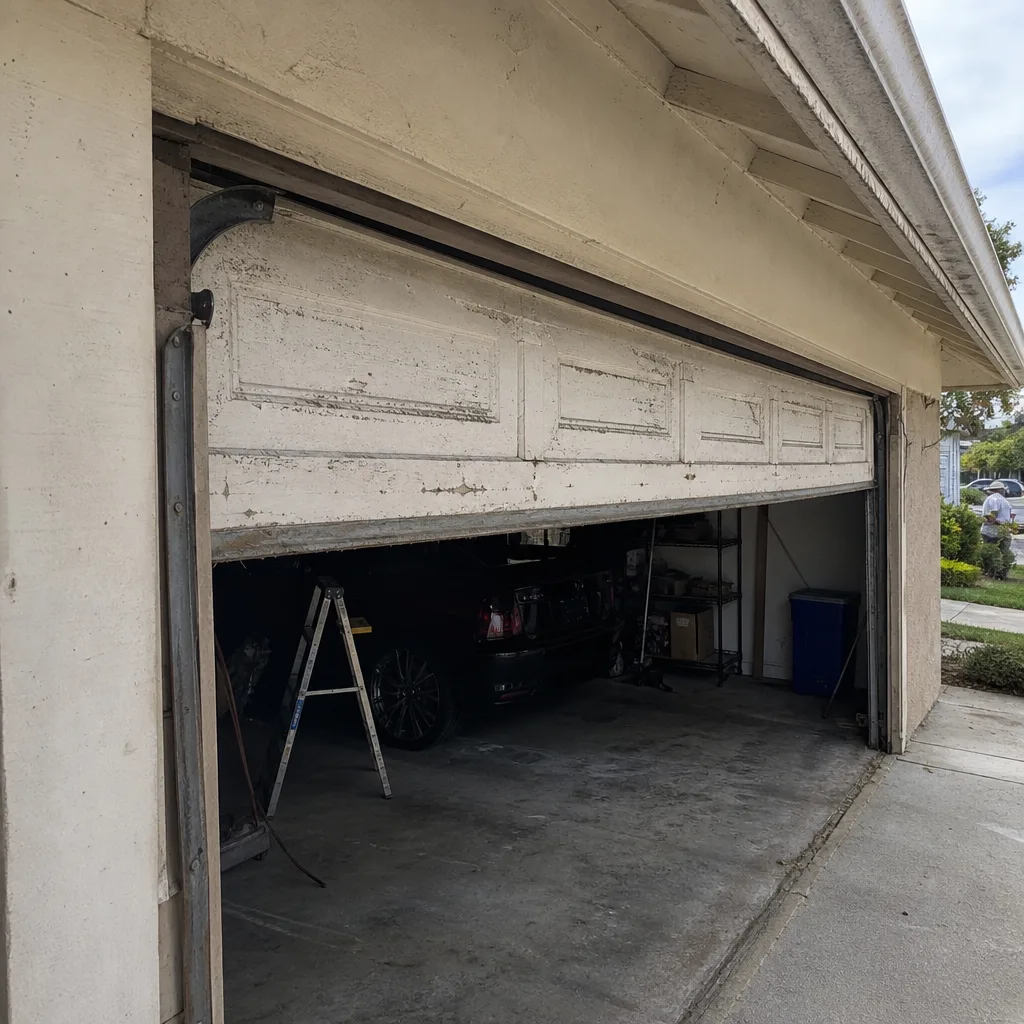 Before
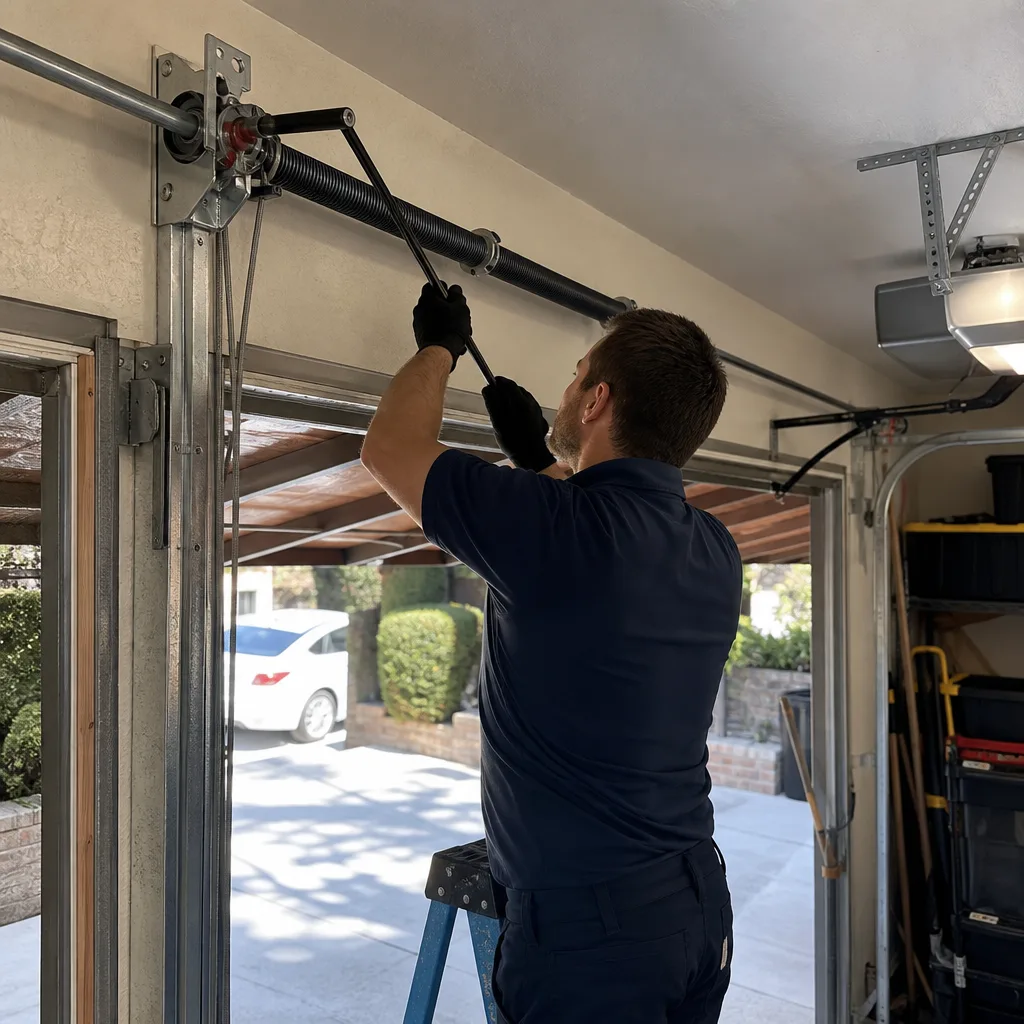 After
After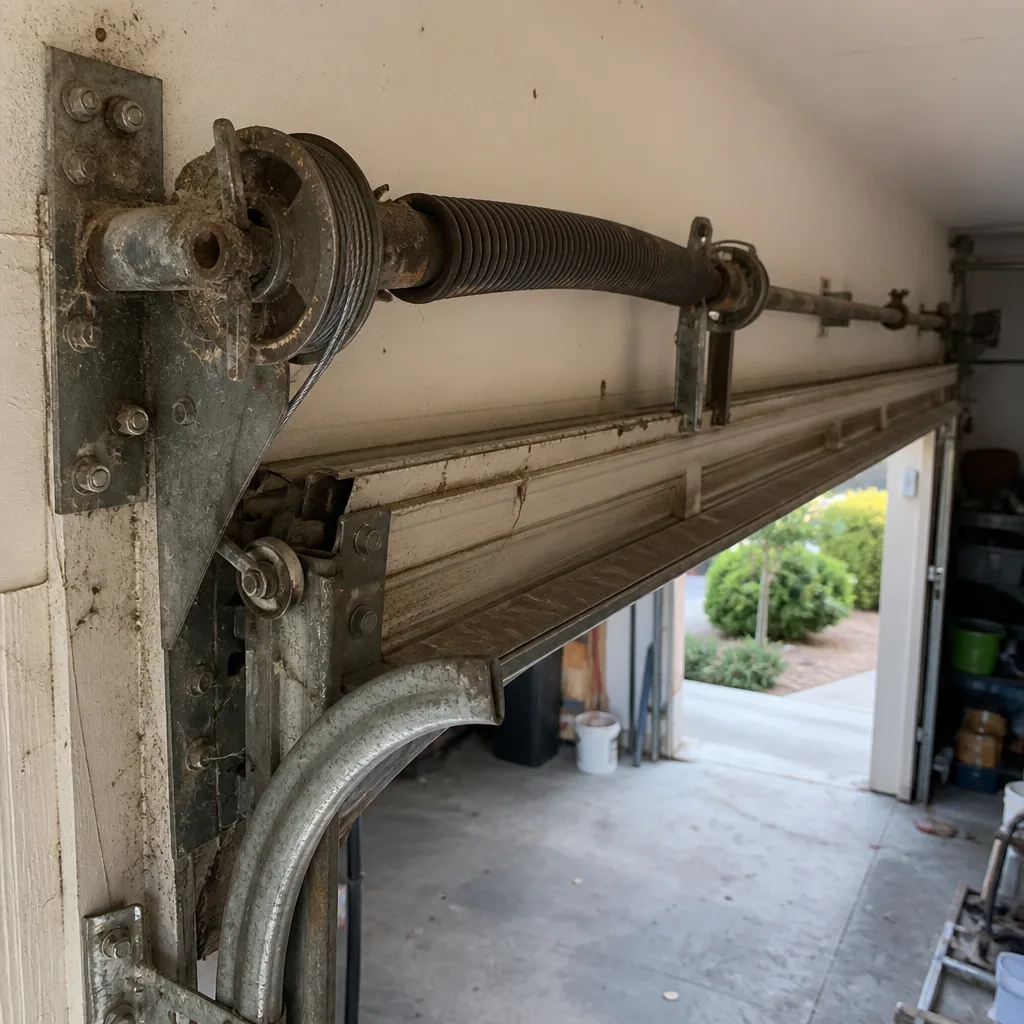 Before
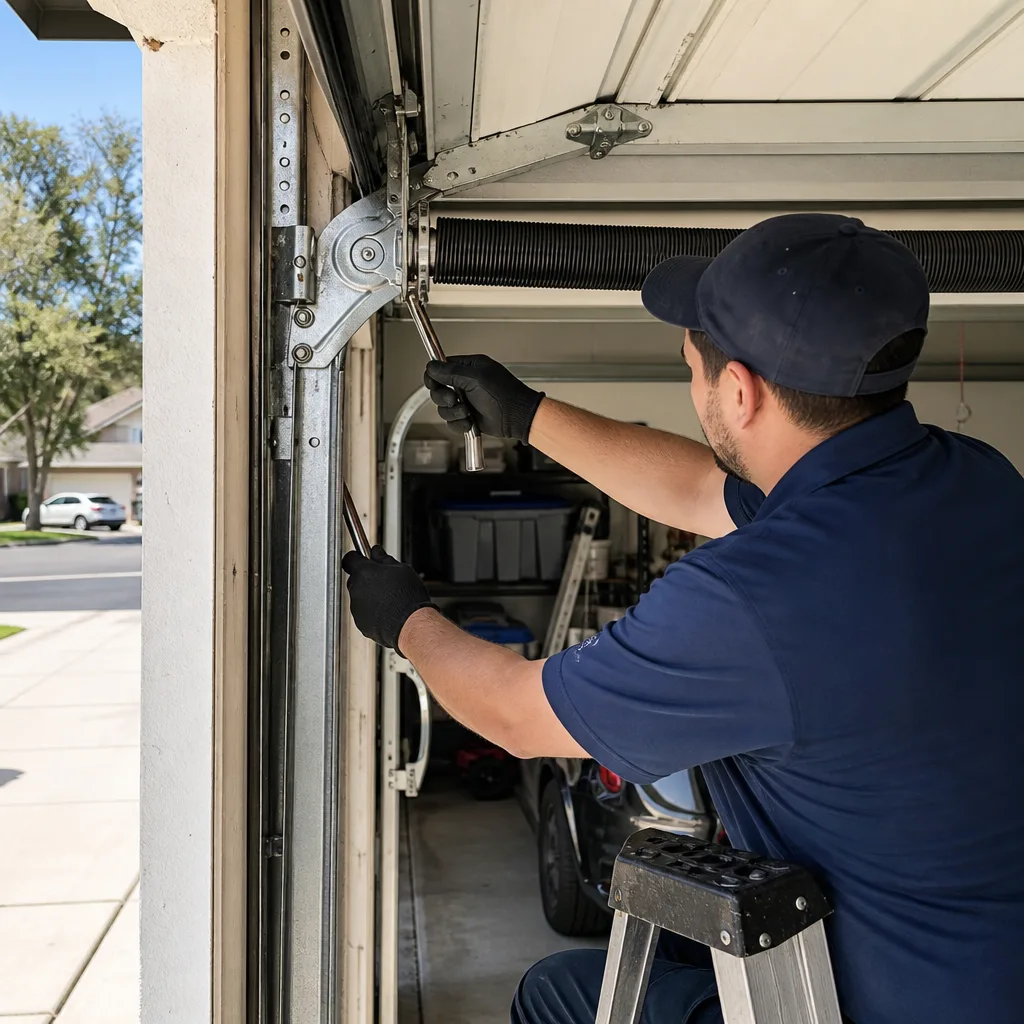 After
AfterGarage Door Warning Signs: A Thousand Oaks Homeowner’s Reference Guide
A torsion spring doesn’t snap without warning. It gives you signals for weeks, sometimes months. The problem is nobody told you what those signals look like, so you ignored them until the door slammed shut at 7 a.m. on a Monday with your car trapped inside. This guide is different. It describes what your garage door looks like the week before it breaks, because that’s when the fix costs under $200 instead of over $600, and that’s when you’re still in control of the situation instead of staring at a door that won’t budge. If you live in Thousand Oaks, where summer heat and dry air age springs faster than the coast, these warning signs matter even more.
Quick Answer
The most common garage door warning signs in Thousand Oaks are a door that shakes or jerks when opening, a grinding or squealing sound that wasn’t there six months ago, cables that look frayed or loose near the bottom brackets, a door that opens slower on one side than the other, and a spring with a visible gap in the coil. If you notice any of these, the door is telling you something mechanically has changed. Catching it now means a repair measured in hundreds, not a replacement measured in thousands.
Table of Contents
- The Sound Library: What Your Garage Door Is Trying to Tell You
- Visual Tells: What to Look For on the Door Itself
- The Response-Time Test: Timing Your Door’s Travel
- Warning Signs Specific to Older Thousand Oaks Homes
- The One Warning Sign Everyone Ignores: The Flickering Opener Light
- A 5-Minute Weekly Inspection That Catches 80% of Problems
- Common Mistakes to Avoid
- When to Call a Professional
- Frequently Asked Questions
- The Bottom Line
The Sound Library: What Your Garage Door Is Trying to Tell You
Your garage door talks to you every time it opens and closes. Most people tune it out the way you tune out a refrigerator hum. That’s a mistake, because different sounds point to different problems, and some of them are cheap to fix if you catch them early.
The Grind
A grinding sound, like rocks being crushed in a metal can, is almost always the opener’s gear and sprocket assembly wearing out. On a LiftMaster or Chamberlain opener, that plastic gear is designed to be the sacrificial part, it strips before the motor burns out. But here’s the thing: a grinding opener is often blamed for what’s actually a door problem. When a door gets heavy because a spring is losing tension, the opener has to work harder. It grinds because it’s straining. We see this in Thousand Oaks constantly, especially in the Conejo Valley neighborhoods where doors face the afternoon sun and springs lose temper faster. Before you replace the opener, have someone check whether the spring is doing its job. If the opener is straining, the problem is almost never the opener.
The Squeal
A high-pitched squeal that happens at the same point in the travel every time is usually a roller. Nylon rollers wear down to the steel bearing, and then it’s metal on metal inside the track. Worn rollers don’t just make noise, they wobble. A wobbling roller puts uneven pressure on the track, which then bends the track, which then makes the door jump the track. That’s a $150 roller replacement turning into a $500 track repair. In Thousand Oaks, where many homes built in the late 1980s and early 1990s still have original steel rollers, this is one of the most common calls Otto Reinhardt gets on a Tuesday afternoon.
The Pop
A single loud pop when the door starts moving is the door binding. That’s the sound of the door unsticking from wherever it’s catching. It could be a hinge pin that’s worked loose, a track that’s slightly out of alignment, or a section that’s rubbing against the jamb. If you hear it once and the door works fine, don’t ignore it. Binding gets worse every time the door cycles, because the friction is eating away at whatever is catching. By the time it becomes a visible problem, the part is usually ruined.
The Rattle
A rattle as the door travels, like loose change in a dryer, is almost always loose hardware. Bolts and nuts on the hinges, track brackets, and opener rail vibrate loose over years of use. Tightening them takes ten minutes. Ignoring them means the door is shaking itself apart. A door is 200 pounds riding on two springs. Respect it.
Visual Tells: What to Look For on the Door Itself
You don’t need to know anything about garage door mechanics to spot most warning signs. You just need to look at the door the way a mechanic looks at a car: not at the whole thing, but at the gaps, the edges, and the places where parts join.
The Uneven Gap at the Top
Close the door and stand inside the garage. Look at the gap between the top of the door and the header, the horizontal frame piece above the opening. If that gap is a half-inch on one side and two inches on the other, the door is out of balance. What that means mechanically: one spring is carrying more load than the other. The heavier side is dragging, the lighter side is lifting faster, and the cables are winding unevenly on the drums. This is the single most reliable early warning of a spring that’s losing tension. It’s also the easiest to check, and almost nobody does it.
One Side Dragging
Watch the door as it opens. If the left side starts moving before the right side, or if one side lags behind by more than an inch, that’s a balance problem. It could be a cable that’s stretched, a drum that’s slipped, or a spring that’s weakened. A door that opens unevenly is a door that’s putting every component under stress it wasn’t designed for. The fix is usually a spring adjustment or a cable re-spool, both quick jobs if caught early. If ignored, the strain transfers to the hinges, the rollers, and eventually the opener, which wasn’t built to fight an unbalanced door.
Rust Streaking Below the Cable Drum
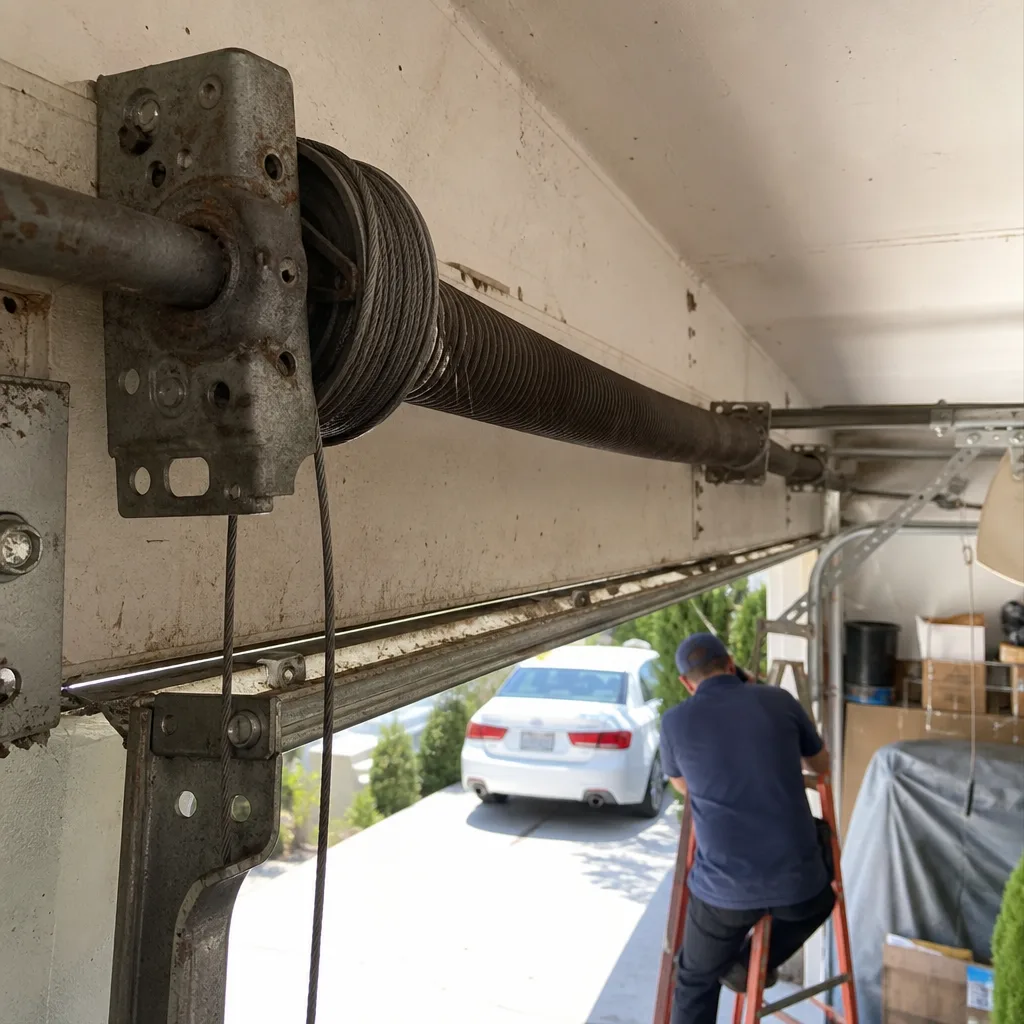
Stand outside the closed door and look at the top corners. You’ll see the cable drums, the spools the lifting cables wind around, just above the top section on each side. If you see reddish-brown streaks running down from those drums, that’s rust. Rust on the drums means the cable is also rusting, because the two are in constant contact. A rusted cable doesn’t break cleanly. It frays, strand by strand. You’ll see little wisps of steel poking out before it goes. That’s your warning. The break itself can happen at any time, and when it does, the door slams down on that side, because the cable is what transfers the spring’s tension to the door. This is not a watch-and-wait situation. If you see rust streaking below a cable drum on your Thousand Oaks home, that’s a call-it-now situation.
Frayed Cables at the Bottom Bracket
Look at the bottom corners of the door where the cables attach. The bottom bracket is a small steel fixture bolted to the door. If the cable coming out of it looks hairy, like there are loose strands poking out, it’s fraying. A frayed cable is a broken cable that hasn’t finished breaking yet. We carry the parts on the truck because when a Thousand Oaks homeowner calls about a frayed cable, Otto quotes it on the call and shows up with the replacement ready.
The Sag Test
With the door closed, pull the manual release handle, the red cord hanging from the opener rail. Slide the door up by hand to about waist height. Let go. A balanced door stays put, or drifts slowly. If it drops, the springs are weak. If it shoots up, they’re too tight. Either way, it’s a five-second test that tells you more about your door’s health than any sound it makes. Do this once a month. It costs nothing and it catches spring failure months before it happens.
The Response-Time Test: Timing Your Door’s Travel
Most homeowners have no idea how long a healthy garage door should take to open. If you don’t know what normal looks like, you can’t recognize slow. Here’s the baseline: a single-car door on a properly adjusted opener should travel from fully closed to fully open in 12 to 15 seconds. A double-car door takes 14 to 17 seconds. If your door takes noticeably longer than that, or if it hesitates for a half-second between the time you press the button and the time it starts moving, something has changed.
The Half-Second Hesitation
That pause before the door starts moving isn’t the opener thinking. It’s the opener straining against resistance. A properly balanced door starts moving almost immediately, because the springs are doing the lifting and the opener is just guiding it. When the springs weaken, the opener has to bear more of the load. The motor is still strong enough to move the door, but it takes a moment to build up the torque to overcome the extra weight. That moment is your warning. A half-second lag becomes a one-second lag, then a two-second lag, then one morning the opener gives up entirely and you’re standing in the driveway with a door that won’t open and a car trapped inside.
The Speed-Change Test
Here’s a test Otto Reinhardt runs on every service call in Thousand Oaks: time the door with your phone. Do it once a month and keep the number in your head. If it changes by more than two seconds over the course of a year, something is wearing out. It might be springs losing tension, rollers binding, or an opener motor on its way out. The point isn’t to diagnose it yourself, the point is to know when to call someone who can. “I count spring cycles the way you count tire miles, I will tell you what’s left on yours.”
What Slow Actually Means
A slow door isn’t a sign of age. Doors don’t get slow just because they’re old, they get slow because a specific component is failing. The usual suspects are springs that have lost tension over thousands of cycles, rollers that are binding because the bearings are shot, or an opener that’s losing power because the capacitor or the gears are worn. None of these fix themselves. All of them get more expensive the longer you wait. The good news is that catching a slow door early usually means a spring adjustment or a roller replacement, measured in the low hundreds, not a full door replacement measured in thousands.
Warning Signs Specific to Older Thousand Oaks Homes
Thousand Oaks has a lot of housing stock from the late 1980s and early 1990s. The Conejo Valley grew fast in that era, and the garage doors installed back then are often still the original ones. That’s 30 to 35 years of service on parts that were designed for 10 to 15. If your home was built before 1995 and you’ve never replaced the springs, the rollers, or the cables, you’re driving on borrowed time.
The 10,000-Cycle Math
A standard torsion spring is rated for about 10,000 cycles. One cycle is one full open and one full close. If you use your garage door twice a day, which most Thousand Oaks homeowners do, plus weekends with projects and kids and the occasional late-night run to the grocery store, you’re looking at 8 to 15 cycles a day. Do the math: that’s somewhere between 2,900 and 5,400 cycles a year. A spring rated for 10,000 cycles is used up in two to three and a half years of normal use. Most original springs on late-1980s Thousand Oaks homes have cycled 30,000 to 50,000 times. They’ve been dead for decades. They’re only holding on because garage doors are overbuilt, until they’re not.
Steel Rollers on Steel Tracks
Original rollers from that era were steel with unsealed bearings. Steel on steel wears both the roller and the track. By the time a roller from 1989 fails, it hasn’t just worn out, it’s worn a groove into the track. Replacing the roller then requires either resurfacing the track or replacing it. Newer nylon rollers with sealed bearings ride quieter, last longer, and don’t eat the track. If your home has original steel rollers, replace them before they fail, not after. It’s the difference between a $20 part and a $400 track replacement.
The Wood Door Question
Some Thousand Oaks homes from the 1980s have solid wood garage doors, they were a selling feature back then. Wood expands and contracts with temperature and humidity. In our climate, the dry Santa Ana season pulls moisture out of the wood and the doors get lighter; the winter months add moisture back and they get heavier. Every seasonal change works the hinges and the springs a little more. A 35-year-old wood door that’s absorbed three decades of seasonal cycling is heavier than it was when it was installed, which means the springs and the opener are working harder than their ratings assume. If you have a wood door and you’ve noticed it’s harder to lift manually than it used to be, that’s the wood talking to you.
The Extension Spring Legacy
Before about 1995, many Thousand Oaks garage doors were installed with extension springs rather than torsion springs. Extension springs stretch alongside the horizontal tracks, and when they break, they fly. Newer installations include safety cables running through the springs to contain them, but original installations from the late 1980s often don’t have those cables. If your door has extension springs and no safety cables running through the center of each spring, that’s not a warning sign, that’s a code violation waiting to become an injury. This is one repair you don’t do yourself. The tension in an extension spring can throw a steel coil through drywall, and through anything in its way.
The One Warning Sign Everyone Ignores: The Flickering Opener Light
Your garage door opener light flickering is the warning sign that doesn’t look like a garage door problem, which is exactly why nobody takes it seriously. But it’s often the first sign of an electrical issue that’s about to become a safety issue, and it’s one of the most common service calls we run in Thousand Oaks.
What the Flicker Means
The opener light is wired into the same circuit that powers the logic board and the safety sensors. When the light flickers, it usually means one of three things: a loose connection on the logic board, a failing capacitor, or sensor wiring that’s damaged and intermittently shorting. That last one matters most, because the safety sensors are what stop the door from closing on a person, a pet, or a bicycle. A sensor that’s shorting out intermittently doesn’t always trip the opener’s error code. Sometimes it just causes the light to flicker for a few days before the sensor fails completely. And when the sensor fails, the door stops reversing when it hits an obstruction. If you have a Raynor or Craftsman opener and the light is flickering, that sensor wiring is usually the culprit, and it’s a fix measured in minutes once the panel is off.
The Power Surge Pattern
If your Thousand Oaks neighborhood loses power during a summer thunderstorm, or more commonly during a Santa Ana wind event that knocks a tree into a line, the surge when power comes back on can damage the opener’s logic board. The symptom isn’t always a dead opener. Sometimes it’s a working opener with a light that flickers, or a remote that works intermittently, or a wall button that has to be pressed twice. These are all the same problem: a logic board that took a hit and is now malfunctioning in ways that get worse over time. If the flicker started right after a power outage, it’s not a bulb problem. It’s a board problem.
The Simple Bulb Check
Before you call anyone, replace the bulb. LED bulbs in particular can flicker when they’re failing, and the flicker has nothing to do with the opener. If a new bulb still flickers, the problem is in the opener or the sensor wiring. A homeowner who can rule out the bulb saves themselves a service call, and a technician who knows the bulb was already replaced can go straight to the real problem. Otto Reinhardt tells every Thousand Oaks customer the same thing: “Check the bulb first. It takes thirty seconds, and it tells us both how serious the problem is.”
A 5-Minute Weekly Inspection That Catches 80% of Problems
Most garage door failures don’t happen without warning. They happen because the warnings were there and nobody was looking. Here’s a weekly inspection routine that takes five minutes and catches the vast majority of problems before they become emergencies. If you do this every Sunday, you’ll know when something changes, and knowing when something changes is the whole game.
- Run the sag test. Close the door, pull the red release handle, lift the door to waist height, and let go. If it stays, the springs are balanced. If it drops, the springs are weak. If it flies up, they’re over-tightened. Either way, you’ve learned something important in ten seconds.
- Listen without headphones. Open and close the door once from inside the garage, no music, no podcast. You’re listening for anything that wasn’t there last week: a new grind, a new squeal, a new pop. Your ears are better at detecting changes than your eyes.
- Look at the cables. Both sides, top and bottom. You’re checking for rust streaking below the drums and fraying at the bottom brackets. This takes twenty seconds and it catches the most dangerous failure mode on the whole door.
- Check the gap at the top. With the door closed, stand inside and compare the gap between the top of the door and the header on the left and right sides. If they’re not even, something is out of balance.
- Time the door. Open it fully with your phone’s stopwatch. If it takes more than 17 seconds for a double door or 15 for a single, note it. Do it again next week. If the time is creeping up, something is wearing out.
- Watch the opener light. If it flickers, change the bulb and watch again. If a new bulb still flickers, you’ve found an electrical issue early.
That’s five minutes. You don’t need tools, you don’t need to know how a garage door works, and you don’t need to open anything up. You just need to pay attention the same way you’d notice a new noise in your car. The homeowners who catch problems early aren’t mechanics. They’re just people who look.
Common Mistakes to Avoid
- Lubricating instead of diagnosing. Spraying WD-40 on a grinding door is like putting a Band-Aid on a broken leg. It quiets the symptom for a few days while the underlying problem, usually a worn gear or a failing spring, gets worse. WD-40 is a solvent, not a garage door lubricant. It strips the grease that was protecting the parts. If you hear grinding, the problem isn’t friction, it’s wear.
- Replacing the opener when the door is the problem. This is the most expensive mistake we see in Thousand Oaks. A struggling opener is almost never the opener’s fault. It’s a heavy door caused by weak springs. Replacing the opener fixes nothing, because the new opener still has to lift the same heavy door, and it will fail the same way. The springs fail first, then the opener fails trying to compensate. Fix the springs and the old opener keeps working for years.
- Ignoring a slow door because it still opens. A door that’s getting slower is a door that’s telling you a component is dying. Every cycle you run it in that condition puts more wear on everything else. By the time it stops working entirely, the repair bill has tripled.
- Messing with extension springs without safety cables. This one is genuinely dangerous. Extension springs under tension store enough energy to throw a steel spring through drywall. If you have extension springs and no safety cables running through them, do not touch them. Call a professional. A door is 200 pounds riding on two springs. Respect it.
- Assuming a loud door is a normal door. Your garage door should not be loud. A properly maintained door with nylon rollers, balanced springs, and a functioning opener is about as loud as a washing machine. If your door sounds like a freight train, something is wrong. It’s been wrong for a while, and it’s not going to get better on its own.
- Waiting until the door won’t open to call. Emergency service exists for a reason, but every emergency was once a warning sign that got ignored. The week before the spring breaks, the door is slow, the gap is uneven, and the cables show rust. Catch it then and you schedule a repair on your terms. Miss it and you’re calling at nine at night with your car sealed inside.
When to Call a Professional
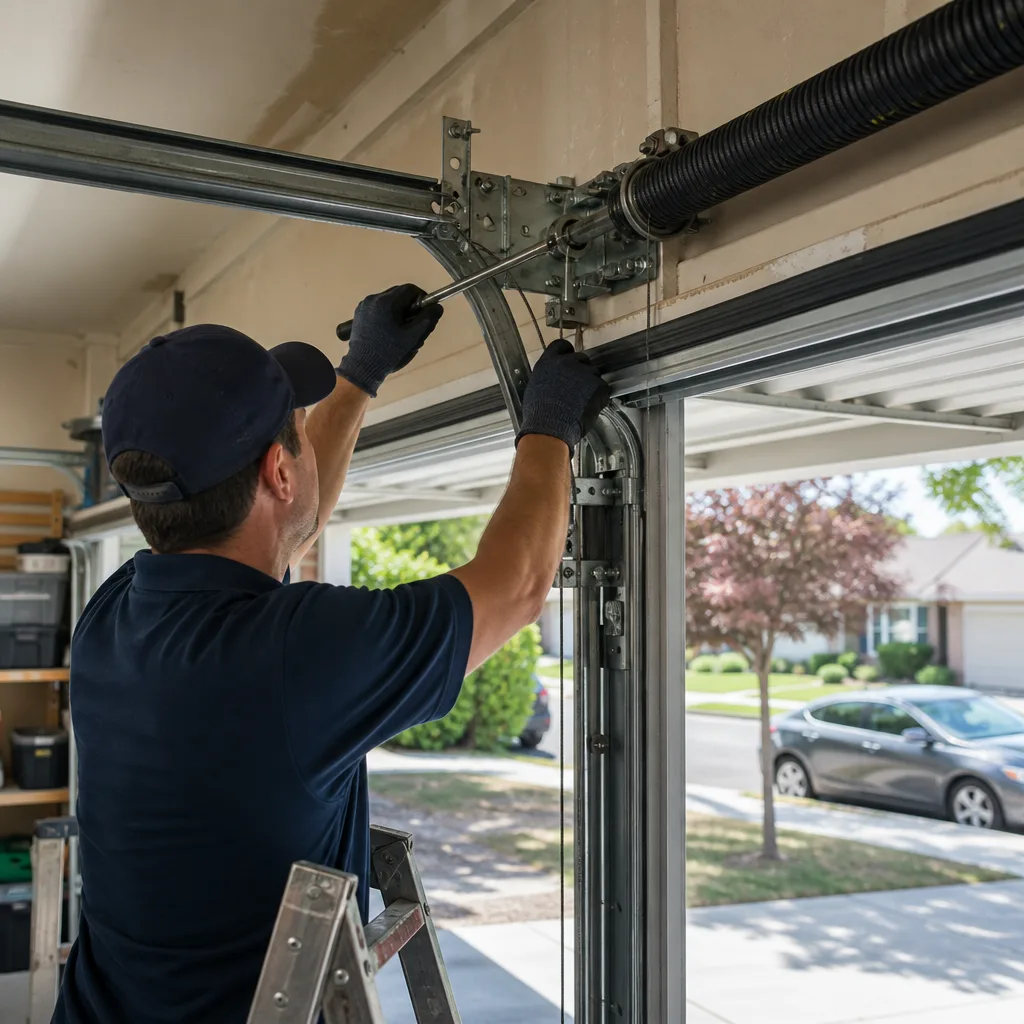
Some garage door problems are DIY-friendly: tightening bolts, replacing a light bulb, cleaning the tracks. Others are not. If your door has a broken spring, a frayed cable, a bent track, or an opener that’s tripping the circuit breaker, call a professional. The tension in a torsion spring can release with enough force to break bones. A cable under load can slice through a glove and the hand inside it. These are not exaggerations; they’re the reason garage door repair exists as a licensed trade. If you’re in Thousand Oaks and you’ve caught a warning sign early, hiring the right garage door contractor starts with Otto’s Garage Door: we offer free estimates, call (805) 519-7431. Otto Reinhardt answers the phone himself more often than not, quotes the job on the call, and holds that price when he pulls up to your driveway. The name on the van is the same name on the invoice and the name on the license.
For more on what we do, see our Garage Door Repair in Thousand Oaks page, or if your door is beyond saving, read about Garage Door Installation in Thousand Oaks. If the opener is the problem, we have a dedicated Garage Door Opener in Thousand Oaks page that covers the common failure modes. And if you’re new to all this, start with the Otto’s Garage Door home page to see who you’re dealing with before you pick up the phone.
Frequently Asked Questions
Spring replacement in Thousand Oaks typically runs $180 to $340 per spring installed, depending on the door weight and the spring’s cycle rating. Higher-cycle springs cost more up front but last three to four times longer, so the per-year cost is actually lower. Otto quotes the full price on the phone before he ever leaves his driveway, and that number doesn’t change when he sees your door in person. Call (805) 519-7431 for an exact quote, estimates are free.
Yes, in most cases Otto Reinhardt can be at your Thousand Oaks home the same day you call, and he carries the most common replacement parts on the truck, including springs, rollers, cables, and hinges. If the door is off the track or a spring has snapped, that’s a same-day repair in most situations. Call (805) 519-7431 and a live person answers, even at nine at night.
No. Otto quotes the job on the phone and holds that number when he arrives. If he finds something unexpected, he shows it to you and explains it before any additional work happens. The price is quoted and agreed before any work starts, always. That’s how it’s been since 2004, and it’s why Thousand Oaks homeowners keep calling back for decades.
Standard springs last about 10,000 cycles, which is two to four years for most Thousand Oaks households. High-cycle springs last 25,000 to 40,000 cycles, which is seven to ten years. If you don’t know how old your springs are and the home was built before 2005, assume they’re overdue. The sag test tells you in ten seconds whether they’re still doing their job.
A noisy garage door isn’t always dangerous, but it’s always a sign of wear. A squeal is usually a worn roller, which can wobble and jump the track. A grind is usually a worn opener gear, which can fail and leave you locked out or locked in. A pop is usually binding, which gets worse every cycle. No garage door should be loud. If it is, something is telling you to fix it.
Yes. Otto’s truck is stocked with springs in all common sizes, rollers, cables, drums, hinges, and opener parts for LiftMaster, Chamberlain, Genie, Amarr, Wayne Dalton, Craftsman, and Raynor. Most repairs are completed in a single visit because the part is already there. Call (805) 519-7431 for a free estimate, and you’ll know the price before he turns the key.
The Bottom Line
Garage doors don’t fail without warning. They get slow, they get loud, they sag, they rust, and they flicker. The warnings are there for weeks, sometimes months, before the failure. What separates a $180 spring replacement from a $900 emergency repair is simply paying attention, and you can find more guides & resources to help you stay ahead of problems. Run the sag test once a month. Listen to the door when it opens. Look at the cables and the gap at the top. If something changes, call before it breaks. If you’re in Thousand Oaks and you’ve noticed one of these warning signs, Otto’s Garage Door offers free estimates and same-day service, call (805) 519-7431. Ask anyone on your street, we’ve been in this county since 2004, and Otto is a palindrome: reads the same from either end, same as the door.
Written by Otto Reinhardt, Owner at Otto’s Garage Door, serving Thousand Oaks since 2004.