
Full 25-point door and opener safety check with every visit - springs, cables, rollers, tracks, and your LiftMaster or Chamberlain opener included
You get a price before we start. It does not change when the truck arrives.
 Before
 After
After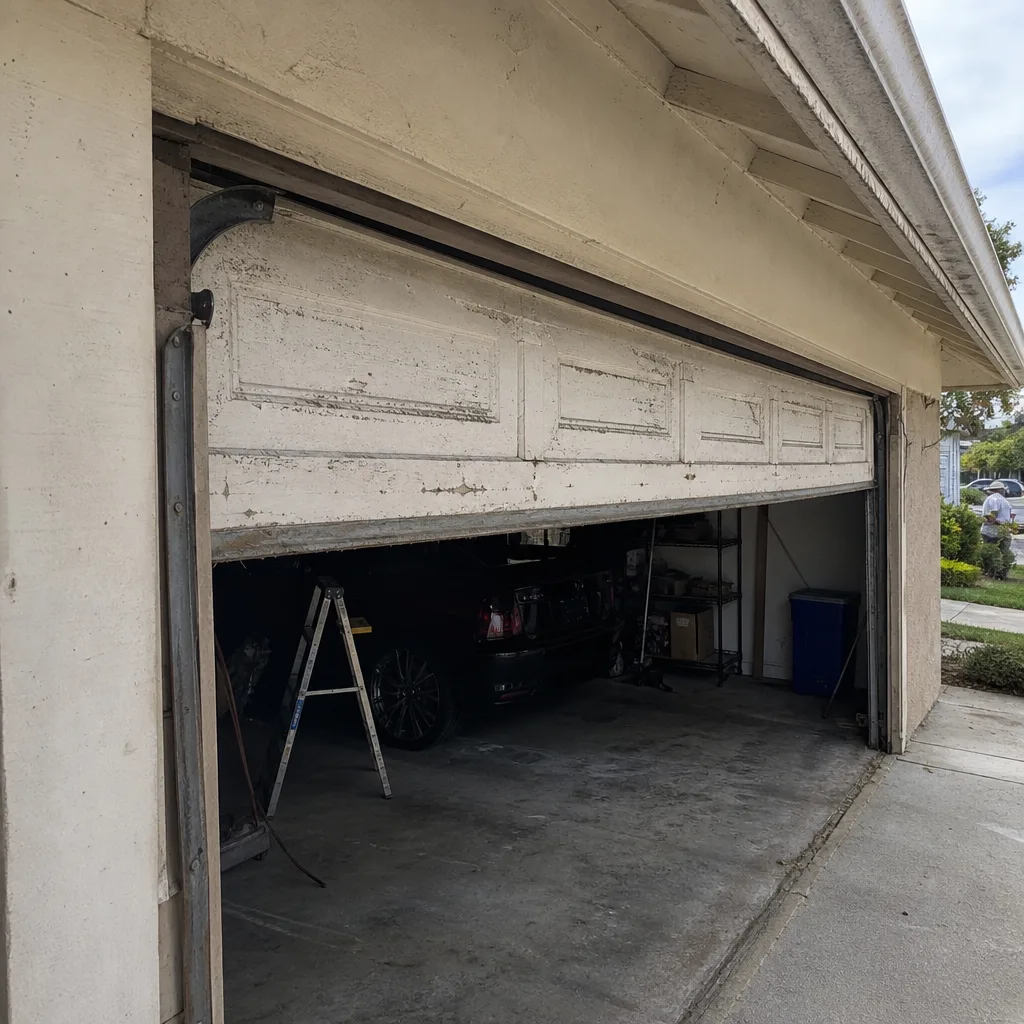 Before
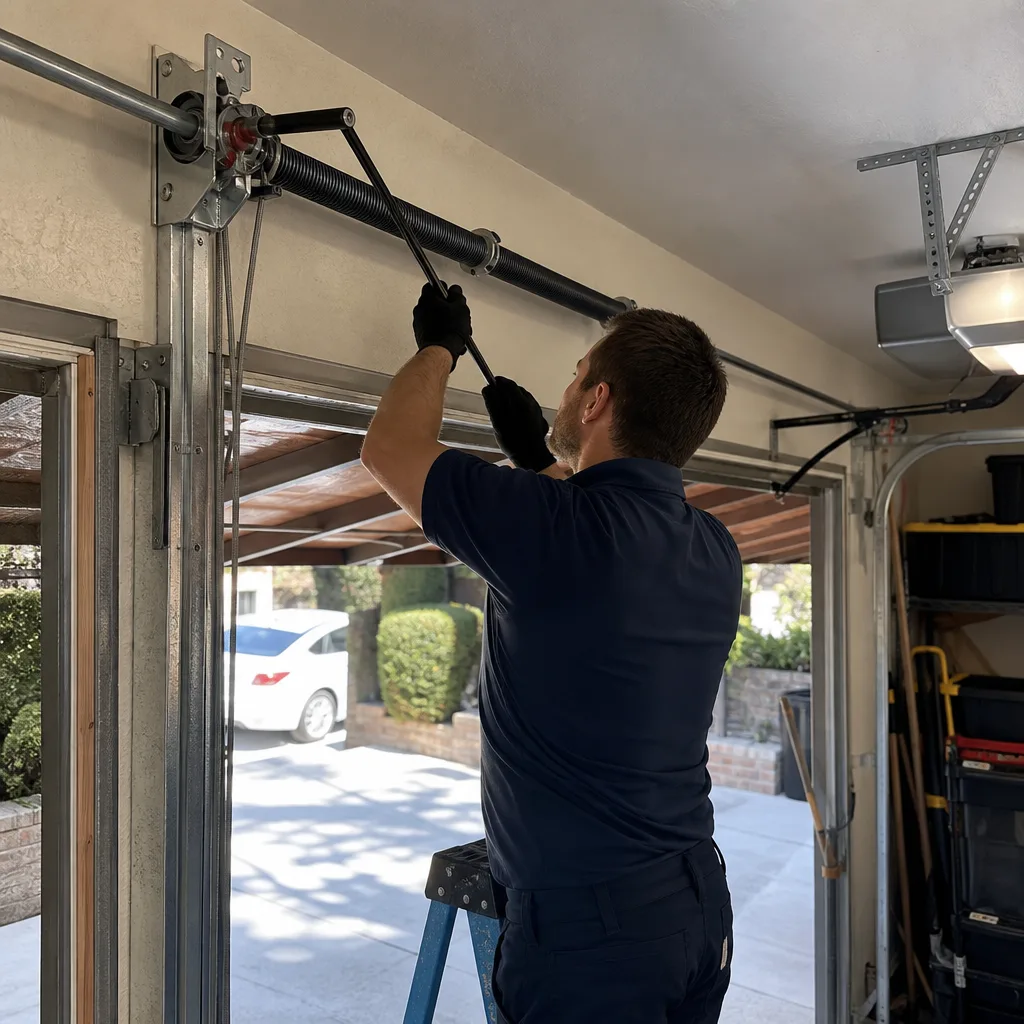 After
After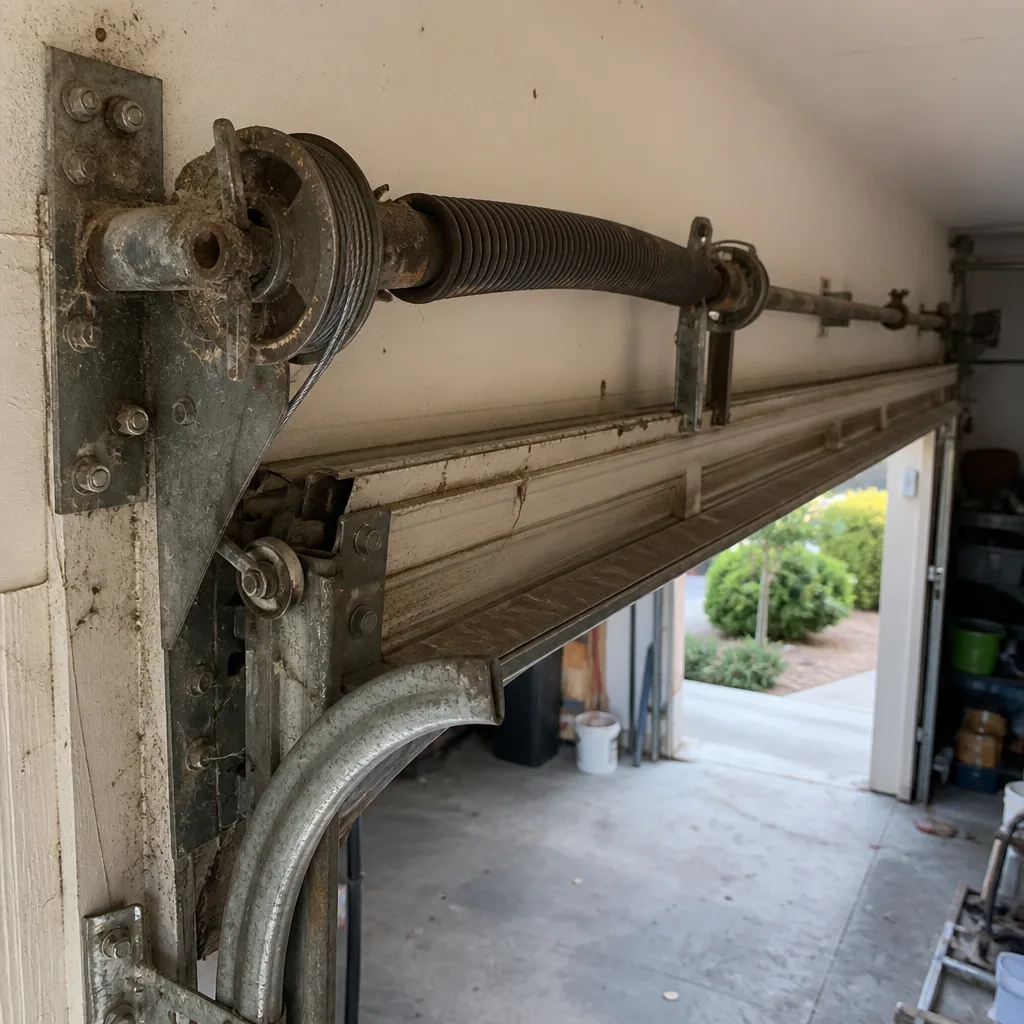 Before
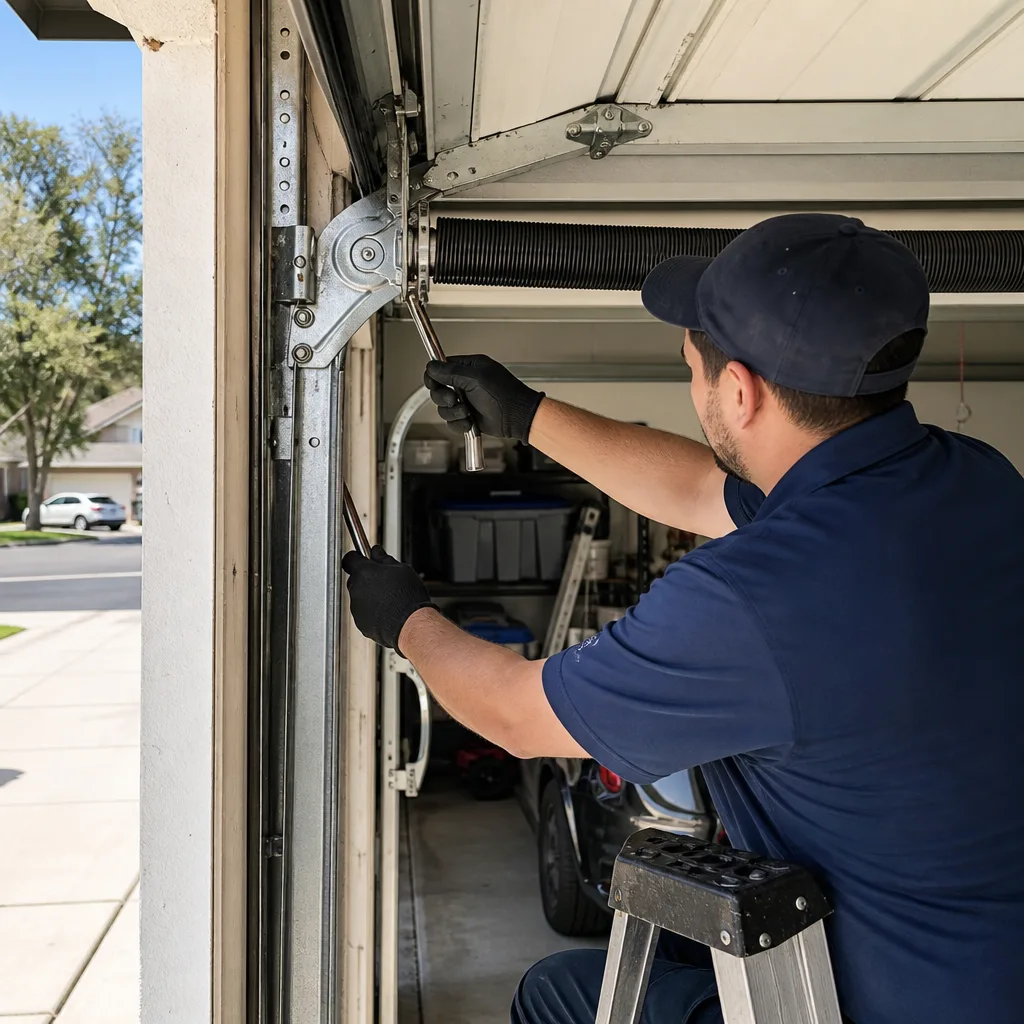 After
AfterLiftMaster Roller Replacement: The Thousand Oaks Owner’s Guide
We replace LiftMaster garage door rollers in Thousand Oaks for $110-$220 installed, and we carry the parts on the truck, so most jobs are done in a single visit. The rollers are the small wheels that ride inside the vertical and horizontal tracks; when they wear out, the door gets loud, jerky, or starts binding instead of gliding. By the time most homeowners call us, the door sounds like a freight train and the opener is working twice as hard as it should.
The telltale sign is almost always the same: you’re standing in the driveway, the door is halfway up, and there’s a grinding, clattering racket that wasn’t there a year ago. What’s actually happening is the roller bearings have given out. The wheel still looks round, but the ball bearings inside have rusted, flattened, or just disintegrated from years of heat, dust, and cycles. In Thousand Oaks, the dry summers and Santa Ana winds push fine dust into the bearings, and the coastal moisture swings in the winter finish the job. Roller failure isn’t a maybe around here; it’s a when.
Which LiftMaster Models This Applies To
LiftMaster has used the same 2-inch roller diameter on the vast majority of its residential door systems for decades, so the roller design itself is broadly compatible across the brand. Whether you have a belt-drive, chain-drive, or jackshaft opener, the rollers are a separate component that runs in the track, and they follow one of two patterns: standard 7/16-inch stems or heavier 1/2-inch stems on doors with thicker hinges. If the door is a heavier wood or insulated steel model built before roughly 2010, you’ll often find the 1/2-inch stems; newer standard residential doors generally run the 7/16-inch version. We always measure the stem diameter before pulling a roller off any LiftMaster door, because guessing is how doors end up popping out of the track.
One thing worth knowing: the older LiftMaster commercial-duty residential doors, particularly in areas like Lynn Ranch or the older ranch-style homes off Avenida de los Arboles, used a 10-ball bearing roller instead of the more common 11-ball or 13-ball. The seat in the hinge is the same, but the old 10-ball bearings are almost always rusted solid by now. We carry OEM LiftMaster rollers and quality sealed-bearing aftermarket equivalents on the truck, and we’ll tell you straight which one makes sense. For standard doors, aftermarket sealed bearings from a supplier like Canimex or DW save real money and last the same. For anything with proprietary stem sizing or an older LiftMaster commercial track, we order OEM to keep the geometry exact.
We’re an independent shop in Thousand Oaks, not a LiftMaster dealer or factory affiliate, which matters when you need honest parts advice. We’re not motivated to sell you a brand-marked roller at triple the price when a sealed aftermarket bearing does the identical job for less. We stock both and we’ll show you the difference.
Signs Your LiftMaster Roller Replacement Is Failing
Most homeowners notice the noise first, but there are usually two or three other symptoms already underway. Here’s what to look for:
- Grinding or rattling during travel. The bearings inside the roller have failed, so the wheel drags across the track instead of rolling. You’ll hear it most when the door passes the curve from vertical to horizontal track.
- The door hesitates or jerks at the same spot. When a roller isn’t turning, the door actually slides and catches on that section of track, and the opener surges to push through it. Watch the door run; if it stutters every time at the same height, that’s a failing roller, not an opener problem.
- Visible rust or corrosion on the roller wheel or stem. LiftMaster standard rollers from the 2000s were often unsealed steel bearings, and once the rust ring appears on the wheel, the bearing is already contaminated. It doesn’t get better on its own.
- One side of the door sits slightly lower than the other when open. A seized roller creates enough drag on one side to twist the door slightly off balance, which then loads the springs unevenly. This is the one that eventually takes out a cable or a spring if you ignore it long enough.
- Black metal dust or fine gray powder on the track. That’s bearing grease mixed with powdered metal from inside a roller that has already ground itself apart. By this point, the roller is done, and the track has usually picked up a little scoring as a free bonus.
If you’re seeing any two of these at the same time, the fix is straightforward and should not wait. Every cycle with a dead roller accelerates wear on the track, the hinges, and the opener’s gear and sprocket inside the motor head.
Replacement Cost & What’s Included
In Thousand Oaks, full roller replacement runs $110-$220 depending on how many rollers the door has and which type it needs. A standard single door with four panels uses 10 rollers; a heavier door or a high-lift track setup may use 12 or more. That range covers roller replacement for a standard 7-foot residential LiftMaster door, parts included, with the higher end pulling in oversized or commercial-duty rollers.
| Service | Installed Price in Thousand Oaks |
|---|---|
| Standard roller replacement (10 rollers, sealed bearing) | $110-$160 |
| Heavy-duty roller replacement (12-14 rollers, oversized stems) | $160-$220 |
| Full LiftMaster roller replacement (varies by door and roller count) | $110-$220 |
The exact price is quoted over the phone and written on your invoice before any wrench touches the door. If the door has a badly scored track section or a hinge with wallowed-out holes, we’ll point that out and quote it separately before we do that work. The roller replacement labor itself includes cleaning and wiping down the track, checking every hinge, and running a full cycle test while we adjust the balance. Every job carries Otto’s 90-Day Done Right Promise, in writing. If a roller sounds off in the next three months, you call us and we’re back, no charge for the callback or the part.
DIY or Call Us?
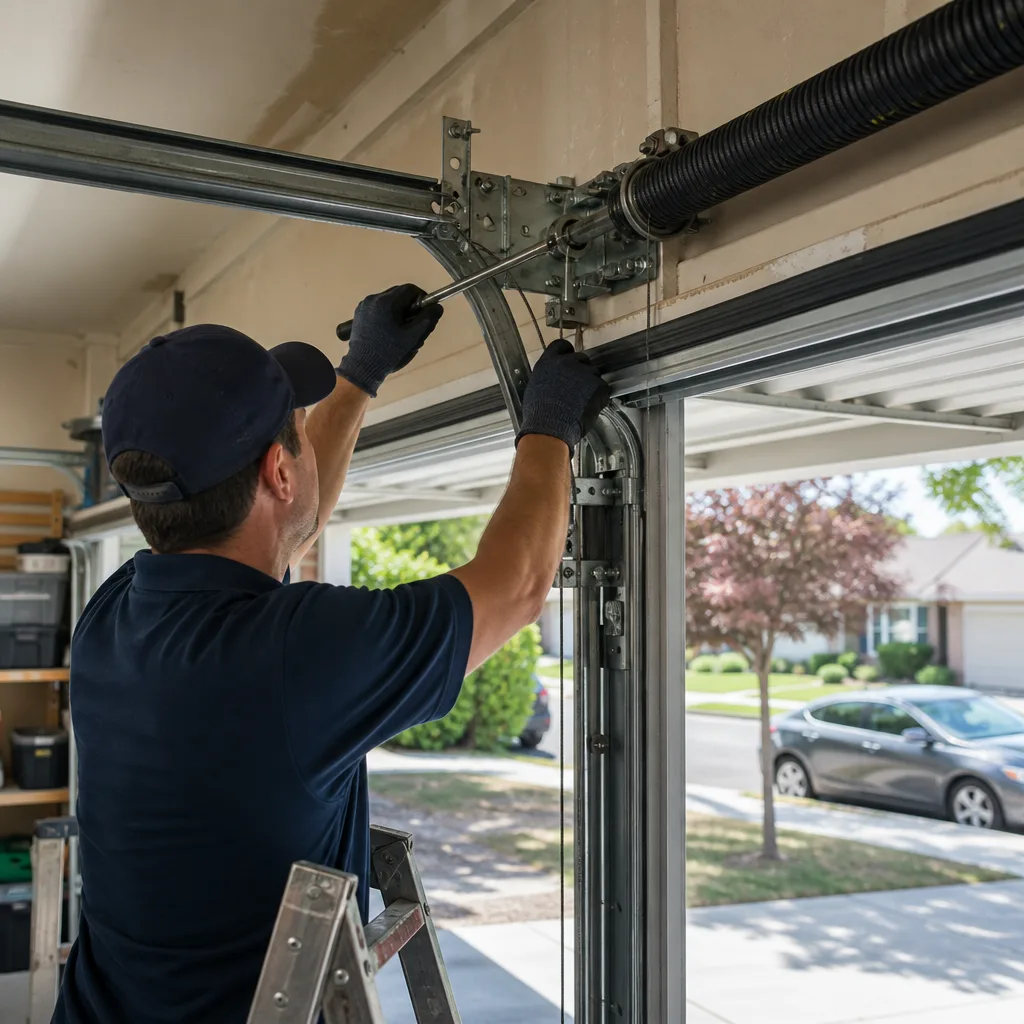
You can safely diagnose a failed roller yourself: run the door up and down a few times, watch for the stutter, listen for the grinding, and look for rust on the wheels. That tells you what’s wrong. What you should not do is unbolt a bottom-bracket roller or pull the bottom fixtures off a LiftMaster door by hand. The bottom roller brackets on most LiftMaster doors also anchor the lift cables, and those cables are under full spring tension. If the spring is a torsion spring, that’s 150 to 250 pounds of stored force looking for somewhere to go. People lose fingers and worse by treating the bottom bracket like a simple bolt-on part.
We replace rollers in Thousand Oaks the same visit we diagnose them, with the spring tension managed by someone who has done it for over twenty-five years. Call (805) 519-7431 and a live person answers, quotes the job on that call, and holds the number when they arrive. That’s how we’ve worked since 2004, and it’s why people around here keep calling.
FAQs
Original steel unsealed rollers that came on older LiftMaster doors in Thousand Oaks typically last 7-12 years, while newer sealed-bearing rollers last 15-20. The local climate shortens that lifespan because the dry Santa Ana dust works its way in and the seasonal moisture swings rust what it finds, especially in neighborhoods closer to the canyons. If your LiftMaster door is over a decade old and still runs original rollers, they’re on borrowed time.
No, a roller with failed bearings is not repairable because the seal and bearing assembly is pressed into the wheel at the factory. We replace the full set, not one at a time, because when one fails the rest are usually within a year or two of the same end. Call (805) 519-7431 and we’ll give you an exact price for your door on the phone.
A standard LiftMaster roller replacement takes 45-90 minutes including the track cleanup, hinge check, and a cycle test. We carry the common stems and bearing types on the truck, so there’s no second trip for parts on most Thousand Oaks doors. If your door needs an odd proprietary stem, we’ll order it and come back at no additional trip charge for the follow-up visit.
Yes, we stock OEM LiftMaster rollers and sealed aftermarket equivalents in both standard and heavy-duty stem sizes, along with the hinge and bracket hardware that sometimes needs replacing at the same time. We also carry rollers that fit Chamberlain and Genie, so if your opener or door is a different brand, chances are we still have the part on hand. Call (805) 519-7431 and tell us what you have; we’ll confirm before we drive out.
If your LiftMaster door is grinding, jerking, or just getting noisier every month, don’t wait until the opener burns itself out trying to drag a seized roller through the track. Call Otto’s Garage Door at (805) 519-7431 and Otto or one of the crew will give you an honest quote over the phone, then show up with the parts in the truck. Free estimates, no surprises at the door, and the owner’s name on the work. We’ve been fixing doors in Thousand Oaks since 2004, and we’ll fix yours right or come back and do it again.
Written by Otto Reinhardt, Owner, Otto’s Garage Door at Otto’s Garage Door, serving Thousand Oaks and nearby areas.